Eating Alone, Together
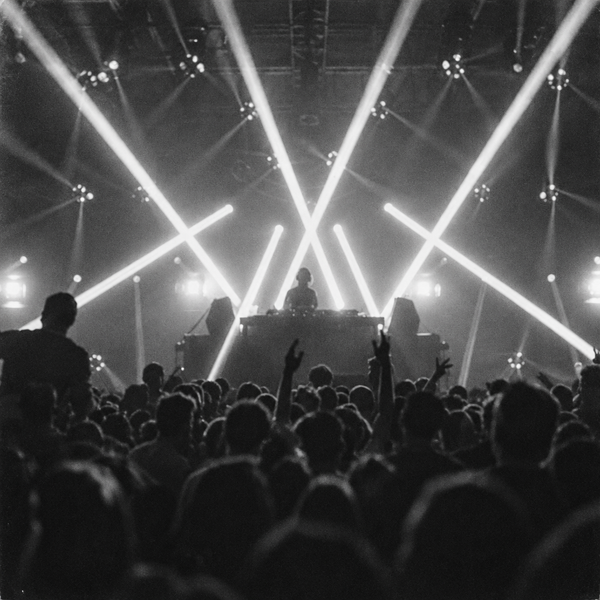
We handed the shared meal to a screen, then mourned it in a thousand essays. Now a French artist has dragged a hand-painted dining installation into a Berlin club and dared strangers to look up and eat together. A wry essay on whether beauty can still gather us back into one room.
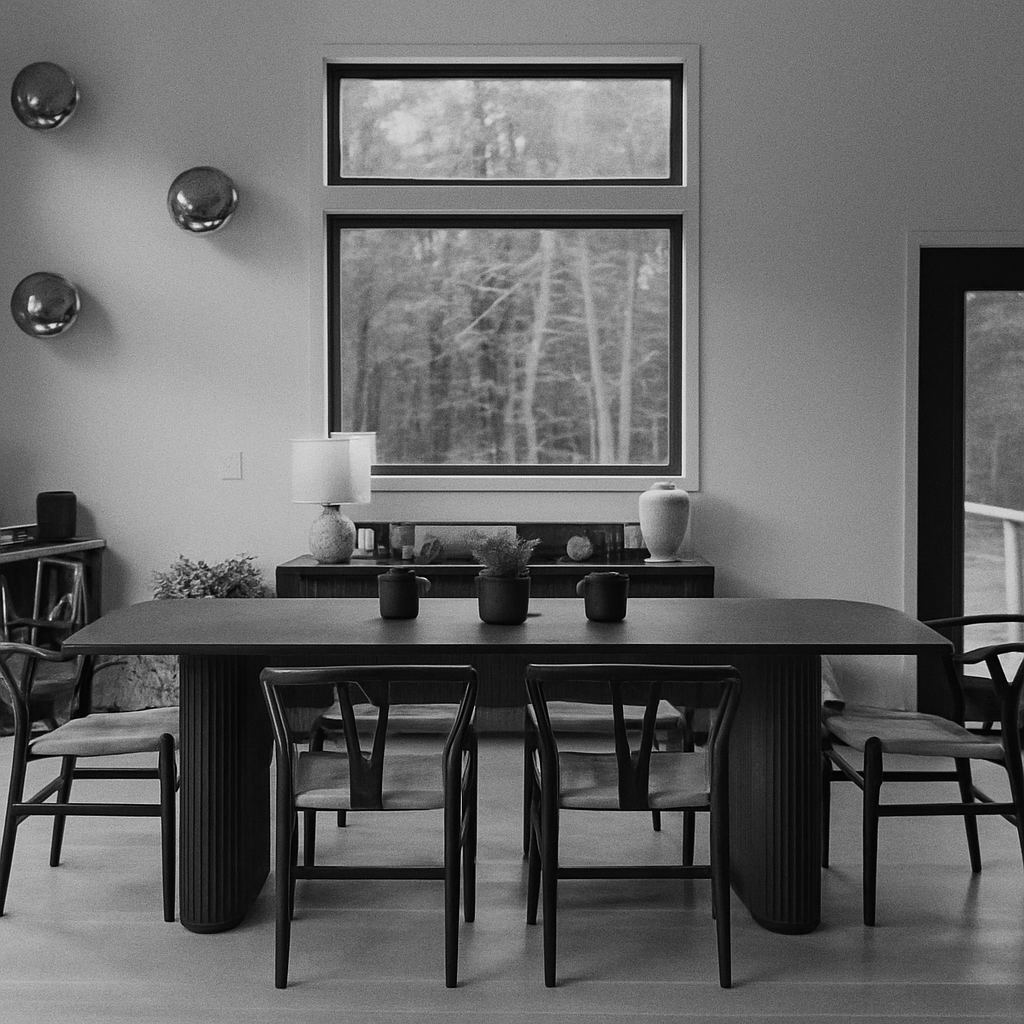
My grandmother had a rule about dinner I now recognize as roughly seventeen ethics violations under modern teenage law: no phones, no books, no television, and if you stood up before everyone finished, you committed a small war crime against the concept of family. We complained. We squirmed. We ate the green beans. And somewhere between the casserole and the dishwashing, we accidentally became people who knew each other.
I’ve been thinking about this because I recently ate dinner alone in my apartment while watching a stranger on TikTok eat dinner alone in hers, and somewhere in this perfectly engineered loop of parasocial chewing, I started laughing, and not at anything funny. I’d realized humans (the species that once invented the civic idea of having lunch together) had outsourced breaking bread to a 23-year-old in Phoenix named Brittany reviewing a frozen burrito.
This is, statistically, where most essays about technology and loneliness pivot into a doomscroll all their own. I’d like to skip it. Roughly every magazine since the TV tray has mourned the shared meal’s collapse, and yet nobody wants to read another 1,100 words about how the smartphone ate your father-in-law. What’s more interesting (and slightly weirder): a small, scrappy corner of the art world has decided to do something about it. With paint. And a table long enough to lose a guest at the far end.
The Table That Refused to Be Reasonable
In early May 2026, during Gallery Weekend Berlin, French artist Eleonore Buschinger installed a hand-painted dining piece at Soho House Berlin: a single composition, thirty-five meters of it, running across the wall, onto the floor, and along a communal dining table. She calls it L’Art de la Table, which translates roughly to “The Art of the Table,” and more loosely to “We Are Going to Make You Sit Down and Look at Each Other Whether You Like It or Not.”
Thirty-five meters of painted surface. Longer than a blue whale, and far likelier to ask you to pass the salt. Designboom called it an immersive dining installation, the kind of phrase that sounds like a press release until you see what it’s doing: smuggling participatory art (the Tate defines it as art that “directly engages the audience in the creative process”) into the one ritual we’ve surrendered almost entirely to convenience.
You can’t doomscroll across thirty-five meters of someone else’s brushstrokes. Well, you can (I’m sure someone tried), but the table does something the algorithm cannot: it makes eating visibly artisanal, publicly slow, and embarrassing to ignore. You’d look like a goblin checking your phone next to a hand-painted whale.
A Brief, Slightly Smug History of Sitting Down Together
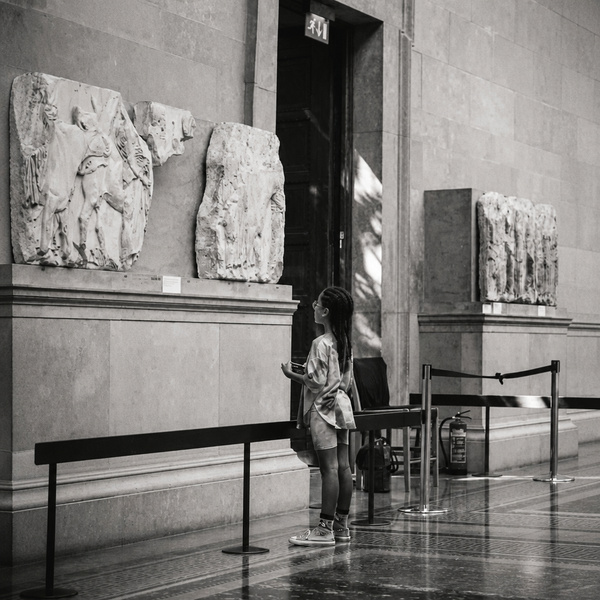
Communal dining, as the Met’s history of the Roman banquet lays out, goes all the way back to ancient Greece and Rome, where shared meals anchored civic life. The Greeks had the symposion. The Romans had the convivium. We have DoorDash and a 23% tip prompt that judges us silently.
I don’t want to romanticize antiquity (the Romans also had lead pipes, and at least one emperor who threatened to make his horse a consul), but the people who more or less invented Western politics treated eating together as load-bearing infrastructure for democracy. The table held the city up. Call it the original operating system.
What happened between the convivium and the Caesar salad eaten over the sink is a long story, but here’s the compressed version: industrialization fractured the household schedule, suburbanization fractured the neighborhood, television fractured the evening, and the smartphone fractured the seven remaining minutes when anyone might have made eye contact with a sibling. Each innovation traded a small piece of friction for a slightly larger piece of solitude, and we, being humans, said yes every single time, because friction is annoying and solitude doesn’t sting until about year three.
Why a Painted Table Might Work
Here’s what I find quietly subversive about Buschinger’s installation, and the small movement of similar projects flickering around its edges. No one’s telling you to renounce technology, log off, or perform “presence” the way wellness influencers do (with a ring light). The ask is smaller: sit at a long table and notice other people exist in three dimensions.
That’s a low bar. It’s also, apparently, the bar.
Participatory art has a sneaky superpower: it gets people to do something they’d never do if you asked. Nobody wants to attend a “community dinner.” That phrase, fairly or not, conjures folding chairs, a sad lasagna, and someone with a guitar. But “thirty-five-meter art installation at Soho House”? Now you’ve got cultural capital, Instagram bait, and, almost as an afterthought, a meal with strangers.
This is the magic trick. Sneak the medicine inside the spectacle. The spectacle gets the press; the medicine is where you end up talking to whoever’s next to you about their dog, their divorce, or their unhinged theory about why ranch dressing is a personality.
What I Suspect Is Happening
I don’t think a painted table will save Western civilization. My idealism has a ceiling. But I do think the culinary arts (especially when they hold hands with design and a little theatrical mischief) are one of the few Trojan horses left for cultural reconnection. Biology demands food. Art makes it memorable. Design makes it shareable. History makes it meaningful. Together, they create the rarest thing in 2026: a setting where checking your phone feels rude even to you.
The Greeks knew the table was where the city happened. We forgot, then we ordered Seamless. Now a French artist has dragged a whale-length canvas into a Berlin club and is running an experiment: if we make the table beautiful enough, will the humans come back?
My grandmother would have called this overcomplicated. She’d have said you don’t need a 35-meter installation to make people talk. You need green beans and a rule. And she’s right, mostly. But her rule worked because the dining room had gravity, and that gravity has scattered across roughly forty-seven apps. Maybe it takes an artist with an absurdly long paintbrush to gather it all back into one room.
Or, at minimum, to make us laugh at the absurdity of needing one.
References
- https://www.designboom.com/art/35-meter-hand-painted-table-dining-immersive-installation-berlin-l-art-de-la-table-eleonore-buschinger/
- https://www.tate.org.uk/art/art-terms/p/participatory-art
- https://www.metmuseum.org/essays/the-roman-banquet
Models used: gpt-4.1, claude-opus-4-7, claude-haiku-4-5-20251001, gpt-image-2