One Tree, One Magazine, One Debut Album
Ai Weiwei drew a 1,200-year-old oak days after the RSPB declared it dead. Ian McDonald spent decades insisting the Caribbean was its own literary universe. A New York duo announced a debut LP. Three unrelated stories, one shared idea: legacy runs on specificity, and it works best small.
A particular kind of magic happens when three unrelated stories start rhyming. You're scrolling the news, and suddenly a Chinese artist sketching under an ancient oak, a Caribbean poet's obituary, and a debut album announcement from a two-man New York project all sound like verses in the same song. Underneath sits a pattern worth pulling on: what we leave behind, and how people who refuse the rules of their era keep reinventing the shape of it.
Start with the tree.
Ai Weiwei, Drawing Again
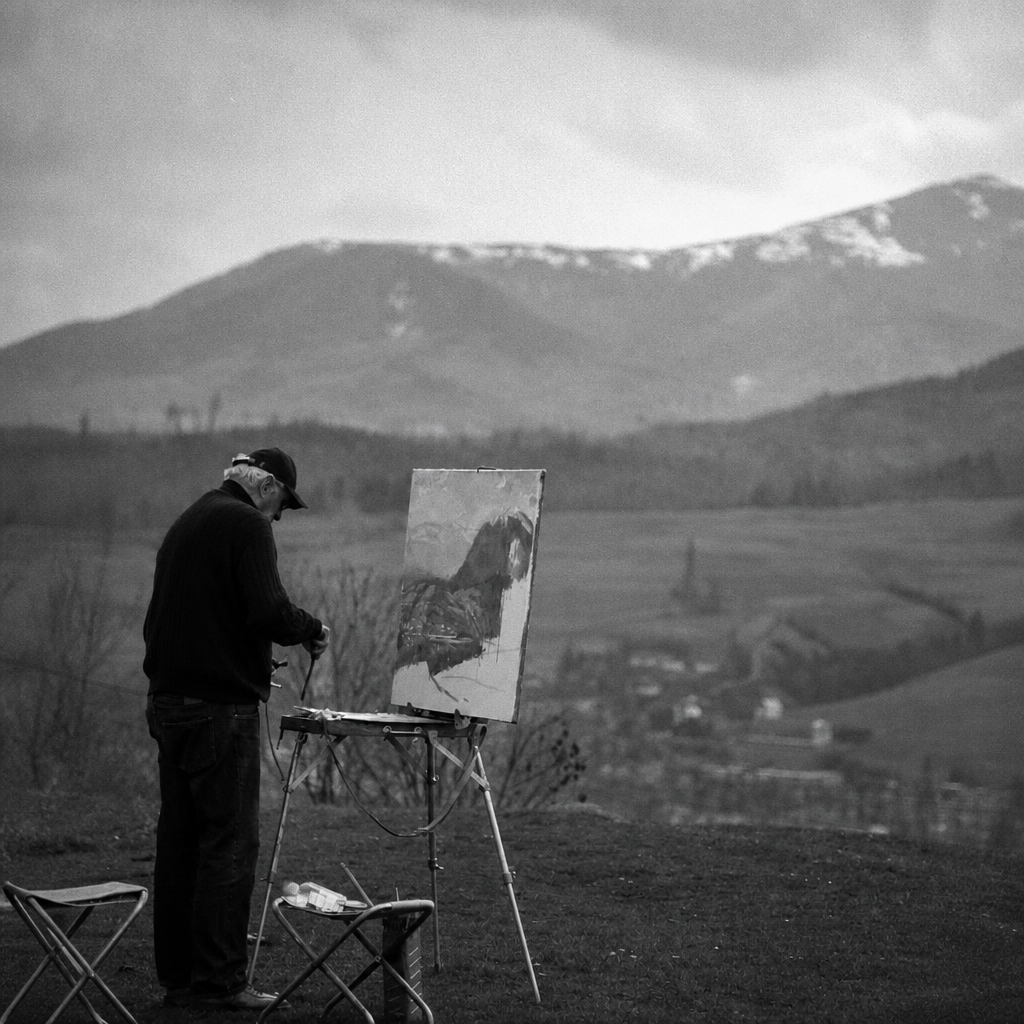
On the Summer Solstice, 21 June 2026, Ai Weiwei sat beneath the Major Oak in Sherwood Forest, a tree estimated at 1,200 years old, and made his first drawing in more than fifty years.
The visit came together in two days, on Ai's own initiative. He sent screenshots about the tree, unprompted, to Josef O'Connor, who founded the public art platform CIRCA, and forty-eight hours later they were standing in the forest. CIRCA later turned the resulting drawing into an animation, A Tree, which premiered on Piccadilly Lights on 9 July.
CIRCA has history with Ai. The Piccadilly Lights takeover in 2020 launched the platform with him as its first artist. The Ai vs AI project put 81 questions to artificial intelligence over 81 days, matching the 81 days he spent in secret detention in China in 2011. That partnership has never dealt in nostalgia.
Half a century without drawing. Ai has spent decades turning sculpture, film, architecture, social media, and confrontational installations into instruments of conscience. His father was the poet Ai Qing, whose 1940 poem Trees opens the animation, so the poetic gesture runs in the bloodline. And yet drawing, the most intimate and immediate form available to him, he set aside. Until he sat beneath a tree older than most countries and picked up a pencil.
The Major Oak is dead. The RSPB declared it so in mid-June, days before Ai arrived, after the tree failed to leaf out this spring. A 1,200-year-old organism gets no further chapters, and Ai went to render it anyway.
Something wonderfully unfashionable lives in that impulse. We're supposed to build things that scale forever, to measure legacy in engagement metrics and cloud storage. Ai read that a 1,200-year-old tree had died and thought: this deserves a hand-drawn line. No scan. No generative model trained on oak trees. A line, made by a hand, in one place, on the day the sun stood still.
The most durable objects we make often admit their own mortality. A drawing of a dead tree is a small, honest thing, and its whole ambition is to bear witness. And in bearing witness, it outlives artist and subject alike, because somebody paid attention.
Ian McDonald, West Indian by Conviction
A month after Ai put pencil to paper, the Caribbean lost one of its literary titans. Dr. Ian McDonald, poet, novelist, editor, and cultural steward, died on 24 July 2026 at the age of 93. Guyana's President Irfaan Ali announced the passing.
Global Voices titled its farewell "West Indian by conviction," borrowing McDonald's own description of himself: Antiguan by ancestry, Trinidadian by birth, Guyanese by adoption, and West Indian by conviction. That is the kind of phrase that makes you stop reading and sit with it for a minute.
McDonald was born in Trinidad, read History at Cambridge, and lived most of his life in Guyana. He could have belonged nowhere in particular, drifting between capitals the way colonial-era intellectuals sometimes did. He chose the Caribbean instead. He edited Kyk-Over-Al, mentored generations of writers, and produced a body of work anchored by his only novel, The Humming-Bird Tree, insisting the region deserved serious attention as its own literary universe. Somebody else's empire did not get to file it as a footnote.
Ai's oak belongs in the same argument. Both men built their lasting work around one idea: a specific place, a specific culture, a specific ecosystem deserves the highest form of attention we can give it. McDonald spent decades documenting a Caribbean outsiders flattened into postcards. Ai drew a tree outsiders flatten into a Robin Hood tourism ad. The job stays identical in both cases. Refuse the flattening. Draw the actual thing. Name the actual place.
Read McDonald's obituaries and you find a mentorship network where you expected a monument. The writers he edited. The students he taught. The magazines he kept alive through eras when Caribbean publishing ran on stubborn hope. Build systems that outlive you by making other people's work possible.
The New Storytellers Are Already Here (Last Verse)
The machinery for getting small-band music into the world has transformed. Record labels, radio, and MTV rotation once drew the whole map. Bandcamp Fridays, Discord servers, TikTok clip virality, and boutique labels behaving more like collectives than corporations now do most of the work for small bands.
Billboard Style, a New York duo built from Dan Howard of Victoryland and Ben Guterl of Forth Wanderers, announced a debut LP called Pull of the Moon for October on Good English Records. Their announcement shares more with McDonald editing Kyk-Over-Al in Georgetown than either shares with a major-label rollout circa 1998. Small, place-specific, human-scale work goes out into the world and finds its people through conviction.
Technology builds the trellis. Somebody still has to grow the plant. Algorithms recommend the song, and somebody still writes it under one particular streetlamp in one particular neighborhood, the same way somebody sits under an oak and moves a pencil, the same way somebody chooses the Caribbean and stays.
The Chorus Is the Part Everybody Sings
Specificity, repeated with love, over a long time.
At whatever size you can reach: one tree, one magazine, one album, one email to the friend who has been on your mind since Tuesday. That's the whole trick, and it works best small, which inverts everything we get told about leaving a mark.
Ai had a pencil and one day in June, under a tree already past its last spring. McDonald had a magazine, a mailing list, and decades of refusing to let the work die. Two guys in New York have a record called Pull of the Moon and an October date. Three verses, and the choice underneath all three stays the same: refuse the flattening, draw the actual thing, name the actual place.
Which leaves the chorus. You have today, and whatever sits in front of you, and the same choice they made.
Go make the specific thing.
References
- https://circa.art/press/press-release-circa-in-collaboration-with-factory-international-presents-ai-weiweis-first-drawing-in-more-than-50-years
- https://circa.art/exhibition/ai-weiwei-a-tree
- https://circa.art/ai-weiwei-the-witness
- https://www.designboom.com/art/ai-weiwei-drawing-50-years-dying-tree-circa-interview
- https://www.cnn.com/2026/06/17/science/major-oak-tree-robin-hood-dead-scli-intl
- https://naturalengland.blog.gov.uk/2026/07/14/sherwood-forests-major-oak-an-ending-and-a-beginning/
- https://circa.art/exhibition/ai-weiwei-ai-vs-ai
- https://circa.art/exhibition/ai-weiwei-circa-2020
- https://newsroom.gy/2026/07/24/caribbean-literary-giant-dr-ian-mcdonald-dies
- https://kaieteurnewsonline.com/2026/07/25/caribbean-literary-giant-dr-ian-mcdonald-dies-at-93/
- https://globalvoices.org/2026/07/29/west-indian-by-conviction-the-caribbean-says-farewell-to-poet-and-author-ian-mcdonald
- https://stereogum.com/2506627/victoryland-forth-wanderers-members-announce-debut-album-as-billboard-style-hear-their-eponymous-first-single/music
- https://www.brooklynvegan.com/billboard-style-mems-victoryland-forth-wanderers-announce-debut-lp-share-single
Models used: gpt-4.1, claude-opus-4-7, claude-haiku-4-5-20251001, gpt-image-2