Sniffin' Glue and Sonic Art: When Punk Zines Meet Drumsticks
In 1976 a bank clerk named Mark Perry started a punk zine because nobody else would. Fifty years on, Whitesnake drummer Tommy Aldridge is turning his fills into light. Both believe music should leave something you can touch. Only one was built to be passed around until it fell apart.
A bank clerk walks out of work in 1974, goes home, and reads about bands he can't see. The Ramones, Patti Smith, Television. They're ghosts on newsprint, drifting through the NME from across an ocean. That's how Mark Perry tells it in The Guardian: he left school, took the bank job, and read about New York punk like a man reading postcards from a country he couldn't afford to visit.
Two years later he started a magazine because nobody was going to do it for him.
That's the whole sermon. Everything after it is footnotes and merch.
The Cheapest Weapon in the Room
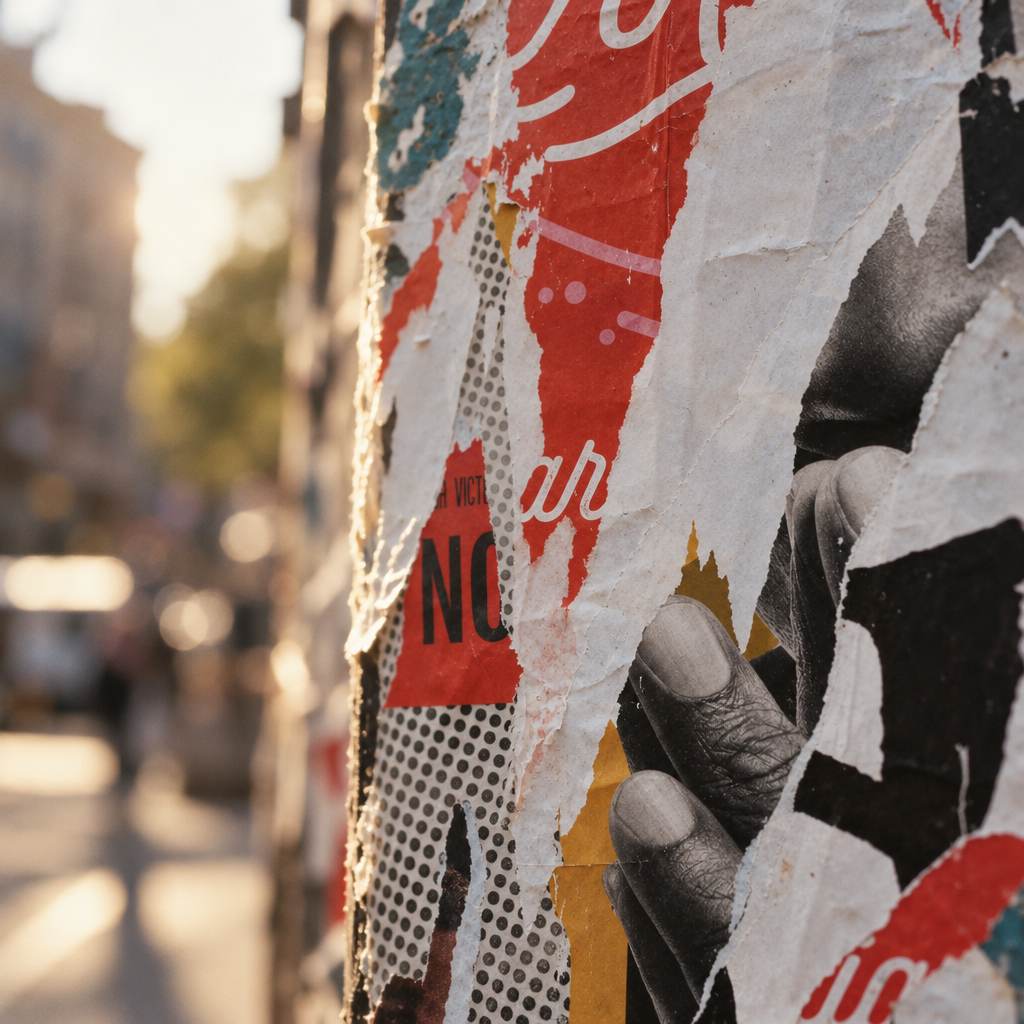
Sniffin' Glue and Other Rock 'N' Roll Habits for Punks ran monthly from July 1976 and lasted about a year. A year. Most bands can't get the van to start in that time. It left a crater anyway. Outsideleft called it a roadmap for writers, as much as the early punk bands were for anyone yearning to create. Damn right, and it's the part people skip. The zine reported the scene, sure, and then it handed out permission slips to everybody reading.
Look at what it was physically: a thing made by hand, by someone with something to say and no one to say it to. You could feel the fingers on it. You could tell a person had been in a room with it, probably a cold one, probably broke.
Perry, now, is a hard man to canonize, and he'd hate the attempt. A recent interview in Gimmie Gimmie Gimmie Zine opens by noting that few people embody punk's original spirit more than he does, "even if he'd probably roll his eyes at the suggestion." The headline carries his own verdict on the thing he cares about most: "That's the worst thing of all, for things to become boring and cliché."
Hold onto that line. You'll need it in about four paragraphs.
Meanwhile, in Los Angeles, a Drummer Makes Art
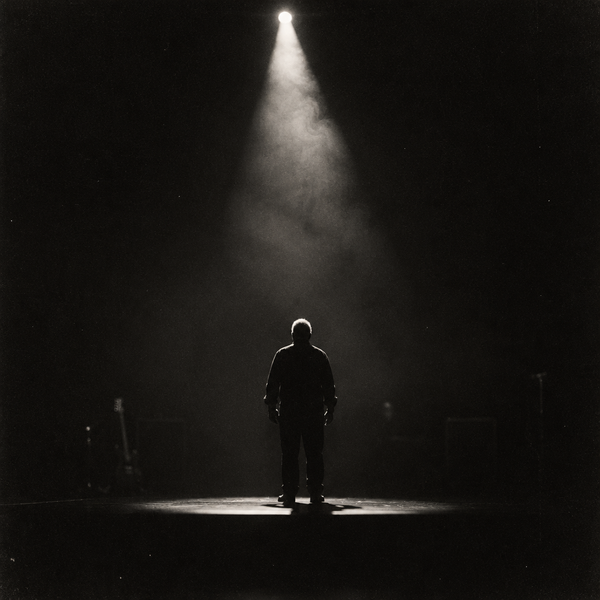
Tommy Aldridge is about as far from a photocopier as a man can get and still be holding sticks. The heavy rock drummer, a veteran of the Whitesnake machine, is the kind of player a Drumeo showcase describes as larger than life, and not only because of the showmanship. The hair gets a mention too. Respect.
In 2026 he announced Sonic Visions, his first art collection, made with the Los Angeles collective SceneFour. According to Blabbermouth, the idea is to transform decades of rhythm, power, and performance into a series of visual works. The first piece, "Off The Hook," came out in September. It springs from his interpretation of the drum work on Whitesnake's "Still of the Night," and per Metal Planet Music it aims to capture the energy, movement, and intensity of that performance and turn it into visual art.
I'll be straight about what the reporting does and doesn't tell us. It tells us a fair bit about process: coverage describes SceneFour using LED-lit drumsticks, motion capture, and long-exposure techniques to translate a drummer's movement into abstract visual art, what the collective calls a "musical fingerprint." Aldridge says in the coverage that when he looked at some of the test shots, "it was pretty amazing, really striking, and a beautiful thing to see." That's a drummer gawking at a picture of himself and liking it. Fair enough. Anyone claiming to know more than the process described is selling you something. I'm not, so I'll stick to the part I can stand behind.
The idea is a good one. Take something that lives for a few seconds in a sweaty room and happens once, a man hitting a drum, and pin it to a wall. Rhythm is the most disappearing art there is. It's gone the moment you've heard it. Wanting to give it a body is the same impulse as the stapler.
So Is This Rebellion or a Gift Shop?
The easy move now is to call the zine and the drum art twin acts of defiance against a sanitized digital culture, and I want to, God help me. Part of it holds. Both start from the belief that music should leave something you can touch. A world where a song is a thumbnail and a tiny gray progress bar has made a lot of us hungry for objects with weight, for sleeves and paper and ink and, apparently, framed visions of a Whitesnake drum fill.
So I won't hand Aldridge a leather jacket and a safety pin because he made a thing you can hang up. A limited art collection from a famous drummer lives in a very different economy than a zine sold for pocket change. One was built to be passed around until it fell apart. The other is built to be kept. I haven't seen the pricing or the edition sizes, and the coverage I've read doesn't dwell on them, so I'll leave the number-crunching to someone braver. But collecting and rebelling are two different itches. Sometimes they shake hands. Sometimes they just share a parking lot.
What the Two Have in Common (and It's Not the Haircut)
Strip off the costumes and here's what's left: Perry and Aldridge both insist the experience of music doesn't end at your ears. The zine said the scene is also words, also paper, also opinion, also you. The drum art says a performance is also shape, also motion, also something to stand in front of.
And both slam into the same wall, which is time. Perry's zine died in about a year, on purpose or by exhaustion, and the document survives. That's the best argument for it. It was too busy living to worry about becoming a brand. The test for Sonic Visions is whether it stays alive on its own terms or ends up as décor in a rich man's den, a very expensive way of saying "I like loud music."
I want it to pass. Heavy rock has always hungered to be physical, and a drummer who wants to turn his most punishing minutes into something you could walk around is no enemy of mine. Aldridge doesn't owe punk anything. He owes the work.
The Stapler Test
My yardstick for all of it, the zine, the drum art, the next thing some label tries to sell me as authentic: Did a person need to make it? Would it exist if no one paid? Does it have fingerprints?
Perry passed that test with a children's typewriter, a felt-tip pen, a pot of cow gum, and a photocopier. He'd roll his eyes at me for saying so, which is the most punk thing about him. Aldridge has his own test coming, and the verdict isn't in. I'm rooting for the sticks.
If you want to honor Sniffin' Glue, don't buy the T-shirt. Go make something ugly this weekend, something nobody can repost, and hand it to a stranger. Then see whether it's still boring and cliché on Monday. If it is, make another one.
References
- https://gimmiezine.com/2026/05/27/markp
- https://en.wikipedia.org/wiki/Sniffin%27_Glue
- https://blabbermouth.net/news/legendary-drummer-tommy-aldridge-discusses-off-the-hook-first-piece-from-sonic-visions-drum-art-collection-in-new-video
- https://officemagazine.net/noah-goes-punk-sniffin-glue
- https://www.theguardian.com/music/2019/dec/10/how-we-made-sniffin-glue-punk-fanzine
- https://metalplanetmusic.com/2026/09/tommy-aldridge-unveils-off-the-hook-first-piece-from-sonic-visions-drum-art-collection
- https://blabbermouth.net/news/legendary-drummer-tommy-aldridge-announces-debut-art-collection-sonic-visions
- https://rockcelebrities.net/tommy-aldridge-reveals-off-the-hook-first-piece-from-sonic-visions-drum-art-collection
- https://metaltabs.org/news/tommy-aldridge-unveils-art-collection-sonic-visions-combining-music-and-visual-expression
- https://mail.outsideleft.com/main.php?story=smell-the-glue
Models used: gpt-4o, claude-sonnet-5-5, claude-sonnet-5, gpt-image-2.5-sunburst