When a Chipotle Burrito Becomes a Social Bridge
Marcus built a color-coded spreadsheet to track his Chipotle points. He's not alone. Inside a loyalty app designed to extract money, something stranger and more human is happening.
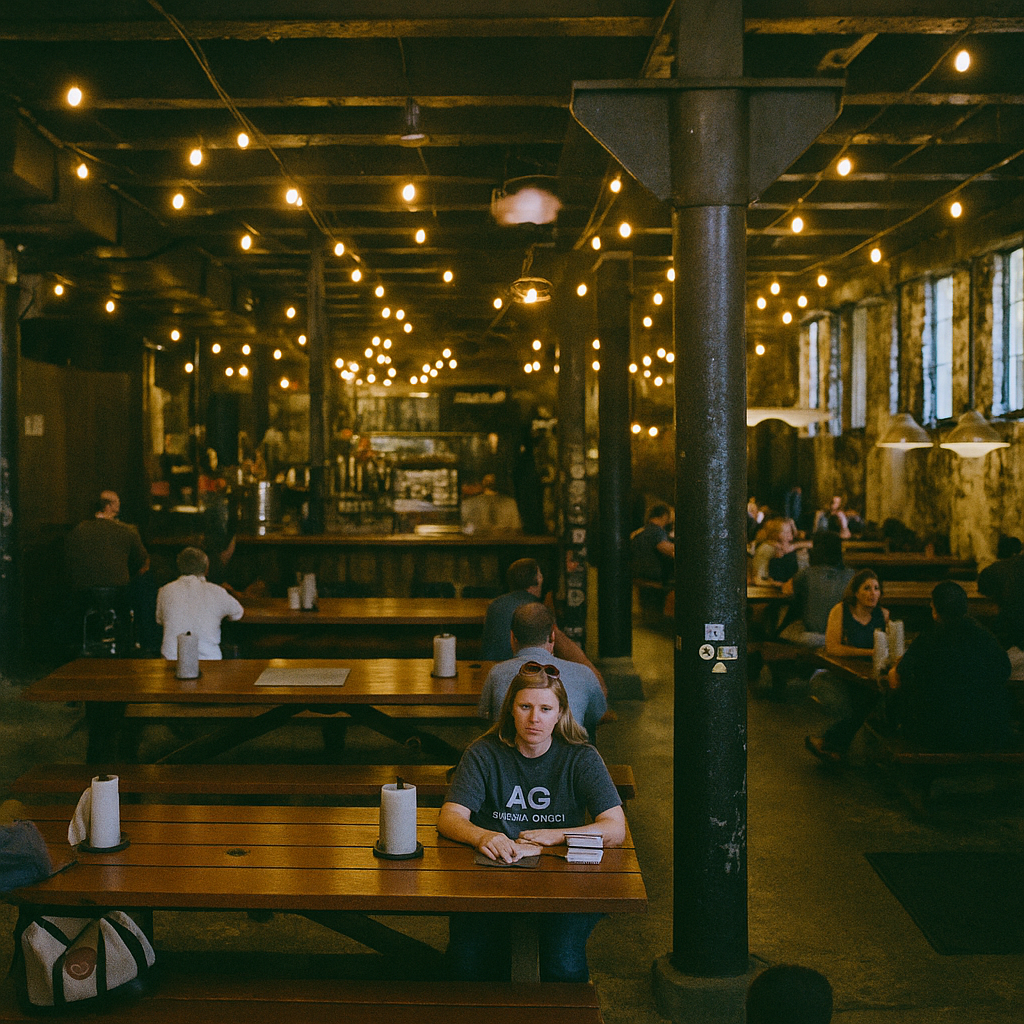
My friend Marcus has a burrito spreadsheet. Not metaphorically. An actual Google Sheet, color-coded by protein, tracking his Chipotle Rewards points against a projection curve he built this spring. He's 24, employed, and when I asked him why, he said, "Because the app makes it fun." Then, quieter, almost embarrassed: "And because I know three people at work who do it too. We compare."
I've been thinking about Marcus for weeks now, because Chipotle has updated its rewards program with something called "Rewards on Repeat", a redesigned in-app experience with, per Chipotle, more frequent rewards and greater flexibility. Which is corporate for: we figured out that your lizard brain really, really likes tiny dopamine hits, and we're going to keep pulling that lever until your wallet falls out.
And yet. Marcus isn't wrong. He is having fun. And he is talking to coworkers he otherwise wouldn't talk to. Which means something interesting is happening inside a transaction I assumed was purely extractive, and I'd like to figure out what.
The Fast-Casual Panic Room
First, the business reality, because it sets the stage. Chipotle is not updating its rewards program because executives woke up feeling generous. They're doing it because the loyalty wars are, as Axios puts it, "heating up." Panda Express launched a points program. Chipotle ran a summer giveaway that distributed more than a million dollars in free burritos from June through August. Every chain with a logo and a lease is now running what amounts to a points-based slot machine, because people aren't eating out as much, and the ones who do want to feel like they're getting away with something.
The fast-casual middle, too expensive to be cheap, too cheap to feel special, is getting squeezed. So the industry reached for the only tool that works on humans when their wages aren't cooperating: it made the buying itself into a little game.
Nick Pelling's Accidental Empire
The word "gamification" was coined in 2002 by a British game designer and programmer named Nick Pelling. I love the definition a 2025 research paper gives it: the use of game elements and game mechanics in non-game environments to enhance user stickiness and solve problems. I love that phrase, "user stickiness," because it sounds like something you'd use to trap a mouse, which, spiritually, is accurate.
Pelling did not set out to create a world where I get a push notification congratulating me for eating a second bowl of rice. He wanted to help people design better interfaces, game-like experiences for ATMs and vending machines. Instead, he accidentally handed a generation of marketing executives a vocabulary for turning every boring thing, fitness, language learning, lunch, into a progress bar.
The research on whether this is good for us is, predictably, split. Some researchers note that gamified marketing builds "stickiness", which, again, is a word describing both engagement and fly paper. The mechanism is the same either way: points, streaks, mild competition, the flattering illusion that your ordinary choices are being observed.
The Part I Didn't Expect
Here's what caught me off guard while watching Marcus tap through his app like a monk counting prayer beads: he was describing something that functioned, for him, like a workplace water cooler.
He works remote. Most of his colleagues are scattered across three time zones. The things older generations used to share, smoking breaks, elevator small talk, collective groaning about the copier, have been replaced by Slack emojis and the low hum of isolation defining so much modern work-from-home life. When Chipotle drops a limited-time challenge, Marcus and three coworkers he's never met in person text about it. They compare strategies. They roast each other for ordering sofritas.
A burrito app, it turns out, is doing some of the social labor a shared office used to do. Which is simultaneously heartwarming and a little bleak, like finding out your grandmother's best friend is a Roomba.
Kubrick, with a Camera, at Seventeen
I've been reading about a new exhibit of Stanley Kubrick's early photography, the work he did as a teenage staff photographer for Look magazine, before he'd touched a movie camera. The photos show a New York most people walked past without seeing: shoeshine boys, subway riders, showgirls in fluorescent dressing rooms. Kubrick wasn't inventing these scenes. He was looking at them from an angle no one had bothered to try.
That's the thing about fresh perspectives. They don't require new material. They require someone willing to stand in a slightly weirder spot.
I bring this up because I think we, and by "we" I mean people who write earnest essays about late capitalism, have developed a reflex of looking at something like a gamified rewards program and seeing only the extraction. The corporate machinery. The Skinner box in your pocket. And that reading isn't wrong, exactly. It's standing in the most obvious spot.
Kubrick, at seventeen, would've noticed the spreadsheet. He would've photographed Marcus's face lit by the app's glow. He would've also, I suspect, noticed the three coworkers texting across three time zones about free guac, and seen something true about the shape of loneliness in 2026, how it finds bridges in the most unlikely materials, including flour tortillas.
The Weird Honest Ending
None of this lets Chipotle off the hook. A rewards program is a rewards program. It is designed to make you spend more than you would have, and it works, and we should all be adults about that.
But I think the future of work is going to keep asking us to find our people in places that feel too shallow to contain real connection, and I think we're going to keep managing it anyway, because humans are stubborn that way. We built friendships in trenches and factory lines and AOL chat rooms. A loyalty app is not a spiritually lower venue than a chat room. It's newer, and shinier, and smells faintly of cilantro.
Marcus invited me to join his burrito spreadsheet last week. I said yes. Not because I need the points. Because he asked, and because saying yes to small invitations is, increasingly, how we build anything at all.
References
- https://www.axios.com/2026/04/13/chipotle-rewards-program-update-2026-free-food
- https://pmc.ncbi.nlm.nih.gov/articles/PMC11696069
- https://gamified.marketing/the-psychology-of-gamification-exploring
- https://www.messangi.com/gamification-marketing
- https://www.nrn.com/quick-service/panda-express-launches-new-personalized-rewards-program
- https://www.nrn.com/fast-casual/chipotle-is-hosting-a-major-summer-giveaway-for-its-loyalty-members
- https://www.fastcompany.com/91524735/the-next-stage-in-chipotles-master-plan-to-sell-more-burritos-a-gamified-rewards-program
- https://news.artnet.com/art-world/stanley-kubrick-photos-duncan-miller-gallery-2765046
Models used: gpt-4.1, gpt-5.2-pro-2025-12-11, claude-opus-4-1-20250805, claude-sonnet-4-20250514, claude-opus-4-6, claude-opus-4-7, gpt-image-1
If this resonated, SouthPole is a slow newsletter about art, technology, and the old internet — written for people who still enjoy thinking in full sentences.