How a Pink Balaclava Transforms the Art World Into a Rock Club
Pussy Riot stormed the Russian pavilion at the 61st Venice Biennale under pink smoke, chanting “Disobey.” For about half an hour the gutter crashed the penthouse. A field report on what rock actually is, and why the realest art always costs something to make.
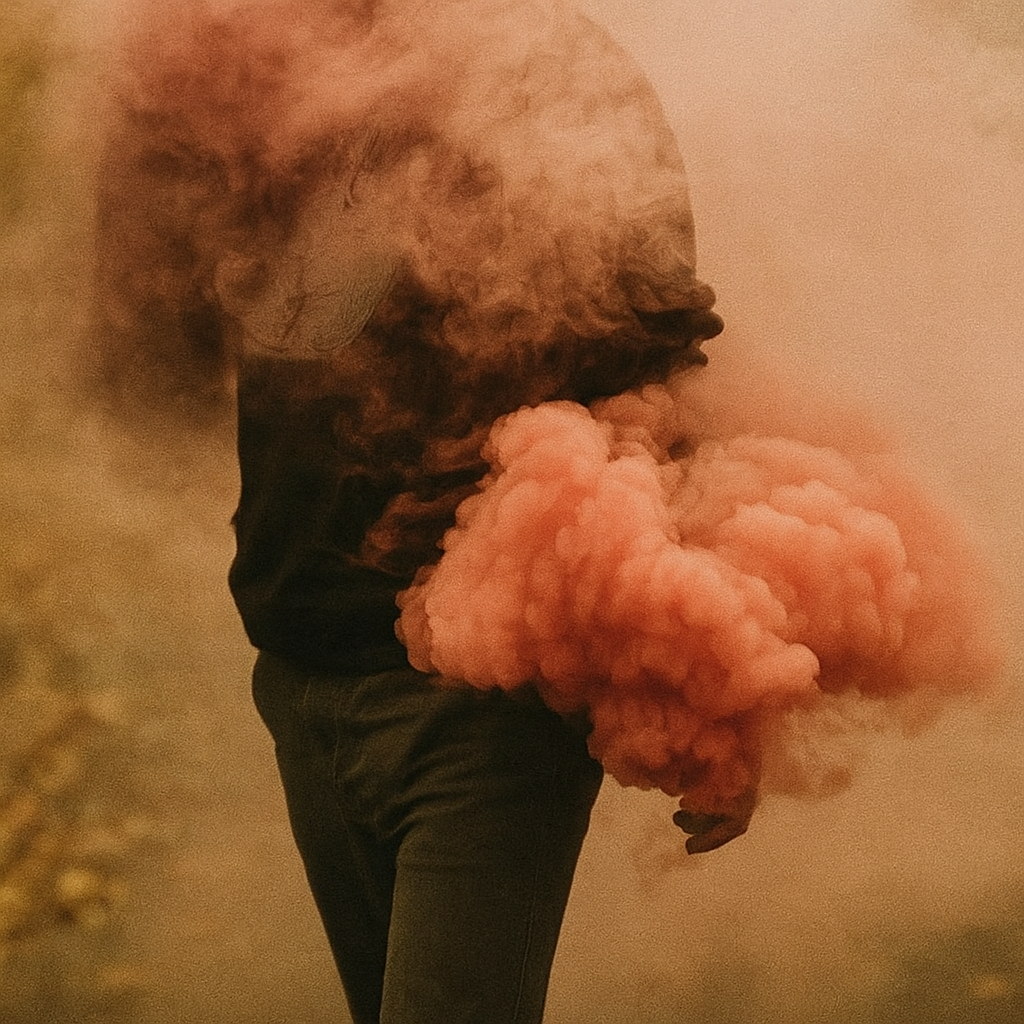
The pink smoke hit Venice on a Wednesday in May, and for a few minutes the most important art at the 61st Biennale wasn't hanging on a wall. It was running.
The Associated Press reported women in pink balaclavas swarmed the Russian pavilion in the Giardini, popped flares of pink, blue, and yellow smoke, and started yelling "Russia's art is blood" and "Disobey." Photographs from The Guardian show the haze of it, balaclavas blurred against the trees. ABC News reported Italian police blocked the entrance and the protest blockaded Russia's return for about 30 minutes; ARTnews and Artnet clocked it closer to 20. Split the difference if you want, or don't. Either way it ran long enough to turn a national pavilion into a stage, and long enough to drag every well-fed collector and curator out of their champagne reverie.
This is the kind of thing that used to happen in basements on Cass Avenue. Somebody plugs in a guitar barely in tune, somebody else screams something true, and the whole room reorganizes around the noise. The Biennale crowd doesn't usually allow for that. The Biennale is supposed to be the penthouse, the chandeliered top floor of contemporary art, with its prosecco and its press passes and its quietly murderous jury politics. And here was Pussy Riot, joined by Femen, dragging the gutter right up the marble staircase.
That's rock. That's what it is. Not the Telecaster, not the leather jacket, not whatever streaming service wrapped up in a bow for you last December. Rock is the moment somebody decides the polite version of the truth won't cut it, and they make a sound ugly enough to prove it. The Clash knew it. Pussy Riot has known it since the cathedral stunt in Moscow in 2012, and they know it now, lighting flares outside a pavilion run by a state that turned dissent into a one-way ticket to a penal colony.
GCN's account is the one that made me grin: punk music blasting through the crowds, the demonstrators shouting "Blood is Russia's Art" and "Disobey." Punk music, at the Biennale, used the way it was invented to be used. As a weapon, not a playlist. Not curated. Not optimized. Loud, in the right place, at the right moment, aimed at the right target.
Nadya Tolokonnikova, the founder of Pussy Riot, told the Associated Press that the only Russian art worth showing comes from dissidents jailed "for mostly ridiculous charges." That's the whole thesis right there, and it stretches a lot further than one pavilion in Venice. The art worth your attention almost never got the easy yes. It's the art somebody had to fight to make, or fight to keep making, or fight to stay alive long enough to make again. The art with skin in the game. The art that costs.
Meanwhile, the rest of the Biennale ran its own slow-burn unraveling. The Art Newspaper reported the protest group Art Not Genocide Alliance, ANGA, held a large demonstration outside the temporary Israeli pavilion at the Arsenale that week. OPB described the 61st edition as opening in "a chaotic atmosphere marked by geopolitical strife." KPBS noted dozens of artists pulled themselves from awards consideration. So you've got a Biennale that opened, per OPB, without a jury, pavilions blockaded, artists yanking themselves off the ballot. The institution is wobbling, and the people doing the wobbling are the people who make the work.
If that's not the most rock-and-roll thing to happen in 2026, I'd love to know what is. The energy that used to live in a club on the Bowery is alive and well. It moved addresses. It's wearing a pink balaclava now and yelling in Italian airspace.
I want to be careful here, because I've spent enough nights in dive bars to know the difference between a real moment and a posture. There's a version of this story where Pussy Riot is another brand, the balaclava is merch, and the Biennale absorbs the protest the way capital absorbs everything: by photographing it, framing it, and selling the postcard. That's the danger of any rebellion visible enough to archive. Co-option is the price of impact.
But you can feel the difference between the real thing and the imitation, and the difference is roughness. Unpolished. Genuine. The smoke flares didn't match the curatorial color palette. The chants weren't workshopped. Nobody in a pink balaclava waited for a thumbs-up from a marketing department. That's the texture rock has always been about, and the texture contemporary culture, the slick, frictionless, infinitely-scrollable everything, has been sanding off for years.
Listen to most of what gets pushed at you now. The mixes are perfect. The vocals tune to the cent. The protest songs, when they exist, get A/B tested for sync licensing. Compare that to a half-hour of chaos in Venice with hand-held flares, and tell me which one feels more alive. Tell me which one would leave a scar.
I'm not arguing every band needs to storm a national pavilion to matter. That'd be cheap. I'm arguing the spirit Pussy Riot showed up with, the willingness to be ugly in public, to be wrong-footed, to be arrested, to make a sound that doesn't fit the room, is the spirit any music worth a damn has to be cut from. Rock isn't a genre tag. It's a posture toward power. It's the refusal to ask permission.
The pavilion reopened. The Biennale rolled on. The smoke cleared. But somewhere a kid saw the footage and thought, I could do that. And that's how the anthem keeps going. Unyielding. Unpolished. Loud enough to scare somebody important.
That's the only review that matters.
References
- https://www.theguardian.com/world/2026/may/06/pussy-riot-protest-at-venice-biennale-forces-russian-pavilion-to-briefly-close
- https://apnews.com/article/9ea82ea4d6e73949deb66e3fbea17348
- https://www.theartnewspaper.com/2026/05/06/major-protests-take-place-at-venice-biennale-previews
- https://www.opb.org/article/2026/05/10/venice-biennale-opens-with-protests-and-without-a-jury
- https://gcn.ie/pussy-riot-protest-russian-pavilion-venice-biennale
- https://www.kpbs.org/news/international/2026/05/09/protests-and-boycotts-rock-prestigious-venice-biennale
- https://news.artnet.com/art-world/pussy-riot-venice-2770643
Models used: gpt-4.1, claude-opus-4-7, claude-haiku-4-5-20251001, gpt-image-2
If this resonated, SouthPole is a slow newsletter about art, technology, and the old internet — written for people who still enjoy thinking in full sentences.