Grandma's Game Boy Camera Is on the Video Call
A 1998 cartridge camera, four shades of gray, and thousands of strangers who refuse to let it die. The Game Boy Camera keeps finding new outlets to plug into, and every mod builds a bridge between generations. Community, expressed in solder.
Footage is making the rounds from a rap concert: grainy, ghosted, four shades of gray that look less like pixels and more like ash blown across a windshield. Michael Rosa, who calls himself a "digital future nerd," shot the whole show on a 1998 Game Boy Camera. The rappers look like they're being summoned through a séance. And somehow, this is some of the most honest concert footage I've seen in years.
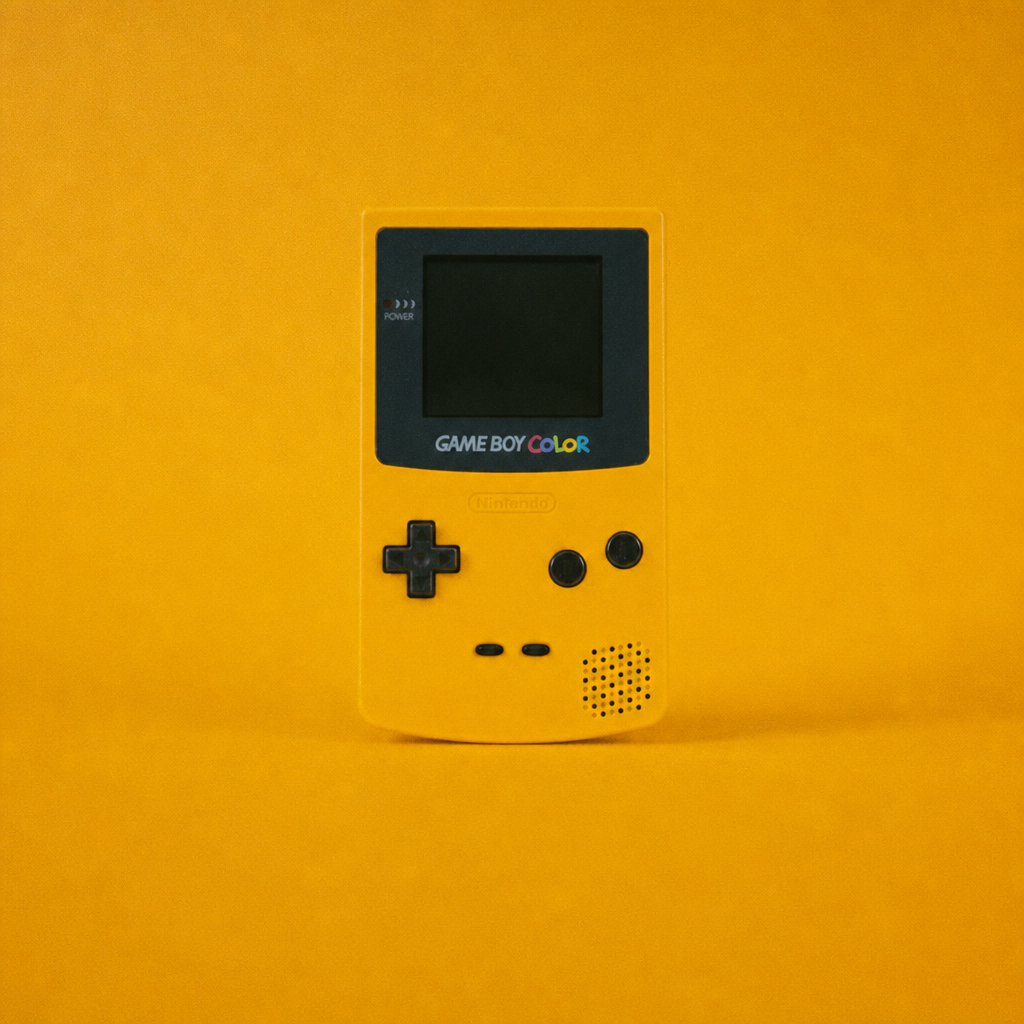
That's the trick of the Game Boy Camera, and it's why the thing refuses to die. Released in Japan as the Pocket Camera in February 1998, it was, at the time, the world's smallest digital camera: a 16-kilopixel eyeball glued to a Game Boy cartridge. Nintendo discontinued it in late 2002 and shuffled it into the drawer where all forgotten peripherals go to nap. But it never slept. Over two decades later, it remains the strangest kind of living heirloom: a piece of hardware whose community keeps finding new outlets to plug it into.
A Cartridge That Keeps Getting Adopted
Consider the timeline. In 2022, Christopher Graves fused a Game Boy Pocket with a mirrorless body to make the sleek, oddly beautiful "Game Boy Camera M." That same year, a maker published a 3D-printable adapter that let the sensor mount CS lenses, opening the door to far larger optics. Graves went further the next year, shrinking the whole camera down to fit inside a regular Game Boy cartridge shell (2023): a nesting-doll of engineering. Then in July 2024, Epilogue's GB Operator dock turned the Game Boy Camera into a working PC webcam. Other developers have since created adapters to transfer photos to smartphones.
Nobody asked for any of this. Which is exactly the point.
The Game Boy Camera is a case study in what happens when people love a piece of hardware into new shapes with no financial reason to bother. One Redditor recently gutted an old Logitech optical mouse and rebuilt it into a tiny camera modeled after the Game Boy's aesthetic. He had nothing to sell. He was moved. That's the currency here: being moved enough to solder.
Nostalgia Works Like a Protocol
The obvious read says we're in a nostalgia loop, and sure, we are. But nostalgia in tech differs from nostalgia in, say, fashion. When ModRetro released the Chromatic (a modern Game Boy Color reinterpretation using FPGA chips to replicate the original silicon at the hardware level), reviewers pointed out the new machine will likely outlast the plastic-and-solder original. The Chromatic works as a preservation act dressed up as a toy.
Some modern phones chase the same instinct. They keep the headphone jack, the microSD slot, the physical shutter button: features other flagships have quietly buried under glass. These choices serve the people who remember when a camera clicked, when audio required no dongle, when your device trusted you with buttons.
The Game Boy Camera crowd and the people buying these phones are, spiritually, the same crowd. They found different altars.
What Grainy Photos Do
The Game Boy Camera captures 128 by 112 pixels in four shades of gray, a resolution starved enough to work less like a camera and more like a filter for meaning. You cannot take a boring photo with it. The camera won't let you. Every image becomes a hieroglyph. Every face becomes a mood.
Modern smartphone cameras do the opposite. They capture too much detail, and the eye starts editing things back out: smoothing skin, boosting sky, correcting the color of a taco until it looks like a stock photo of a taco. High fidelity is a kind of forgetting. Low fidelity is a kind of remembering.
And remembering, it turns out, is a group activity. When someone transfers their Game Boy Camera photos to a phone, something quietly generational happens. A kid learns a picture doesn't have to be sharp to be true. A parent remembers their first digital photo probably looked exactly like this: a fuzzy self-portrait taken in a bedroom in 1999, uploaded to a family PC that made a dial-up handshake sound like a robot clearing its throat.
The Intergenerational Group Chat
The most underrated feature of the revival: it makes technology talkable across ages. A grandparent who once wrapped a Pocket Camera as a Christmas gift can now watch a grandchild plug the same cartridge into a webcam dock and appear, floating and pixelated, on a video call. That's a shared vocabulary.
Compare that to explaining TikTok's algorithm to your uncle. The Game Boy Camera has become a translation layer: a device old enough to be sentimental, new enough to be functional, weird enough to require conversation. You can't use it silently. Someone always has to explain something, and in the explaining, a bridge gets built.
This is what the best retro tech does. It gives people a reason to stand next to each other and look at the same screen, even if the screen shows 16 kilopixels of nothing.
A Small Assignment
If you have a drawer with an old peripheral in it (a camera, a Minidisc player, a first-generation iPod nano with the click wheel worn smooth), take it out this week. Plug it in. See if it still works. If it does, show it to someone at least fifteen years younger or older than you and ask what they think. If it doesn't, look up whether some obsessive on the internet has already figured out how to revive it. (They almost certainly have.)
The Game Boy Camera survived because thousands of strangers, working in garages and Discord servers and Reddit threads, decided together that four shades of gray were worth keeping around. Nintendo had nothing to do with it. Call it community, expressed in solder.
And honestly? The photos still look great.
References
- https://www.tomshardware.com/video-games/retro-gaming/you-can-now-use-the-game-boy-camera-as-a-webcam-for-your-pc-26-year-old-camera-gets-new-life-with-the-sleek-gb-operator-dock
- https://www.techradar.com/cameras/modder-shrinks-legendary-game-boy-camera-down-to-the-size-of-an-original-gameboy-cartridge
- https://en.wikipedia.org/wiki/Game_Boy_Camera
- https://petapixel.com/2022/12/06/3d-printed-adapter-lets-the-game-boy-camera-use-interchangeable-lenses
- https://www.engadget.com/game-boy-camera-mirrorless-camera-conversion-162844001.html
- https://www.pcgamer.com/hardware/webcams/the-game-boy-camera-can-now-be-used-as-a-webcam-providing-16000-pixels-of-grainy-black-and-white-glory
- https://petapixel.com/2022/07/14/game-boy-pocket-is-transformed-into-stylish-mirrorless-camera
- https://www.timeextension.com/news/2026/03/you-can-now-transfer-game-boy-camera-photos-to-your-smartphone
- https://www.ifixit.com/News/106916/modretro-chromatic-better-than-the-game-boy-color-it-emulates
- https://www.pcgamer.com/hardware/one-techie-has-built-a-camera-out-of-an-old-logitech-gaming-mouse-and-its-inspired-by-the-game-boy-camera
- https://www.digitalcameraworld.com/cameras/digital-cameras/guy-shoots-rap-concert-using-a-gameboy-camera-dont-believe-me-read-this
- https://www.theverge.com/tech/952173/epilogue-gb-operator-game-boy-camera-ios-android-app-iphone
- https://www.theverge.com/tech/952245/sony-xperia-1-viii-review
Models used: gpt-4.1, claude-opus-4-7, claude-haiku-4-5-20251001, claude-fable-5, gpt-image-2