Dave Has Been Squinting at Brake Assemblies Since 1994
Ford spent three years and billions learning what its quality consisted of, and one key ingredient turned out to be human: gray beard engineers who hear rattles no sensor can name. Biscuit on craft, taste, and the wisdom nobody ever wrote down.
There's a specific kind of joy in watching a band's original drummer walk back onstage after the fill-in couldn't land the pocket. The crowd knows. The bassist knows. The song, suddenly, knows. Whatever was slightly off (a shimmery wrongness nobody could name) snaps into alignment, and everyone exhales at once.
I thought about that feeling all week, because Ford performed the corporate equivalent of calling the original drummer back to the kit.
According to TechCrunch, Ford has hired roughly 350 veteran engineers over the past three years, many of them former employees, others brought over from suppliers, after determining artificial intelligence and automated systems couldn't hit the quality bar on their own. Assembly Magazine reports a similar number (some 300 experienced engineers and technical specialists) brought back specifically to work alongside the AI systems meant to replace them. Forbes framed the whole detour in blunter arithmetic: three years, billions of dollars, and a quality crisis that ended when the "gray beards" came back through the door.
I love this story. AI didn't exactly fail here; something more interesting happened. A company tried to skip a step, then admitted it (to its enormous credit) and went knocking on the doors of the people who knew where the step was.
The Wisdom That Doesn't Fit in a Training Set
Here's what fascinates me about veteran engineers, especially the ones who spent decades listening to door panels close and running their thumbs along weld seams. What they know lives somewhere past knowledge in the usual sense. Music producers call it "ears." You can teach someone the frequencies where a mix goes muddy, but you can't teach them to hear muddy. That comes from a thousand nights in a thousand rooms, learning by accident.
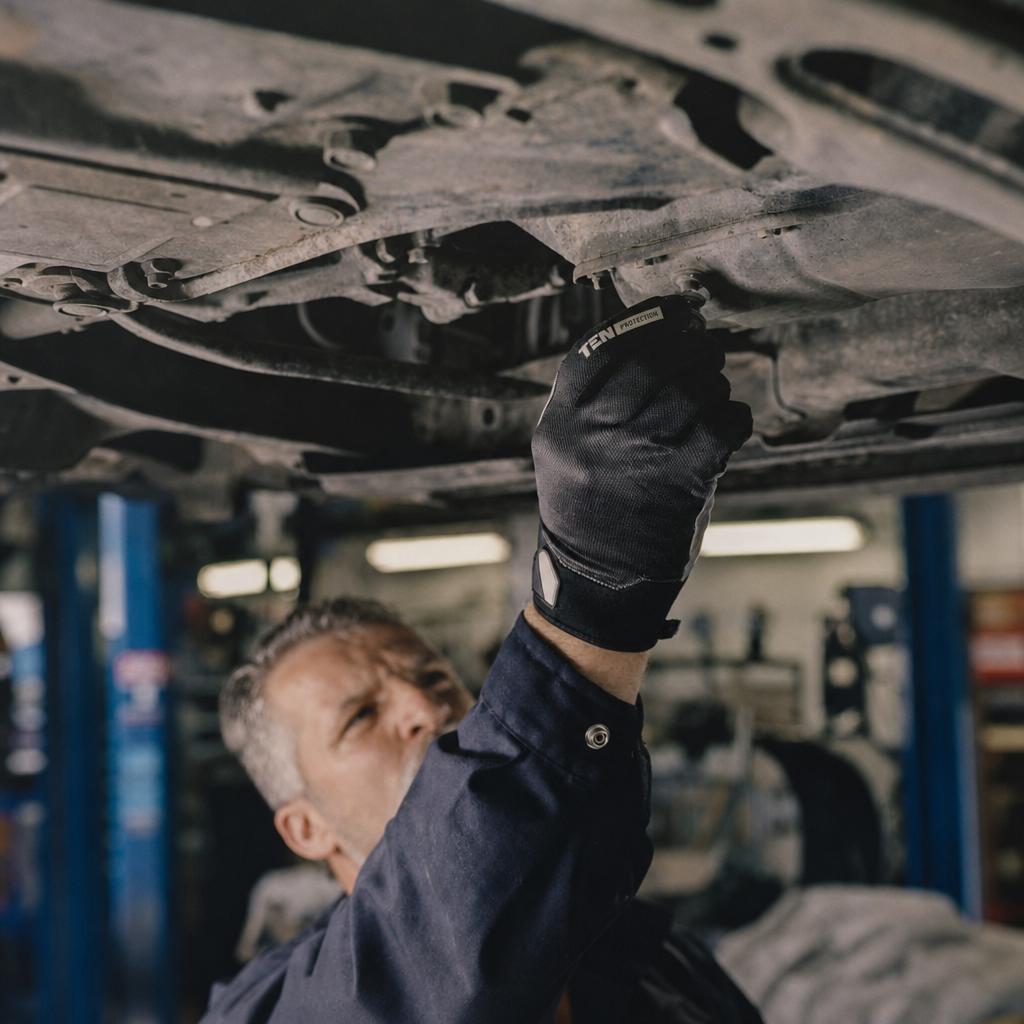
A gray beard engineer at Ford has probably felt a chassis flex in a way no spec sheet could describe. They've heard the specific rattle that means a clip is seated wrong three assembly stations upstream. They know a certain plastic gets brittle if the paint booth runs hot on humid Tuesdays in July. Spec sheets can't hold this. Think of it as an algorithm trained on a career: most of it on the shop floor, most of it undocumented.
AI models, brilliant as they are, need the training data to exist. And a huge share of manufacturing wisdom never made it onto paper. It lived in the muscle memory and side-eye of people the industry, for a hot minute, decided were expensive and replaceable.
The Steely Dan Principle
I want to invoke Steely Dan here, because I think Donald Fagen and Walter Becker figured out something Ford is now rediscovering. The Dan famously ran through session musicians like popcorn: they'd hire the best players in Los Angeles, listen to a take, and if the feel was 2% off, they'd try someone else. Sometimes they'd cycle through as many as seven guitarists to get one solo.
They understood the distance between technically correct and right is enormous, and only a human with taste can spot it. The AI systems Ford deployed could measure tolerances to a thousandth of a millimeter. But "does this door feel like a Ford door when it shuts?" is a Steely Dan question. It requires someone in the room going, "nope, try it again, but with feeling."
Tom's Guide framed it as a rare example of a company reversing course on an AI-driven layoff, which is diplomatically true, but I think it undersells what's happening. Reversal feels too small a word. Ford spent three years learning what its own quality consisted of, ingredient by ingredient, and one of the key ingredients turned out to be a person named Dave who's been squinting at brake assemblies since 1994.
Internet Culture Already Knew This
If you've spent any time in the deeper corners of online enthusiast communities (vintage synth forums, mechanical keyboard subreddits, the surprisingly intense world of espresso machine restoration), you already know the shape of this story. Every one of these communities eventually converges on the same wisdom: the old guy who's been doing this since before it was cool has answers no wiki can replicate. YouTube tutorials get you 80% of the way. The last 20% is a phone call with a stranger in Ohio who's been rebuilding these carburetors for forty years and knows your problem before you finish describing it.
The internet, at its best, serves as a Rolodex for exactly these people. Ford, I think, briefly mistook the Rolodex for the people themselves. Now they seem to remember, and the remembering cost them, per Forbes, enough money to fund a small nation's music scene forever.
Design Is Diplomacy
The reporting was plain: Ford determined AI alone couldn't achieve the quality standards it wanted. That word, alone, does enormous work in the sentence, and it holds the whole story.
Look at Ford's current move. The AI stays. The humans return. The gray beards come back to teach the algorithms, correct them, catch what they miss, and (I suspect) feel things the algorithms will never feel. It's an optimistic outcome, if you squint right: a collaboration where the machine handles the impossible math and the human handles the impossible taste.
Good design has always been diplomacy between constraints. Between weight and strength. Between cost and beauty. Between what's possible and what's pleasant. It turns out the diplomacy between silicon judgment and human judgment is one more dimension of the same negotiation, and we're only now getting the hang of it.
The Takeaway, in Practical Form
If there's something to carry out of the Ford story into your own week, it's small and unglamorous: find the gray beard in whatever you're doing. Every field has one. The receptionist who's been at the firm for twenty years and knows which partner reads their own email. The neighbor who's lived on the block since the 70s and knows which trees flood the basement. The friend who remembers your exes better than you do.
Ask them things. Buy them coffee. Write down what they say.
Machines and people will build the future together; that much is settled. The question is only whether we remember to invite the right people to the table before the assembly line starts moving.
Ford remembered. That's a great day at the office.
References
- https://techcrunch.com/2026/06/28/ford-rehires-gray-beard-engineers-after-ai-falls-short
- https://www.forbes.com/sites/joetoscano1/2026/06/30/ford-hiring-350-engineers-after-ai-failed-shows-human-value-in-ai-era
- https://www.dexerto.com/entertainment/ford-rehires-veteran-engineers-after-ai-fails-to-meet-quality-standards-3380736
- https://www.tomsguide.com/ai/ford-replaced-hundreds-of-engineers-with-ai-now-its-bringing-them-back-after-quality-problems
- https://dev.ua/en/news/ford-1782746292
- https://www.assemblymag.com/articles/100186-ford-rehires-veteran-engineers-to-improve-ai-vehicle-quality
Models used: gpt-4.1, claude-opus-4-7, claude-haiku-4-5-20251001, gpt-image-2