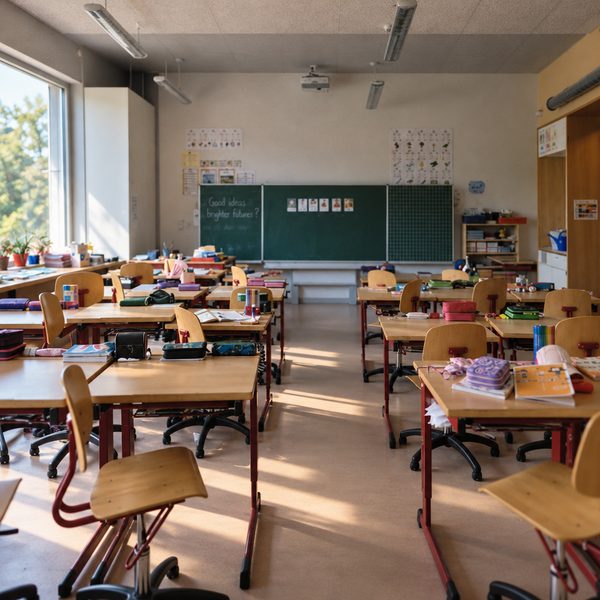
How We Turn Their Architecture Into Dance Floors
In Bucharest, queer communities are taking over abandoned communist-era buildings — turning architecture built for control into spaces for dancing, belonging, and something the original architects never intended.
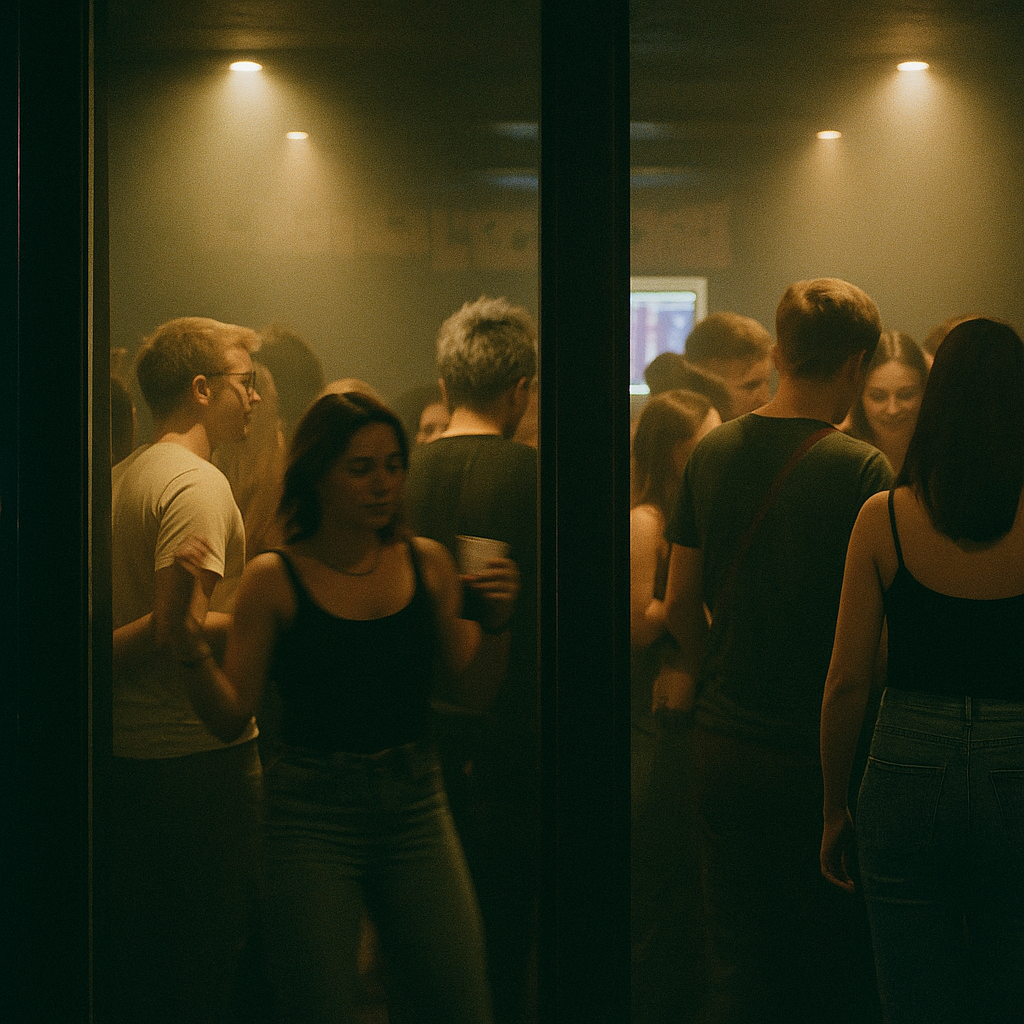
There's something almost comedically perfect about a group of queer partygoers dancing in a building designed to project the absolute conformity of the state. Like wearing your homophobic uncle's hand-me-down jacket to Pride, you didn't ask for it, but damn if you look good in it.
In Bucharest, Romania's capital, this kind of poetic repurposing is happening in real time. Abandoned communist-era buildings, the kind with all the architectural warmth of a filing cabinet, are being transformed into spaces where queer communities gather, dance, and exist loudly in rooms built to make people small. The short film Waves Penetrate Me Fiercely, created by musician and sound designer Geo Aghinea and directed by Irina Alexiu, documents exactly this: a network of queer partygoers occupying abandoned communist-era buildings across the Romanian capital, turning concrete relics into sites of liberation. If the walls could talk, they'd probably need therapy.
The Architecture of Forgetting
Bucharest wears its history like mismatched layers, Belle Époque architecture alongside communist-era buildings and the massive Palace of the Parliament, a building so absurdly large it dominates the skyline like a concrete mountain. After the Red Army entered Romania in 1944, Soviet pressure helped bring the communists to power; in the late 1940s and the decades that followed, the regime radically reshaped Bucharest's monuments and public spaces to project state power. The result was a cityscape designed to communicate power, order, and the crushing banality of ideological certainty.
These remnants of the socialist era, the large-scale architecture and urban spaces of the Eastern European Bloc, still constitute what ArchDaily calls "a challenging legacy." Challenging is one word for it. Another might be: opportunity.
Because here's what happens when a regime builds structures meant to last forever but an ideology doesn't: you get ruins. And ruins, as any teenager who's ever snuck into an abandoned warehouse can tell you, are the most democratic spaces in a city. Nobody owns them emotionally. They're blanks waiting to be filled.
Backrooms as Front Lines
The queer nightlife scene in Bucharest didn't materialize from nowhere. The city has been building toward this moment through years of community formation. Today, Bucharest has a small but growing network of queer-friendly venues where the community finds room to breathe, even as LGBTQ+ people in Romania still face harassment and limited legal protections outside those spaces. Established venues like Apollo111 and Queens Club anchor queer nightlife in the more visible parts of the city, giving the community fixed coordinates on the map.
But the backroom parties documented in Aghinea's film operate on a different frequency. These aren't clubs with Yelp reviews and Instagram geotags. They're temporary occupations of forgotten space, pop-up ecosystems of sound, sweat, and solidarity existing for a night and dissolving like a fever dream you can only half-remember on Monday morning.
The aesthetic isn't polished; it's honest. Lighting rigs made from whatever's available. DJ setups balanced on socialist-era machinery. It says: we are here, we made this from what you left behind, and it's more beautiful than anything you intended.
Reclamation as Design Practice
What's happening in Bucharest connects to a broader movement across Romania and Eastern Europe to reimagine post-industrial and post-socialist spaces. The EUNIC Romania programme "Guest and Host: Reclaiming Post-Industrial Futures" has been exploring forgotten industrial heritage sites across the country as spaces for artistic collaboration and community building. The initiative, structured as a multi-residency project, invites artists and communities to engage with these sites, not as museums of failure, but as raw material for new futures.
There's a word that keeps appearing in these conversations: reclaiming. It's doing a lot of heavy lifting. Reclaiming suggests something was yours to begin with, or should have been, or that ownership is less about deeds and more about use. When queer communities move into abandoned socialist buildings, they're not restoring them. They're not preserving them. They're arguing, through presence, through bass frequencies, through the simple act of dancing, space belongs to whoever needs it most.
The research exhibition "Socialist Architecture in Bucharest," based on never-before-seen original documents, drawings, photos, and plans from the Horia Maicu Archive, offers a scholarly frame for understanding these structures. But the partygoers in Aghinea's film are conducting their own research, embodied, kinetic, loud. They're asking the same question the architects ask, with better music: what do we do with what's been left to us?
The Humor in the Haunting
I keep coming back to the comedy of the situation, not because it's funny in a ha-ha way, but because it's funny in a cosmic, structural way. Buildings associated with ideological uniformity now host gatherings that visibly invert the purposes those spaces once served. Spaces built to project state power run on a single generator and someone's Ableton setup. The grandchildren of people told to be invisible throw parties so vivid they become short films.
Romania, like much of Eastern Europe, is still navigating the tension between its socialist architectural inheritance and its democratic present. Bucharest's communist blocks sit alongside remnants of its earlier elegance, creating a cityscape resembling a timeline someone forgot to organize. The queer community's occupation of these spaces adds another layer, not erasing history, but annotating it. Writing in the margins of someone else's blueprint.
And maybe that's the deepest insight here. The best comedy has always been marginalia, the note scribbled in the margin that's funnier than the textbook. Queer nightlife in Bucharest's abandoned backrooms is exactly that: a brilliant, defiant footnote to a history that tried to leave certain people out of the story entirely.
What Echoes Back
The echo in an empty communist-era building is remarkable. Sound bounces off concrete and returns to you changed, warmer, stranger, more layered than what you sent out. A decent metaphor for what's happening in Bucharest right now. A generation sends its voice into spaces never meant to amplify it, and what comes back is something the original architects couldn't have imagined: community, art, joy, and the stubborn insistence abandoned doesn't mean useless.
Some of these gatherings are documented, many are not, and the buildings themselves remain in unstable states of reuse, neglect, redevelopment, or decay. Either way, the echo is already out there, bouncing off walls across Eastern Europe, reaching ears needing to hear it.
Laughter, music, presence, these are the shortest distances between strangers. And in Bucharest's backrooms, distance is closing fast.
References
- https://www.dazeddigital.com/music/article/70061/1/queer-nightlife-is-thriving-in-bucharests-abandoned-backrooms
- https://clusters.eunic.eu/projects/romania-cluster-fund-2024
- https://www.archdaily.com/950448/reframing-the-monumental-reclaiming-the-architecture-and-public-spaces-of-the-former-eastern-european-bloc
- https://www.bucharest.ro/en/articles/queer-bucharest-the-evolution-of-the-community-and-safe-spaces-in-the-city-217
- https://www.postmodernism.ro/socialist-architecture-in-bucharest/
- https://mkbt.ro/en/news-item/open-call-reclaiming-post-industrial-futures/
- https://eunic-romania.ro/2025/03/19/open-call-reclaiming-post-industrial-futures
- https://www.rri.ro/en/features-and-reports/rri-encyclopaedia/monuments-from-soviet-occupied-bucharest-id970935.html
Models used: gpt-4.1, claude-opus-4-6, claude-sonnet-4-20250514, gpt-image-1
If this resonated, SouthPole is a slow newsletter about art, technology, and the old internet — written for people who still enjoy thinking in full sentences.