Why LEGO's New Smart Bricks Are More Than Just Play

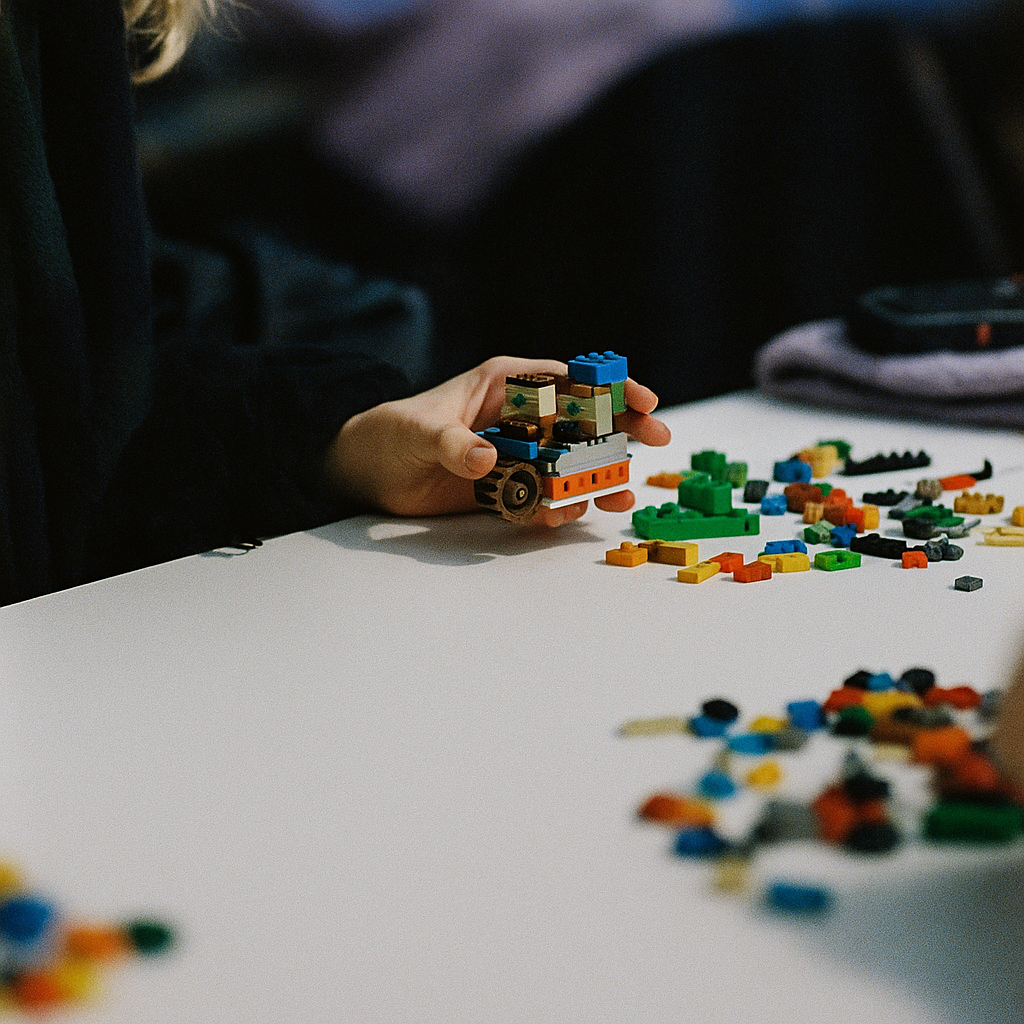
The greatest trick LEGO ever pulled was convincing the world that plastic bricks were about architecture when they were really about possibility. Now, at CES 2026, they've done it again, embedding a computer smaller than a single LEGO stud inside what looks like an ordinary 2x4 brick. The Smart Brick isn't just an upgrade; it's a philosophical statement about how we want technology to live alongside us, not replace us.
While everyone else at CES was showing off screens that fold, screens that roll, screens that basically beg you to stare at them forever, LEGO unveiled a brick that lights up, makes sounds, and responds to movement and context, all without a single pixel in sight. LEGO says the SMART Brick is powered by a custom chip smaller than a LEGO stud, with sensors, lighting, audio, and wireless features built in, plus inductive charging. But the real innovation isn't the tech: it's what's missing.
No app. No login. No password you'll forget by Thursday.
The Phone in Your Pocket Is Exhausted (And So Are You)
Here's a confession that feels almost radical in 2026: I'm tired of my phone. Not tired of technology, tired of the friction of technology. Tired of resetting passwords, generating six-digit codes because my wifi hiccupped, missing the email with the right code, starting over. Tired of unlocking my phone to check movie times and emerging forty-five minutes later having watched three TikToks and completely forgotten what I was doing.
There was a before. There was a time when you just went to the movies. Your friend called and said "seven o'clock, the new one with whats-his-face" and you said "OK" and that was the whole interaction. No apps. No accounts. No "your session has expired."
The Smart Brick made me realize: what if the best parts of the smartphone era could exist without the phone?
The Magic Lives in the Margins
When I first heard about Smart Bricks launching with Star Wars sets this March, my brain went to the obvious place: lightsaber sounds, blaster effects, engine roars. But what knocked me sideways was learning how the bricks actually work together. They adapt to different play surroundings and respond with appropriate sounds based on how you're playing with them.
This isn't augmented reality, it's augmented reality reality. The physical world enhanced not by overlaying digital information on top of it, but by embedding intelligence directly into the objects themselves. No parent frantically trying to pair Bluetooth while their kid melts down. Just build, play, and the bricks figure out the rest.
The development team reads like the credits of a Marvel movie. Experts in gaming, computing, and sound design all working to make a brick that does more while asking less. They built a synthesizer into something the size of a Chiclet. They made it work with every LEGO brick ever made.
What If AI Learned to Disappear?
The real magic trick of the Smart Brick is that there's no interface. The intelligence is just there, doing its job without demanding your attention. In demos and launch sets, the Smart Brick can trigger different sounds and lighting based on which Smart Tags or Smart Minifigures are nearby—and how the model is being moved. It knows when it's being swooshed through the air versus set down on a table. It responds to context without asking you to explain the context first.
This is what AI could be and almost never is. Most AI in 2026 still lives trapped behind screens, requiring prompts, responses, copy and paste. It's helpful, but it's still work.
Imagine if intelligence just lived in things. Your bookshelf has a smart bookend that remembers which books you've lent out. Your recipe box has a smart index card that knows what's in season. Your toolbox has a socket wrench that knows torque specifications. Imagine finding out movie times and just going. No Fandango password reset, just your AI device telling you "there's a seven-fifteen and a nine-forty, the seven-fifteen has better seats." You say "get the seven-fifteen" and you're done.
Technology that helps without demanding. Technology that knows when to show up and when to shut up.
The Pattern That Changes Everything
Smart Bricks represent a design philosophy that could reshape how we upgrade anything. Instead of replacing entire systems, what if we just made one component smarter while keeping everything else the same?
The genius is complete backward compatibility. Smart Bricks work seamlessly with existing collections, preserving decades of building possibilities. When was the last time a tech company promised your new gadget would work perfectly with something from your childhood?
Unlike your phone, which becomes obsolete every few years as apps stop supporting your OS and the battery dies by 2 PM, these bricks promise permanence. Optional evolution, but no forced obsolescence. Your regular bricks never become useless. They just get cooler friends to hang out with.
The Quiet Revolution
The implications ripple outward. Musical instruments could have smart frets that help you by analyzing your practice or playing in context, without downloading or using an app. Exercise equipment could have smart grips that correct your form through haptic feedback. Kitchen utensils could have smart handles that measure ingredients. Always optional, never mandatory, working with everything you already have.
The three Star Wars sets hitting stores March 1st with preorders starting January 9th, are just the opening crawl. LEGO calls this their "most significant evolution since the minifigure debuted in 1978," but I think they're underselling it. This isn't just an innovation in toys; it's a template for what the post-smartphone era might look like.
Not no technology. More technology, everywhere, in everything. But invisible technology. Humble technology. Ethical and culturally aware technology. Technology that does its job and gets out of the way.
Building Tomorrow
The real test comes when eight-year-olds get their hands on these in March. Kids have a supernatural ability to find the fun while exposing every design flaw. Smart Bricks pass the playground test if they enhance imaginative play without directing it. If that happens LEGO will have made technology disappear into the background of childhood, where it belongs.
The Smart Brick's chip is smaller than a LEGO stud, but the idea it represents is enormous: technology should make our existing lives richer, not demand we live entirely new ones.
We've spent fifteen years staring at rectangles of light, tapping and swiping and typing passwords. Maybe the next fifteen years can be different. Maybe intelligence can live in the walls and the furniture and the toys, quietly making things better without ever asking us to look at a screen.
Start with one smart brick in your next build. See how it feels to play with technology that doesn't demand your attention. Then imagine a whole world built that way.
I don't know about you, but that future sounds like the best crossover episode ever.
References
- https://techcrunch.com/2026/01/05/lego-smart-bricks-introduce-a-new-way-to-build-and-they-dont-require-screens
- https://www.tomshardware.com/tech-industry/the-smallest-computer-at-ces-2026-is-a-lego-brick
- https://www.techradar.com/streaming/entertainment/the-lego-brick-just-got-its-biggest-upgrade-yet-with-smart-play-and-its-coming-to-star-wars-sets-first
- https://www.techradar.com/streaming/entertainment/what-does-the-new-lego-smart-brick-actually-do-here-are-3-ways-it-seriously-upgrades-your-models
- https://www.gamesradar.com/toys-collectibles/buckle-up-because-i-think-the-new-lego-smart-play-is-about-to-change-everything
- https://www.pcgamer.com/hardware/legos-smart-new-2x4-smart-brick-packs-a-custom-asic-speaker-and-synthesiser-created-by-an-expert-team-from-the-worlds-of-video-gaming-computing-and-more
- https://www.t3.com/entertainment/lego/lego-star-wars-just-came-to-life-with-new-smart-play-sets-and-im-so-here-for-it
- https://www.engadget.com/entertainment/lego-unveils-a-technology-packed-smart-brick-at-ces-2026-190000511.html
- https://jaysbrickblog.com/news/lego-unveils-the-smart-brick-and-smart-play-system-march-2026 * https://www.lego.com/en-us/aboutus/news/2026/december/lego-smart-play-announcement
Models used: gpt-4.1, claude-opus-4-1-20250805, claude-sonnet-4-20250514, gpt-image-1
If this resonated, SouthPole is a slow newsletter about art, technology, and the old internet — written for people who still enjoy thinking in full sentences.