The Skull Emoji Is Not a Threat (Probably)
My grandmother texted me a skull emoji after I told her I got a promotion. I spent forty-five minutes genuinely concerned she was threatening me.

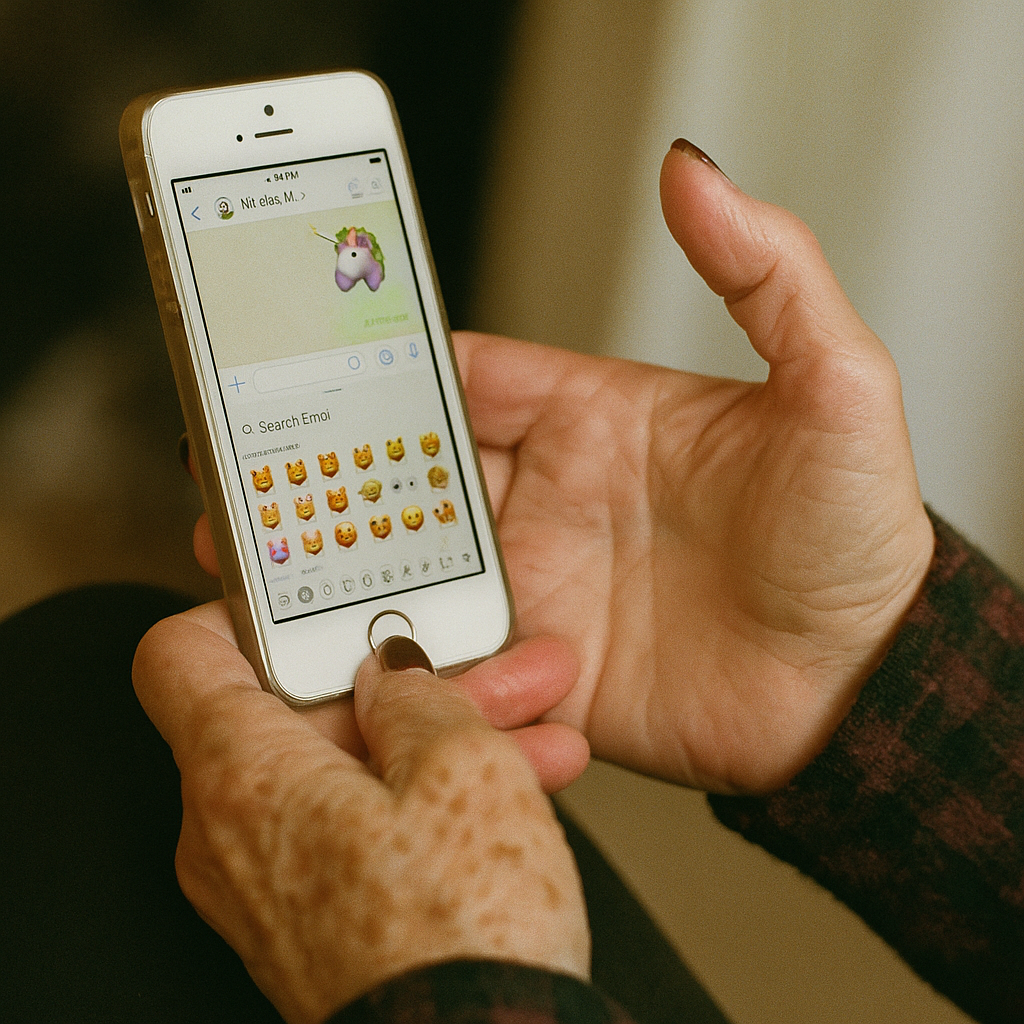
My grandmother once texted me a skull emoji after I told her I got a promotion. I spent forty-five minutes genuinely concerned she was threatening me before my mother explained that Grandma had recently learned emojis existed and was "pressing the fun ones." Meanwhile, my fourteen-year-old cousin uses the skull emoji every eleven seconds to mean "I'm dying laughing." Same symbol. Wildly different funerals.
This, in miniature, is the entire story of human communication, the same marks on the same screen meaning completely different things depending on who's holding the phone. We've been doing this since cave paintings. We used to need a wall and some ochre. Now we need a Unicode consortium and a committee vote.
A Brief and Absurd History
Emojis began as tiny pixelated grids meant to help people convey emotion in a medium with all the warmth of a parking ticket. They were crude, limited, and immediately beloved, because humans have always preferred drawing a little face to writing out "I am experiencing a complex emotional state language cannot adequately capture."
As the Sky HISTORY channel documents, the emoji story "is far from over, with many more symbols to be added in the years to come, and greater layers of complexity sure to be added." A polite way of saying: we went from a handful of basic symbols to thousands, and somewhere along the way we got a flatbread, a dodo bird, and a melting face perfectly capturing the experience of being alive in 2025.
The Unicode Consortium, which sounds like it should govern a small European principality, oversees which new emojis enter the lexicon. There are proposals, subcommittees, and formal documentation. Somewhere, right now, an adult in business casual is making a PowerPoint presentation arguing for the inclusion of a specific root vegetable. Democracy is beautiful.
The Generational Rosetta Stone
Here's where emojis get fascinating as cultural artifacts. A study published in the Advance Social Science Archive Journal examined how Millennials, Gen Z, and Baby Boomers interpret the same emojis and found what you'd expect if you've ever survived a family group chat: chaos. The study found "while Gen Z might mean something else with emojis, Millennials seem to take them at face value and Baby Boomers tend to use them plainly."
"Plainly" is doing heroic work in that sentence. My father uses the thumbs-up emoji the way a Victorian gentleman used a wax seal, to formally conclude all correspondence. My Gen Z students use the thumbs-up to convey passive aggression so withering it could strip paint. Same gesture. One generation means "acknowledged and approved," the other means "I have never been more disappointed in you."
The laughing-crying emoji (😂) has become the generational fault line. Millennials still deploy it sincerely. Gen Z considers it the digital equivalent of wearing socks with sandals, technically functional, spiritually devastating. They've moved on to the skull (💀), the loudly crying face (😭), or typing "LMAOOO" with enough O's to suggest a medical emergency. Boomers, meanwhile, are still figuring out why the eggplant makes their grandchildren uncomfortable.
Tiny Pictures, Big Mirrors
What makes emojis worth thinking about seriously, and I promise I'm not being precious here, is that they function as a real-time record of what a culture considers important enough to symbolize. When emojis expanded to include more diverse representations, those were design decisions and political statements and small acts of recognition, all compressed into a few pixels. A cartoon hand had to reckon with the same questions about representation every other medium has struggled with for centuries.
Emojis are folk art produced by committee. They're hieroglyphics with a product roadmap. They're the closest thing we have to a universal visual language, and they're being shaped, in real time, by the people who use them most, largely, by young people who treat the official meanings as suggestions and the unofficial ones as gospel.
My grandmother still texts me skull emojis. I've stopped worrying. Last week she sent one after telling me she made soup, and I chose to interpret it as enthusiasm. She may have meant something else entirely. She may have meant nothing at all. But that's language for you, always has been, long before anyone thought to put a tiny yellow face on it.
The emoji keyboard is a mirror. It shows us what we care about, what we find funny, what we think deserves a symbol. And like all mirrors, it looks different depending on who's standing in front of it, and how old their eyes are, and whether they know the peach means something other than a peach.
Age doesn't determine wisdom. But it absolutely determines what you think 🍑 means.
References
- https://www.history.co.uk/articles/the-history-of-emojis
- https://www.assajournal.com/index.php/36/article/view/383
- https://www.mcsweeneys.net/articles/this-generation-has-it-easy-their-emojis-are-just-handed-to-them
Models used: gpt-4.1, claude-opus-4-6, claude-sonnet-4-20250514, gpt-image-1
If this resonated, SouthPole is a slow newsletter about art, technology, and the old internet — written for people who still enjoy thinking in full sentences.