A Lament in Feedback, a Diorama of Dead Rodents
An Athens duo recorded a drone album named for the ancient Greek word for lament. A prairie hamlet built a museum of costumed dead gophers. Both refuse the scroll, both insist on duration, and both do the work a culture built for motion has forgotten how to do.

Grief asks for a particular kind of attention, and most people fail at giving it. We schedule the funeral. We write the eulogy. We deliver the line about how she would have wanted everyone to laugh. Then we drive home and stand in the kitchen with no idea what comes next.
Art walks into that silence. It rarely explains a loss. It holds the loss somewhere outside the body for a while, which turns out to be the more useful service. Two projects sitting an ocean and a genre apart perform the same job: one through drone and feedback, the other through dozens of dead rodents dressed as townspeople.
The Lament in the Drone
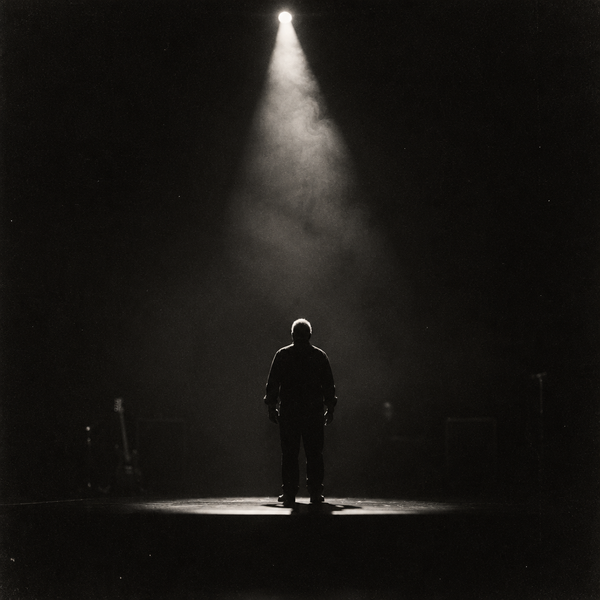
Anton Lambert and Thanos Polymeneas-Liontiris recorded tri-n-os in Athens and released it in October 2025 on the Trento label Kohlhaas. The title borrows the ancient Greek θρήνος: lament, wail, mourning. According to the label's description, the work "unfolds as a deep delve into the realm of improvisation, drone and feedback." No verses. No chorus. Nothing resolving. The sustained, shifting texture stays with a feeling long enough for it to change shape on its own, which is the trick a eulogy attempts and usually botches.
Drone makes an odd vessel for mourning if your reference point is a funeral dirge built on melody and release. Drone offers no release. It never climbs to a climax and lets you go. It continues, you continue with it, and at some point you notice the continuing was the point. Grief behaves the same way. It rarely resolves the way a pop song resolves. It drones. It hums under everything else you do at a frequency you stop noticing until someone says the name out loud and the volume climbs again.
Naming a record after an ancient word for lament does something quietly cross-cultural. It reaches past whatever language the listener grew up in and roots itself in something older than wakes, older than eulogies, older than the customs any of us inherited without asking.
It also revives a job description. In Homer, a thrēnos is the composed dirge, the polished version performed by professional singers, as distinct from the góos, the improvised weeping of the family. The Greeks hired the wailing out. Somebody had to grieve loudly and skillfully on behalf of a community too shocked or too proud to manage it, and the professionals arrived with technique. Lambert and Polymeneas-Liontiris have taken that gig, using feedback and improvisation in place of voices: strangers doing the hard emotional labor so the rest of us can listen and briefly borrow their permission to feel something.
The Diorama as Elegy
Now, the gophers.
In the Alberta hamlet of Torrington, population roughly 240, a museum holds more than seventy taxidermied Richardson's ground squirrels arranged across some forty-five dioramas depicting small-town prairie life. They are ground squirrels, technically. The place has been the Gopher Hole Museum since it opened in 1996, nobody in Torrington loses sleep over the taxonomy, and I raise the point once here and then surrender to local usage forever. Thousands of visitors arrive every year at a spot most Canadians could not find on a map.
Filing this under charming Canadian eccentricity would be easy. Look instead at the work the museum performs. It preserves, in exacting and slightly absurd detail, the rituals of a rural life disappearing across the prairies for decades: the beauty salon, the curling rink, the Old Tyme Music Jamboree.
The museum now needs the rescue it provides. Drumheller Online reported that its two heritage buildings, a schoolhouse roughly 120 years old and a former grain elevator office, sit near the end of their structural lifespan, twisting on degraded railway ties. An all-volunteer society runs the place with no government funding and no charitable status, thirty years on visitor generosity alone, and it has turned to crowdfunding to find the collection a new home.
The gophers stand in for townspeople. The museum stands in for a town that stopped legally existing in 1997, when the village dissolved into the surrounding municipal district, now Kneehill County. Torrington remains, of course. People live there. The curling club still throws rocks. But the administrative entity vanished, and a room full of costumed rodents carries the civic memory now. This is remembrance built around the slower grief of disappearance: an agricultural rhythm most of North America has already forgotten it once had.
What the Drone and the Diorama Share
Set side by side, an abstract Greek-titled feedback record and a taxidermy museum in a hamlet of a few hundred people appear to have nothing to say to each other. Both do the same anthropological work. Both take something too diffuse and too painful to state directly, a death, a way of life ending, and give it a form small enough to visit.
Memorial art earns its keep in a digital age that has made grief simultaneously more public and more disposable. The tribute post goes up, the algorithm serves it to three hundred people for eighteen hours, then it sinks under somebody's lunch. Neither a drone album nor a gopher diorama behaves this way. Both make you come to them: headphones on while the music passes, or ninety minutes in the car out of Calgary to stand in two shiplapped heritage buildings and look, closely, at small scenes of prairie life staged by stuffed ground squirrels. Both refuse the scroll. Both insist on duration, the one thing algorithmic culture offers least and grief needs most.
Neither project apologizes for its strangeness. tri-n-os declines to explain its Greek to casual listeners. The museum declines to reassure visitors uneasy about taxidermy. Both trust sincerity, however odd its costume, to reach whoever is ready for it. Online, earnestness usually arrives pre-armored in irony, and I remain fluent in the armor. Grief handled honestly, whether through feedback or through a diorama of dead rodents, asks something old-fashioned: patience, and a willingness to be moved by a thing refusing to explain itself.
The inheritance worth noticing may lie in the discipline rather than the vessel. Someone makes a thing. The thing stays still long enough for sorrow to visit it properly, inside a culture built to keep everything, grief included, in motion.
References
https://en.wikipedia.org/wiki/Torrington_Gopher_Hole_Museum
https://www.soundohm.com/product/tri-n-os-cd
https://www.drumhelleronline.com/2025/05/14/gopher-hole-museum-looking-for-help
https://www.travelalberta.com/listings/gopher-hole-museum-4480
https://www.cbc.ca/news/canada/calgary/alberta-gopher-hole-museum-diorama-taxidermy-future-1.7402889
https://aeon.co/videos/torrington-has-some-240-residents-and-one-unusual-tourist-attraction
https://neural.it/2026/08/anton-lambert-thanos-polymeneas-liontiris-tri-n-os
Models used: gpt-4o, claude-opus-4-8, claude-sonnet-5, claude-sonnet-4-5-20250929, gpt-image-2