The Robot Grandmother Will See You Now
UBTech's new companion robot wears silicone skin, blinks on cue, and can speak in a dead loved one's voice. 13,000 orders arrived before most of us finished coffee. A field report from the uncanny valley of the heart, guided by the surrealists, who understood love was always partly invented.
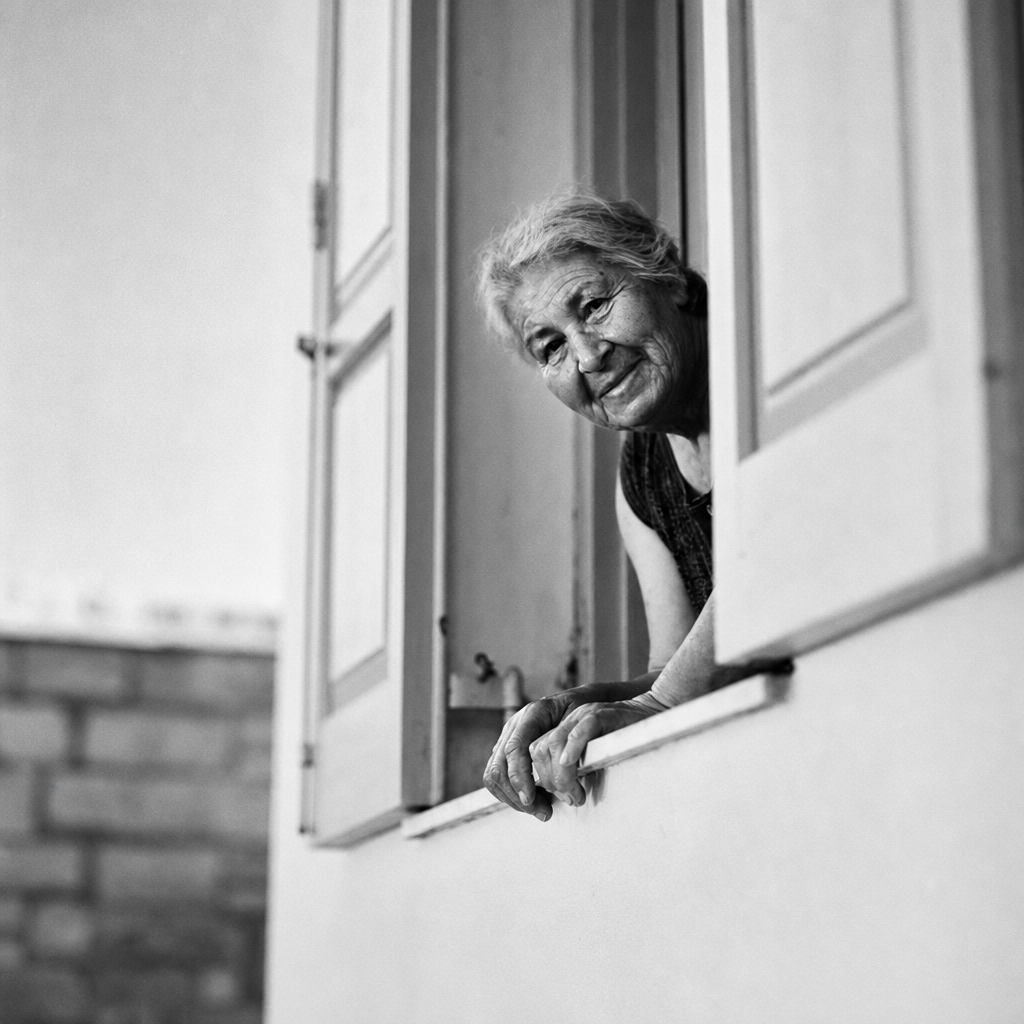
The first time I read UBTech wanted to build robotic replicas of your dead grandmother, I laughed. Then I remembered I once cried when a Roomba got stuck under a couch, and I thought: okay, maybe I am not the objective observer this story needs.
But here we are. On June 30, 2026, at a launch event in Shenzhen that felt part iPhone keynote, part séance, UBTech unveiled the UWORLD U1 series: what the company calls the world's first full-size, mass-produced ultra-bionic humanoid robot. Silicone skin. Blinking eyes. Emotional AI. A voice, according to GIGAZINE, tunable to reproduce a real person's voice. Pre-orders on JD.com blew past 13,000 units before most of us had finished our morning coffee.
The company's founder, Zhou Jian, described a three-step roadmap: first robots take over dangerous and repetitive labor, then they move into home companionship and care, and eventually (this is where I need a snack and a moment) humans and machines achieve what he calls "deep integration." UBTech has framed the immediate mission in gentler terms: addressing social isolation in China, where millions of seniors and adults live alone. TechRadar reports the company plans to donate 100 units in 2026 as a goodwill gesture.
Here is the pitch, then: a lifelike robot able to wear the face and voice of someone you love, marketed to people who are lonely. That is the plot of a movie I would refuse to watch alone, dressed up as a product launch.
Enter, stage left, the surrealists
Whenever technology lurches toward something previously reserved for the soul, I check in with artists, because artists have rehearsed these problems for a century. The surrealists (those glorious weirdos with their melting clocks and lobster telephones) spent the 1920s and '30s treating love as an experiment. They loved across genders, across marriages, across the boundaries of what polite society considered a person.
The surrealists cannot consent to a robot debate, and I will not draft them into one. I bring them up because they understood something we're about to relearn the hard way: love has always been partly an act of projection. You love the person in front of you, and you also love a small movie of them playing in your head, scored by your own longings, edited by memory. The surrealists made art about this. They painted the beloved as a chessboard, a bird, a room. They knew the object of affection is always, in some sense, an object.
Which brings us, uncomfortably, to the silicone.
The uncanny valley of the heart
Here is what the robot marketers keep almost saying and never quite saying: nobody buys a U1 the way they buy a dishwasher. According to the South China Morning Post, the U1 is designed for "personal companionship," a phrase doing an Olympic amount of work. Personal companionship is what your grandmother wanted from her second husband. It is what a dog delivers every time you walk through the door. It is what human beings have historically sought from other human beings, sometimes with disastrous results, sometimes with poetry.
Researchers are already sketching what happens when we look for it in code. A 2025 study titled "My Dataset of Love"found users of AI companions were more willing to self-disclose to a machine than to a person, and reported increased positivity "without social stigma." A separate paper, "The Real Her?", found young adults turn to AI partners for emotional comfort, stress relief, and (this is the line keeping me up at night) "to avoid social pressures."
Avoiding social pressures is another way of saying: avoiding other people. Which is another way of saying: the cure is beginning to resemble the disease.
And yet. And yet the same lonely seniors UBTech invokes are lonely for a real reason. Their children work in other cities. Their spouses are gone. A machine that blinks and remembers a birthday competes against silence, and silence has no counteroffer. If a robot can lower the ambient dread of a Tuesday evening, is my aesthetic squeamishness about silicone skin the ethical high ground?
Art gets in the machine
The most interesting response I've found comes from artists, who skipped the ethics panel and started climbing inside the robots. A recent project called Alter-Art has performers use a humanoid avatar named Alter-Ego to dance, act, and paint through "immersive teleoperation": a first-person creative experience mediated by a machine body. The artist keeps the byline and gains a second body.
That, I think, is the frame we're missing. The scary version of the UBTech story is the one where a robot replaces your grandmother. The interesting version is the one where a robot becomes a new shared space: a place where memory, design, and music (yes, imagine the playlists these things will curate at your funeral) collide into an object neither person nor pet nor phone. Something we haven't named yet.
The surrealists would have loved it. They spent decades building objects that carry the charge of a dream. A companion robot is a lobster telephone with a heartbeat sensor.
Field note, filed under "ask again in ten years"
I don't know how this ends. I know UBTech, founded in 2012 by Zhou Jian, moved from toy robots to mass-produced humanoids in roughly the time it takes to finish grad school. I know 13,000 people have already handed over money for a machine most of them have never touched. I know the word "companion" is about to get renegotiated the way Facebook renegotiated "friend," and everyone who has ever posted a thirst trap renegotiated "follower."
If the surrealists taught us love is partly invented, the roboticists are about to teach us the beloved can be partly manufactured. Somewhere between those two facts sits a small, weird, human room where the future will live.
I'll bring the wine. You bring the grandmother. She can bring herself.
References
- https://www.prnewswire.com/news-releases/ubtech-launches-uworld-u1-the-worlds-first-full-size-mass-produced-ultra-bionic-humanoid-robot-302815285.html
- https://www.techradar.com/ai-platforms-assistants/ubtech-just-introduced-its-first-full-size-ultra-bionic-humanoid-robot-but-what-it-really-wants-to-do-is-make-robot-replicas-of-loved-ones-thats-a-hard-no
- https://en.wikipedia.org/wiki/UBtech_Robotics
- https://embodiedglobal.com/en/article/ubtech-uworld-emotional-companion-preorder-2026
- https://www.globenewswire.com/news-release/2026/07/07/3323221/0/en/China-s-UBTECH-unveils-full-sized-ultra-bionic-humanoid-robot-U1-series.html
- https://kyodonewsprwire.jp/release/202607021895
- https://warmcore-tech.com/blogs/press/ubtech-uworld-u1-consumer-humanoid-launch-v2026-07
- https://www.scmp.com/tech/tech-trends/article/3358884/ubtechs-lifelike-humanoid-robots-built-companionship-arriving-homes-across-china?module=top_story&pgtype=subsection
- https://news.cgtn.com/news/2026-07-02/Chinese-company-debuts-full-size-hyper-bionic-humanoid-robot-1Os0tkbss00/index.html
- https://www.chinaaidaily.com/article/ubtech-u1-ultra-bionic-humanoid-robots-pre-orders-800753
- https://www.rockingrobots.com/ubtech-prepares-launch-of-emotional-humanoid-robots
- https://arxiv.org/abs/2508.13655
- https://arxiv.org/abs/2604.26473
- https://arxiv.org/abs/2503.03067
- https://gigazine.net/gsc_news/en/20260702-ubtech-uworld-u1
- https://www.fastcompany.com/91570086/ubtech-first-commercial-human-like-robot
Models used: gpt-4.1, claude-opus-4-7, claude-haiku-4-5-20251001, gpt-image-2, claude-fable-5