The Museum in Vienna Looks Like Any Other, Though Every Canvas on Its Walls Is a Lie
A Vienna museum displays nothing but forgeries and treats each one with the seriousness of a minor master. The reverence reveals something uncomfortable: the aura we feel before a painting was never in the canvas. It was always in us, and the forgers understood that first.

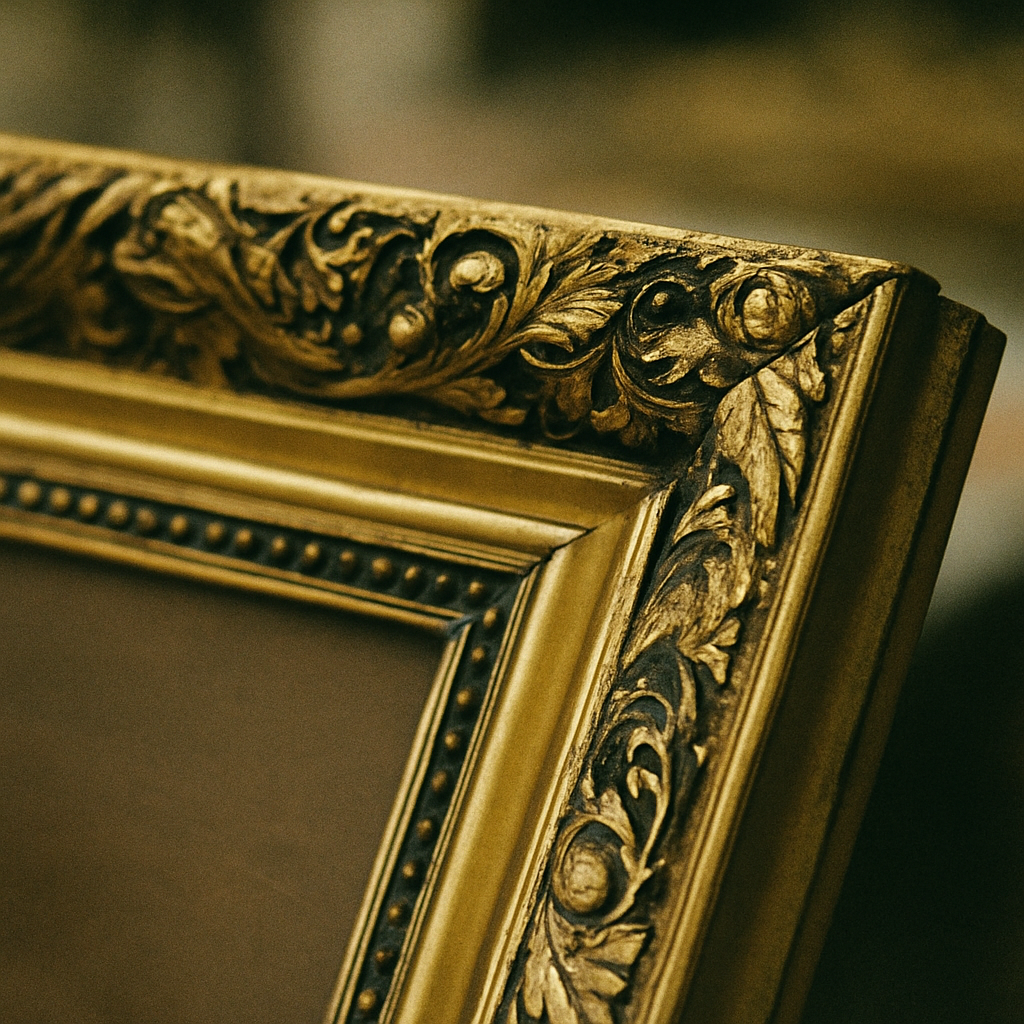
A small museum in Vienna, opened in 2005, devotes itself entirely to forgeries. The Museum of Art Fakes collects work made by people who, by most reasonable definitions, are criminals. Visitors come anyway. They come, I suspect, for the same reason people slow at the scene of an accident, but also for something stranger: the suspicion that what hangs on those walls carries not only deception but a kind of skill we lack the vocabulary to name.
I have been thinking about this museum for weeks. It strikes me as a small, polite act of cultural rebellion: the Austrians, of all people, building a monument to dishonesty and treating its practitioners with the curatorial seriousness one might extend to a minor Flemish master. The signage is sober. The lighting is correct. The frames are nice. The implication, never spoken aloud: something in these objects rewards looking, even after we know.
The long con, considered historically
Art forgery is older than most institutions designed to police it. The Routledge Encyclopedia of Philosophy offers the cleanest definition I have found: forgery occurs "when something is presented as a work of art with a history it does not actually have." Notice the precision. The object itself may be real (paint on canvas, pigment ground from the correct century's minerals), but the story attached is false. Forgery is, in a sense, a crime against narrative.
The twentieth century gave us its share of accomplished narrative criminals. Han van Meegeren, the Dutch painter the PBS show History Detectives remembers as "one of the best-known forgers in the last 100 years," produced canvases he passed off as Johannes Vermeer's, fooling Dutch critics and Nazi officials with equal ease. More recently, Pei-Shen Qian introduced a wrinkle the older stories rarely had. HeadStuff covers the case: Qian, a Chinese immigrant, has claimed he never knew his works were sold under false pretenses. He was indicted, fled to China, and never stood trial. The painter and the deception, in this telling, are not even the same person.
Across decades and continents, one thing unites these episodes: the quiet embarrassment they cause. Experts certified the works. Collectors paid. Catalogues raisonnés absorbed them. Then, somewhere down the line, a chemist or archivist or competitor noticed the wrong pigment, the wrong weave, the wrong receipt. Artnet's catalogue of forgery controversies notes, correctly, this material has become "the subject of books, films, and television series the world over." We cannot stop telling the story. The question is why.
The pleasure of being fooled
Neuroaesthetics pushes gently against received wisdom. A 2022 essay in Psychology Today calls it a discipline that "seeks to explain the physiology that underlies what feels ineffable — the experience of a work of art's aura, or soul." Aura is a slippery word. Walter Benjamin smuggled it into modern criticism, and no one has unpacked it fully since. Neuroaesthetics suggests, in its careful clinical way, that the aura we feel standing before a painting originates in us. The canvas only seems to hold it.
This is uncomfortable, if you sit with it. It means the swelling we feel before a Vermeer and the shrug we feel before a Vermeer-shaped object draw on the same internal machinery. The label on the wall produces almost the whole difference. When the label changes, our experience changes. When the label was wrong all along, our experience was, in some neurological sense, still real. We were moved. We weren't moved by what we thought moved us.
I notice art-world commentary treats this as a scandal. One undergraduate essay in Groundings summarizes the standard position neatly: forgeries are "generally thought to be culturally perverse, falsifying our experience and understanding of art." Perverse is a strong word. It implies authentic experience is the default and deception corrupts it. The neuroaesthetic evidence suggests the opposite: the deception enabled the authentic experience, and the forger gave us, briefly, something real.
Originality, reconsidered
Cultures hold originality differently, and the difference is worth stating plainly. The Anglo-American art market treats originality as something close to a sacrament: a single hand, a single moment, a single signature; the rest is counterfeit. Other traditions have been more relaxed. Chinese landscape painters spent lifetimes copying masters as devotion; the Renaissance workshop assumed a Raphael was, in practice, a Raphael-and-his-students. The hard line between original and fake is partly a legal convenience and partly a Romantic-era inheritance, and it is not as old as we sometimes pretend.
The present moment raises the same questions. Image-making technology has shifted under us fast enough that the questions forgers used to raise (who made this, when, with what intention, and does it matter?) are now everyone's. A generated portrait resembling nothing in particular still triggers the aura-machinery; a "real" photograph of a real event may turn out to be a composite of fragments. We have industrialized the forger's old trick of persuading the viewer to feel something through false attribution. We are all, in some small way, Han van Meegeren's audience now.
This is why the little museum in Vienna feels prescient rather than perverse. It admits what the larger institutions cannot bring themselves to say: a work's experience and its provenance are separable, we can examine them independently, and one is not always a lie when the other is. The forgers, in their underhanded way, have run this experiment for centuries. We have simply refused to read their results.
I am not arguing we should hang the fakes beside the originals and call it even. I am suggesting the next time we feel the small swelling before a painting, we might be honest about where it comes from. The aura is in us. The painters, real and false, have only ever been collaborators in something we were already prepared to feel. That, when you sit with it, is a more generous account of looking at art than the one we usually tell.
References
- https://www.psychologytoday.com/us/blog/the-elusive-brain/202204/art-forgeries-in-light-neuroaesthetics
- https://www.pbs.org/opb/historydetectives/feature/forgers/index.html
- https://headstuff.org/culture/history/brief-history-art-forgery
- https://www.rep.routledge.com/articles/thematic/artistic-forgery/v-1/sections/the-aesthetic-significance-of-forgery
- https://journals.gla.ac.uk/groundings/article/view/206
- https://news.artnet.com/art-world/biggest-art-forgeries-2016-783464
Models used: gpt-4.1, claude-opus-4-7, claude-haiku-4-5-20251001, gpt-image-2
If this resonated, SouthPole is a slow newsletter about art, technology, and the old internet — written for people who still enjoy thinking in full sentences.