We Built Twins to End the Blown Call. They Redefined Judgment
FIFA scanned every player at the 2026 World Cup into a body-accurate avatar that can settle an offside call in under a second. The technology works. The harder question is what happens to human judgment when a duplicate starts making the call, on the pitch and in the studio alike.

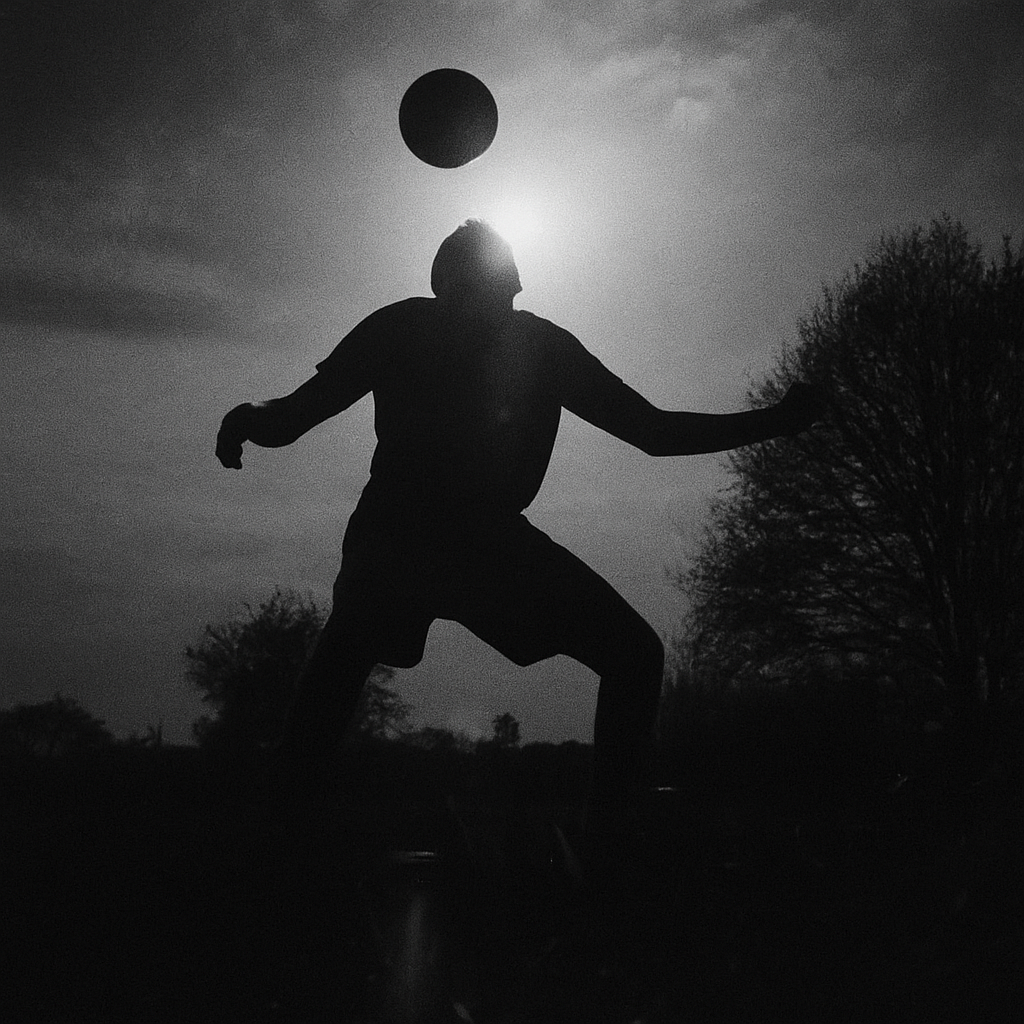
At the 2026 World Cup, every player walks onto the pitch with a doppelgänger. Before the tournament, FIFA scanned each athlete down to limb length and body proportion, building physically accurate AI avatars it can summon into a virtual rendering of any moment in any match. When a striker times a run a half-step early, the avatar knows. When a defender’s heel lingers a centimeter behind the last line, the avatar knows too. The referee, increasingly, sees what the model shows.
This is the quiet arrival of the human digital twin into mass spectacle. We have built twins for jet engines and wind farms for a decade, but a body-accurate replica of Kylian Mbappé, dropped into a simulated stadium to settle an offside call in under a second, marks something new: a duplicate that adjudicates a person’s own labor in real time.
Pause before we celebrate the end of the blown call.
The Architecture of Certainty
The mechanism is elegant the way good infrastructure is elegant: invisible until you look. Semi-Automated Offside Technology (SAOT) fuses optical tracking from stadium cameras, an inertial sensor inside the match ball, and the pre-scanned 3D avatars to compute player positions roughly 50 times per second. When the ball leaves a passer’s foot, the system already knows where every relevant limb sits in three-dimensional space. According to FIFA’s technical materials, assistant referees can now raise the flag at once, before an attack unfolds and VAR has to unwind it.
The framing is accurate and slightly unsettling: a layer of sensors, cameras, and AI now sits between what happens on the pitch and what the referee decides. The decision still belongs to a human. SAOT assists; it does not decide. But the layer the referee reads through has changed entirely. The referee no longer sees the play; the referee sees a model’s reconstruction of it, built by a system that knows the player’s body better than the player’s tailor does.
This shifts what we mean by judgment. Offside was always a geometric fact dressed in human guesswork. Now the system extracts the geometry cleanly, and the guesswork has nowhere to hide.
What Subjective Decisions Lose When They Win
The offside call makes a good first patient because it is, in principle, objective. A foot is in line or it isn’t. But the same architecture will not stay in its lane: body-accurate twins, sub-frame tracking, 3D recreations of camera angles that never existed. Handball, dangerous play, the simulated dive: each is partly geometric and partly interpretive. Once you can render the play from any virtual camera, including ones inside the player, every contested moment becomes a question of which truth we ask the model to surface.
The sports-tech press tends to skip this implication. When you give a referee an unblinking second opinion, you relocate their authority. They stop reading the play and start curating the model’s output. Some observers welcome the change because the system promises clear, real-time criteria to settle a call before an argument starts. But disputes are not always pathology. In refereeing, as in medicine, as in art criticism, the dispute is often where the discipline learns what it believes.
A field that outsources its hardest calls to a duplicate stops developing the muscle that made those calls possible. Goalkeeping coaches already worry about a generation of defenders who trust the sensor to hold the offside line and forget how to read the run. The twin is a prosthesis, and prostheses, used long enough, reshape the body they assist.
The Painter’s Version of the Same Problem
The same body-scanning, scene-reconstructing, model-fitting tools transforming sport now arrive in the studio. Generative models trained on millions of images can produce a competent painting in the time it takes to clean a brush. Photogrammetry can twin a sculptor’s maquette so precisely that the physical original becomes redundant. The toolchain is identical to FIFA’s, pointed at canvas instead of grass.
Here the technology cuts both ways with unusual clarity. A digital twin of a violin lets a luthier test bracing patterns without destroying wood. A 3D scan of a dancer lets a choreographer iterate on movement no single body could rehearse to exhaustion. These tools amplify: they extend the reach of a creative hand without replacing it. But the same scan, fed into a generative pipeline, can produce a thousand variations the dancer never danced and credit them to a style she spent twenty years earning. Now the twin substitutes for the artist it was meant to serve.
The technology settles nothing. The positioning does: a twin built as a rehearsal space serves the artist; a twin built as a delivery mechanism replaces her.
Designing the Twin That Remembers Its Original
The World Cup deployment offers one design principle worth keeping: a twin works ethically when it stays bound to a single decision and dissolves afterward. SAOT’s avatars answer a single question: was a foot past the line at a given instant? Then they return to storage. They generate no fan content, sign no sneaker deal, narrate no career. The scope is surgical.
The trouble starts when scope creeps. Academic surveys of human digital twins already describe replicas extending into behavior, decision-making, and predicted future states. The ethical literature is direct: a duplicate that interacts back with its original is no longer a mirror. It becomes a second author of the life it was built to represent.
For referees, SAOT should remain open to challenge. Officials question the model; they do not take orders from it. The system should expose its confidence intervals, log its disagreements with the human official, and treat the call on the field as a hypothesis the model may challenge but not overrule by default. For artists, the same principle holds in reverse: the twin belongs at the workbench. It should never become the publisher. Whoever holds the scan should hold the veto.
We built these duplicates to eliminate the blown call. The deeper craft: making sure we have not also eliminated the human whose judgment was worth duplicating.
References
- https://inside.fifa.com/innovation/innovating-the-game/3d-player-scanning
- https://inside.fifa.com/innovation/innovating-the-game/3-d-recreations
- https://www.bbc.co.uk/sport/football/articles/c62ver6z7z8o
- https://www.theguardian.com/football/2026/jan/07/world-cup-players-to-have-lifelike-ai-avatars-for-use-in-var-offside-decisions
- https://arstechnica.com/gadgets/2026/06/cameras-sensors-and-3d-body-scans-all-the-tech-helping-eliminate-blown-calls
- https://arxiv.org/abs/2407.11990
- https://arxiv.org/abs/2302.03593
- https://arxiv.org/abs/2208.04289
Models used: gpt-4.1, claude-opus-4-7, claude-haiku-4-5-20251001, gpt-image-2
If this resonated, SouthPole is a slow newsletter about art, technology, and the old internet — written for people who still enjoy thinking in full sentences.