Bill Oddie Needed a Place That Changed Every Morning
Bill Oddie died on July 25, aged 85. Kate Humble said the natural world let him quieten his mind. The research behind that runs thinner than the idea it supports, though his two careers sketch a specification for the kind of place a working mind needs, and for how easily it can be taken away.
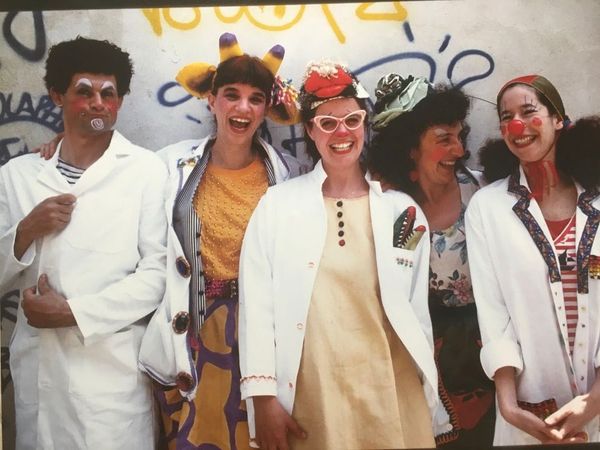
Bill Oddie died on July 25, 2026, aged 85. The obituaries circled a paradox: the man who threw custard pies in The Goodies became a trusted British voice on wagtails and warblers. The dual life reads like a career pivot, or an eccentric hobby grown teeth.
He spoke openly about a lifetime with depression, diagnosed as clinical depression in 2001 and later as bipolar disorder, through repeated psychiatric admissions and severe lithium poisoning from his treatment. Near the end he named what the birds had done for him. Wildlife had long been a refuge, he said, "probably more than I realise."
The hedge deserves scrutiny. Landscapes may do structural work for the mind, and Oddie reads like a case study in a man who stumbled onto the specification for his own cognitive operating system and never quite read it back.
Two careers, one substrate
Start with the timing. The Goodies ran from 1970 to 1982, peaking in the mid-Seventies: high-tempo, high-visibility, physically punishing comedy. The birding never waited its turn. He logged observations as a schoolboy, was building a naturalist's career by the mid-Seventies, and published a bestselling bird book in 1980, two years before The Goodies finished. Springwatch arrived in 2005 and made the second career the main one: low-tempo, observational, patient. The comic performer needs an audience. The birder needs the audience to disappear, then waits for something with feathers to decide to appear.
The two ran concurrently for a decade. Both draw on one capacity: extreme attention to pattern. A sketch depends on noticing the tiny false note in ordinary behavior and amplifying it. Field ornithology depends on noticing the tiny true note in a bush full of leaves. Same signal processor, different frequencies.
What the instruments measure
The claim that nature is good for you long sat in the same bracket as chicken soup: probably true, impossible to specify. Measurement goes back further than the phrasing suggests, to Roger Ulrich's hospital-window study in Science in 1984 and Rachel and Stephen Kaplan's Attention Restoration Theory, set out in The Experience of Nature in 1989. What has sharpened since is resolution.
A 2024 study in Scientific Reports used smartphone-based ecological momentary assessment to log encounters with natural diversity in real time: 1,998 participants, 41,448 assessments. It found an incremental link between the richness of an environment (whether a person could see or hear trees, plants, birds and water) and self-reported wellbeing. Diversity accounted for roughly a quarter of the link, adding on top of exposure; exposure itself remained the stronger association, by about three to one.
A 2025 study in PLOS ONE ran it the other way, testing whether guided imagery could stand in for a physical walk. Ninety-seven participants walked both routes in imagination, natural and urban, in sessions at least five days apart. Convergent creative thinking improved after the nature walk and not the urban one, though the conditions did not differ significantly. Small, online, and preliminary by the authors' own reckoning, it puts mental imagery in play as a live variable and stops well short of showing nature refills a depletable store.
The counterweight, and its fragility
Set those findings beside Oddie's biography and a hypothesis forms, though the evidence cannot yet carry it. The reedbeds may have restored the same faculty sketch comedy, performance and songwriting drew down.
The record resists the tidy version. The BBC told Oddie it would not ask him to make more programmes, and he called the year afterward probably the worst twelve months in his life. Later he ran it partly the other way, allowing the illness had already been in the room, had made him hard to work with, and showed itself in hindsight as a manic phase he missed. Cause and effect braid together, with no clean arrow between them. What survives is structural: a counterweight another party can withdraw is fragile infrastructure, and the fragility belongs inside the specification.
The pattern repeats
Oddie is a vivid instance in a crowded intersection. After renting the adjoining land in 1846, Charles Darwin laid a quarter-mile stone and sand path at Down House and walked it daily until his final weeks. Posterity, not Darwin, named it his thinking path. Robert Macfarlane's Landmarks argues our vocabulary for landscape and our grip on the landscape thin together. Chris Packham, Oddie's successor on Springwatch, has spoken openly about his autism diagnosis and about the Hampshire walks he credits with shaping and probably saving his life.
The honest through-line runs narrow: higher perceived natural diversity tracked higher momentary wellbeing, and one convergent-thinking task improved after imagined time outdoors. Around the instruments sits testimony from people who could not otherwise explain why they needed the hedge. Calling any of it restoration of a cognitive substrate reaches past the data, though the phrase keeps suggesting itself, which says something about how the experience feels from inside.
Designing for the faculty
If a physical environment carries part of the cognitive load, what happens to a species spending more time indoors, in buildings optimized for everything except mental imagery?
Eight young adults with depression brought local natural materials into their own rooms. The study reached a conference poster and went no further than a preprint. Participants reported improved mood, sharper environmental awareness, and more agency over their space, and kept returning to the making itself: choosing the materials, building the thing.
Compare digital mental health. A preregistered randomized controlled trial, so far a preprint, found a generative-AI wellbeing app produced gains in positive affect, resilience and social wellbeing among 486 undergraduates over six weeks. Every outcome came from self-report, and the comparison group sat on a waitlist with no active control. A real result, with the usual asterisks. Note the asymmetry, though: one study handed people authority over their physical surroundings, the other a well-designed interlocutor. Both help, and only one changes the room.
The interesting design space sits where they converge: tools sending people outdoors, then getting out of the way. Merlin Bird ID is a small, elegant example. The Cornell Lab's app converts phone-microphone audio into a spectrogram and runs it through a deep convolutional neural network trained on annotated recordings from the Macaulay Library. At its best it redirects attention from the interface to the tree. The algorithm earns its place by making itself unnecessary.
What Oddie's life specifies
There's a temptation, when a public figure dies, to render them as allegory. Oddie resists it: too particular, too grumpy, too specifically himself. A biography can still carry a hypothesis worth designing against, and his carries three clauses.
First, creative intensity needs a counterweight, and the counterweight cannot be more work in the same register. Second, it performs best when it engages the same faculty (attention, pattern recognition, imagery) at a different tempo. Third, it has to be a real place, with real biodiversity, returning slightly different information on each visit. A garden delivers new information every morning. A screensaver delivers the same information forever. The imagery study puts light pressure on the third clause, without yet landing a blow.
Oddie found the arrangement by accident and by need, nearly lost it when someone else held the keys, and by his own account never fully saw what he had. The next generation, carrying better tools and better distractions, will have to build it on purpose. The tools we make can help on one condition: we design them, as Oddie designed his second career, to point away from themselves and toward the world where the actual birds still live.
References
- https://www.bbc.co.uk/news/articles/c4nnkylr0llo
- https://www.euronews.com/culture/2026/07/27/bill-oddie-famed-british-comedian-with-the-goodies-and-wildlife-broadcaster-dies-aged-85
- https://www.chortle.co.uk/news/2026/07/27/61068/bill_oddie_dies_at_85
- https://www.nature.com/articles/s41598-024-55940-7
- https://pubmed.ncbi.nlm.nih.gov/39787122
- https://pubmed.ncbi.nlm.nih.gov/6143402
- https://arxiv.org/abs/2506.05729
- https://arxiv.org/abs/2601.11530
- https://www.english-heritage.org.uk/visit/places/home-of-charles-darwin-down-house/history/description/
- https://darwin-online.org.uk/life19.html
- https://www.macaulaylibrary.org/2021/06/22/behind-the-scenes-of-sound-id-in-merlin/
- https://www.bbc.co.uk/news/uk-england-hampshire-57999012
Models used: gpt-4.1, claude-opus-4-7, claude-haiku-4-5-20251001, gpt-image-2