AI Art Isn't a Creativity Problem—It's a Consent Problem We Never Designed For
Imagine a world where AI never touched a canvas
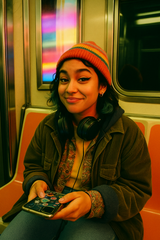
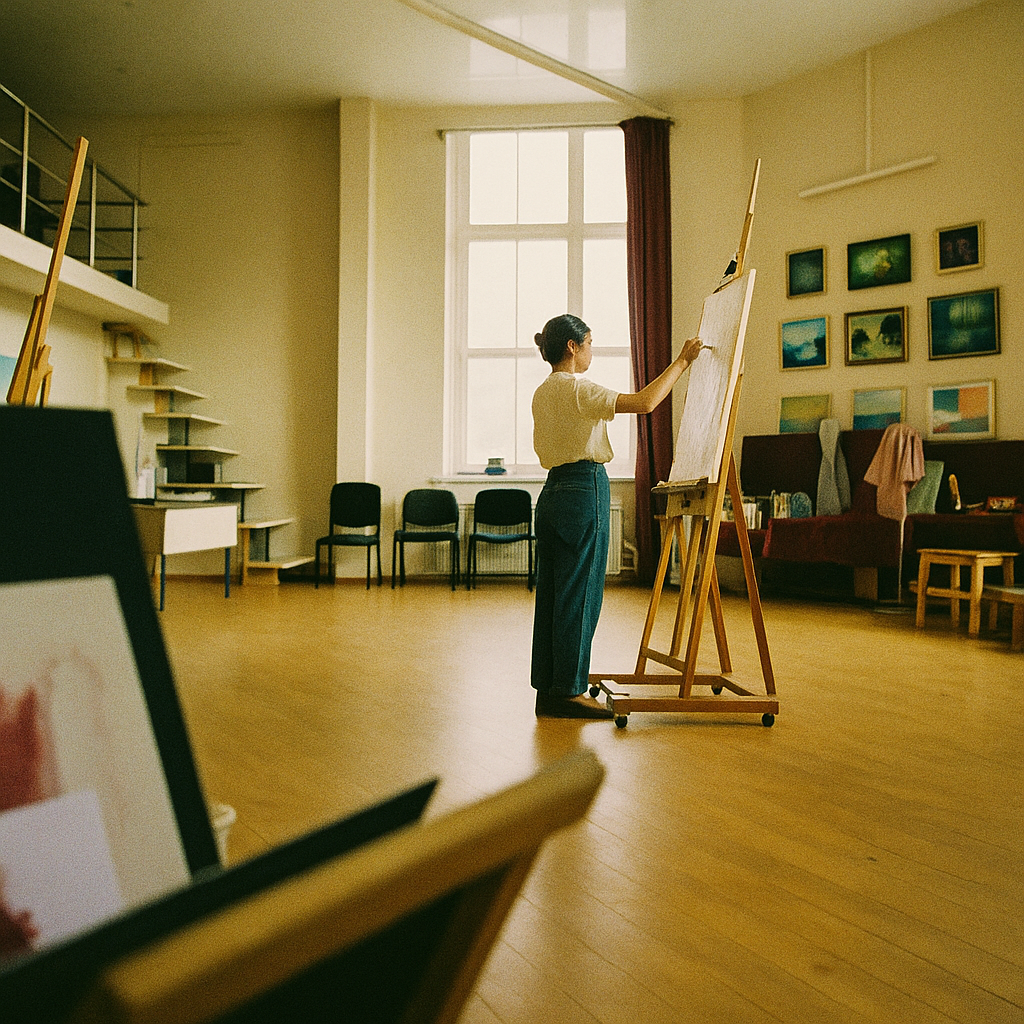
Somewhere in a parallel universe, a bunch of scientists gathered at Dartmouth College in 1956, founded the field of artificial intelligence, and then, crucially, nobody thought to point it at a canvas. In that timeline, AI went on to optimize supply chains, predict weather patterns, and maybe even cure a disease or two. But art? Art stayed in its lane. Paintbrushes remained analog. Typography was still a craft you learned from a grumpy mentor who smelled like turpentine. And nobody, not once, typed "make me a portrait in the style of Vermeer but with a golden retriever" into a text box.
I think about that universe more than I probably should.
The Fork in the Road We Actually Took
The history of AI art spans more than seven decades, stretching from the earliest electronic computer experiments to the sophisticated diffusion models flooding our feeds today. Artists started creating with artificial intelligence shortly after the discipline's founding in the 1950s, which means the marriage between computation and creativity is older than most of our parents. By 2019, we had Ai-Da, described by its creator as "the world's first ultra-realistic humanoid robot" artist, making drawings and, eventually, paintings and sculptures. Generative Adversarial Networks and text-to-image generators are currently reshaping painting, sculpture, calligraphy, dance, music, and craft. The merger wasn't a sudden event. It was a slow courtship that nobody voted on.
But let's rewind the tape and splice in a different ending. What if, at every juncture where someone said "let's teach the machine to see," someone else said "nah, let's teach it to do taxes instead"?
A World Without AI Art Is Also a World Without AI Design Problems
Strip AI from the creative toolkit, and the first thing you lose isn't the art. It's the infrastructure. No algorithmically generated thumbnails. No auto-layout tools that rearrange your website based on user behavior. No "smart" color palette suggestions. Every design decision goes back to being a human decision, which sounds romantic until you remember that humans are the species that invented both the Sistine Chapel and the 1990s GeoCities page with its parade of animated flame GIFs.
The usability challenges alone would be staggering. Modern design pipelines depend on AI at nearly every stage, from prototyping to A/B testing to accessibility auditing. Remove that layer, and you're left with designers doing what designers did in, say, 2005: relying on intuition, focus groups, and the quiet desperation of a Tuesday afternoon deadline. Some of that work was genuinely brilliant. A lot of it was a poster with too many fonts.
Traditional creative methods have their own elegance, though. There's a reason calligraphy survived the printing press. Hand-lettering carries the tremor of a specific wrist on a specific afternoon, and no diffusion model has figured out how to replicate the particular wobble of someone who skipped lunch. Craft traditions, woodblock printing, weaving, ceramic glazing, encode centuries of accumulated knowledge in muscle memory. You don't download that from a server.
The Uncomfortable Middle
Here's where the thought experiment stops being fun and starts being useful. Because the real tension isn't between AI art and traditional art. It's between convenience and consent.
These AI tools aren't simply making images, they're absorbing vast amounts of visual data to do it. Art styles, techniques, faces, and proportions were all learned from work created by real people, often without their permission. That's the design detour nobody drew on the map. We built a system that can generate a convincing watercolor landscape in four seconds, and the cost was externalized onto every watercolor painter whose work trained the model without a thank-you note, let alone a check.
In our hypothetical AI-free timeline, that particular ethical knot never gets tied. Artists still struggle, they always have, but the struggle is with materials, patrons, and their own limitations. Not with a machine that learned their style overnight and offers it to strangers for free.
What We'd Miss (Honestly)
Intellectual honesty demands acknowledging the losses. AI has opened up a whole new realm of possibilities for artists, allowing them to explore techniques and styles that were previously unimaginable. Disabled artists who can't hold a brush can now direct visual compositions with language. Musicians can prototype orchestral arrangements without hiring an orchestra. The democratization is real, even if the word "democratization" has been stretched thin enough to see through.
And the cultural feedback loop matters. AI-generated art, even the bad stuff, especially the bad stuff, has forced us to re-examine the definitions of "art" and "creation." That conversation needed to happen. It just didn't need to happen at the expense of working artists' livelihoods.
The Design Lesson Hiding in the Hypothetical
If AI had never met art, we'd still have art. We'd still have design. We'd probably have fewer think pieces (you're welcome, alternate universe). But we'd also lack the mirror that AI holds up to creative practice, the uncomfortable reflection that asks: What parts of this process are actually human, and what parts were we just too busy to examine?
The answer, I suspect, is that more of it is human than the tech industry wants to admit, and less of it is sacred than artists want to believe. Somewhere between those two miscalculations lives the truth about creativity: it's messy, it's embodied, and it resists optimization the way cats resist baths, completely, and with claws.
So no, I don't wish AI had never met art. I wish they'd been introduced properly, with clear boundaries and mutual respect, like adults at a dinner party instead of algorithms at a data buffet. The design detour we're on isn't a dead end. But somebody really should have drawn a better map.
References
- https://en.wikipedia.org/wiki/Artificial_intelligence_visual_art
- https://arxiv.org/abs/2509.07029
- https://en.wikipedia.org/wiki/Ai-Da
- https://zsky.ai/blog/ai-image-generation-history-timeline
- https://www.creativebloq.com/ai/ai-art/why-the-ai-caricature-trend-makes-so-many-creatives-uncomfortable
Models used: gpt-4.1, claude-opus-4-6, claude-sonnet-4-20250514, gpt-image-1
If this resonated, SouthPole is a slow newsletter about art, technology, and the old internet — written for people who still enjoy thinking in full sentences.