Why Folding Clothes is the Ultimate Human-Robot Friendship Test

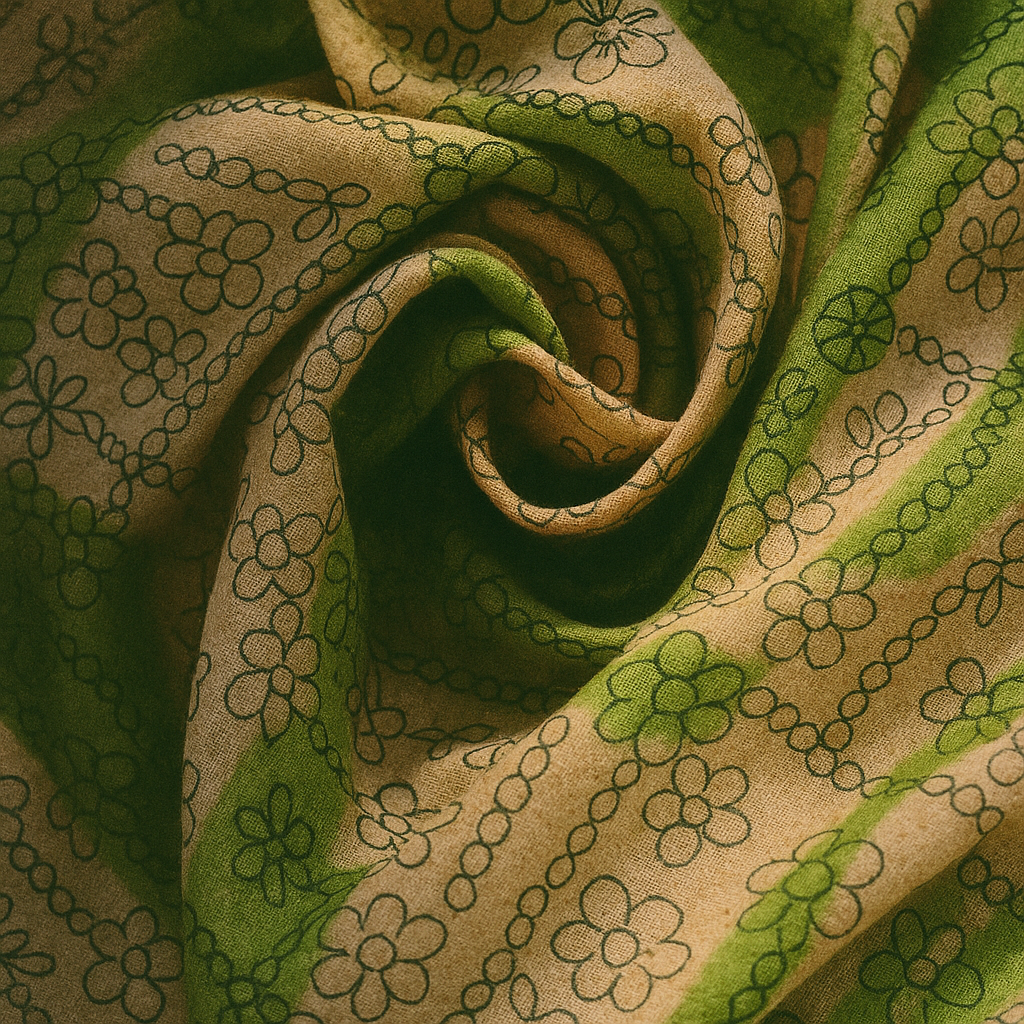
The laundry basket sits there, mocking you. Inside: a chaotic tangle of fitted sheets that somehow transform into origami nightmares the moment you touch them. But here's the beautiful thing—robots are learning to fold our laundry, and it's not about replacing us. It's about the most human thing possible: helping a friend with something that drives them absolutely bonkers.
When researchers developed a system that can fold clothes at rates of 30-40 items per hour, they weren't just solving an engineering problem. They were creating what might be the perfect metaphor for human-robot collaboration. Because folding clothes—that mundane, repetitive, surprisingly complex task—requires exactly the kind of understanding that makes great friendships work: patience, adaptation, and the ability to handle things that are soft, unpredictable, and constantly changing shape.
The Wrinkled Truth About Progress
Here's what makes laundry folding the perfect friendship test: it's simultaneously simple and impossibly complex. A five-year-old can fold a washcloth, but ask a million-dollar robot to handle your favorite vintage band tee without stretching the collar, and suddenly we're in PhD territory. The fabric wrinkles differently every time. Your jeans never land in the basket the same way twice. That fitted sheet? It's basically cloth-based chaos theory.
The latest generation of laundry-folding robots aren't just programmed with rigid instructions anymore. They're learning to feel their way through the task, using advanced sensors and AI to understand how different fabrics behave. These systems are getting better at cloth-related tasks like folding, smoothing, and hanging, adapting their approach based on what they encounter. It's like watching someone learn to play jazz—there are rules, sure, but the real magic happens in the improvisation.
What's revolutionary isn't the folding itself. It's that these robots are learning to handle uncertainty the way humans do: by paying attention, adjusting on the fly, and occasionally just accepting that some fitted sheets are going to look lumpy no matter what you do.
The Softness Revolution
For decades, robots excelled at hard things—welding car frames, assembling circuit boards, moving massive containers. But soft things? That's where robots historically face-planted harder than someone trying to fold a fitted sheet while blindfolded. The technical term is "deformable object manipulation," which is engineer-speak for "dealing with stuff that won't hold still."
Think about what your hands do when folding a shirt. You're constantly adjusting pressure, feeling for edges, smoothing wrinkles, all while predicting how the fabric will behave based on subtle cues you don't even consciously notice. You know instinctively that silk slides differently than denim, that wet clothes are heavier and clingier, that your favorite hoodie needs special attention around the hood to lie flat.
This is what researchers call the "sim-to-real gap"—the chasm between how things work in computer simulations and how they behave in your actual laundry room. Recent research has produced systems that can fold roughly 30–40 items per hour in lab experiments, and many of these models are trained using a mix of real-world demonstrations and other data sources—like teaching someone to cook by having them watch cooking shows and actually burn a few dishes.
Why This Matters More Than Clean Socks
The push toward domestic robots isn't about laziness or efficiency—it's about something much more fundamental. We're teaching machines to share our spaces, understand our needs, and help with the tasks that eat up our time but don't define our humanity. It's the difference between a robot that replaces a factory worker and one that helps your grandmother maintain independence in her own home.
Previous attempts at automated folding machines tried to solve this with expensive appliances that would fold your clothes like a vending machine in reverse. The company behind Laundroid went bankrupt in 2019, showing that people don't want a machine that demands they feed it clothes one by one in a specific way. They want a helper that meets them where they are—messy, imperfect, dropping socks behind the dryer.
The new generation gets this. Modern robotic systems are learning to recognize different clothing types and treat them accordingly. These aren't just tools; they're partners learning to navigate our deeply human spaces.
The Friendship Test
Here's why folding clothes is the ultimate friendship test: it requires trust, patience, and the ability to handle someone else's personal items with care. Your clothes carry your scent, your style choices, your bad decision to buy that neon green tank top. Letting a robot fold your laundry is surprisingly intimate—it's inviting technology into the soft, private corners of daily life.
The best friendships aren't about perfection. They're about showing up, helping with the unglamorous stuff, and occasionally mangling a fitted sheet together while laughing about it. The robots learning to fold our clothes aren't trying to be perfect either. The successful ones are learning to be helpful, adaptive, and forgiving of chaos—exactly the qualities we value in human relationships.
The Soft Skills Future
The real breakthrough isn't that robots can fold clothes now. It's that they're learning the soft skills—literally and figuratively—that make collaboration possible. When a robot can handle your delicate sweater with appropriate care, recognize that your kid's superhero cape needs special treatment, and adapt when you throw in a random beach towel, that's not just programming. That's understanding.
We're not heading toward a future where robots do everything for us. We're building one where they do things with us, taking on the tasks that computers are genuinely better at (perfect folds, infinite patience) while we focus on what we're better at (deciding what to wear, knowing which stains need pre-treatment, remembering that the red shirt runs).
The next time you're standing in front of a pile of clean laundry, consider this: somewhere, a robot is learning to help with exactly this task, not to replace you but to give you back those 20 minutes to do something more interesting. That's not the robot revolution anyone predicted, but it might be the one we actually need—one folded T-shirt at a time.
Because in the end, the measure of technology isn't how well it replaces us. It's how well it helps us be more human. And if that means finally conquering the fitted sheet problem through human-robot collaboration? That's a friendship worth investing in.
References
https://arxiv.org/abs/2208.10552
https://arxiv.org/abs/2507.19983
https://en.wikipedia.org/wiki/Cobot
https://arxiv.org/abs/2305.07493
https://en.wikipedia.org/wiki/Laundroid
https://ideaexchange.uakron.edu/honors_research_projects/1436
https://arxiv.org/abs/2301.03003
https://scisimple.com/en/articles/2025-06-02-robots-learn-to-fold-cloth--a98o75q
https://spectrum.ieee.org/robots-folding-clothes
Models used: gpt-4.1, claude-opus-4-1-20250805, claude-sonnet-4-20250514, gpt-image-1