Who Gets to Decide What the Place Is For?
A county library in central Oregon retired the Dewey Decimal System and reshelved every branch around how readers browse. The same question runs through murals, vacant lots, and shade structures: who sat in the room when the decisions got made?
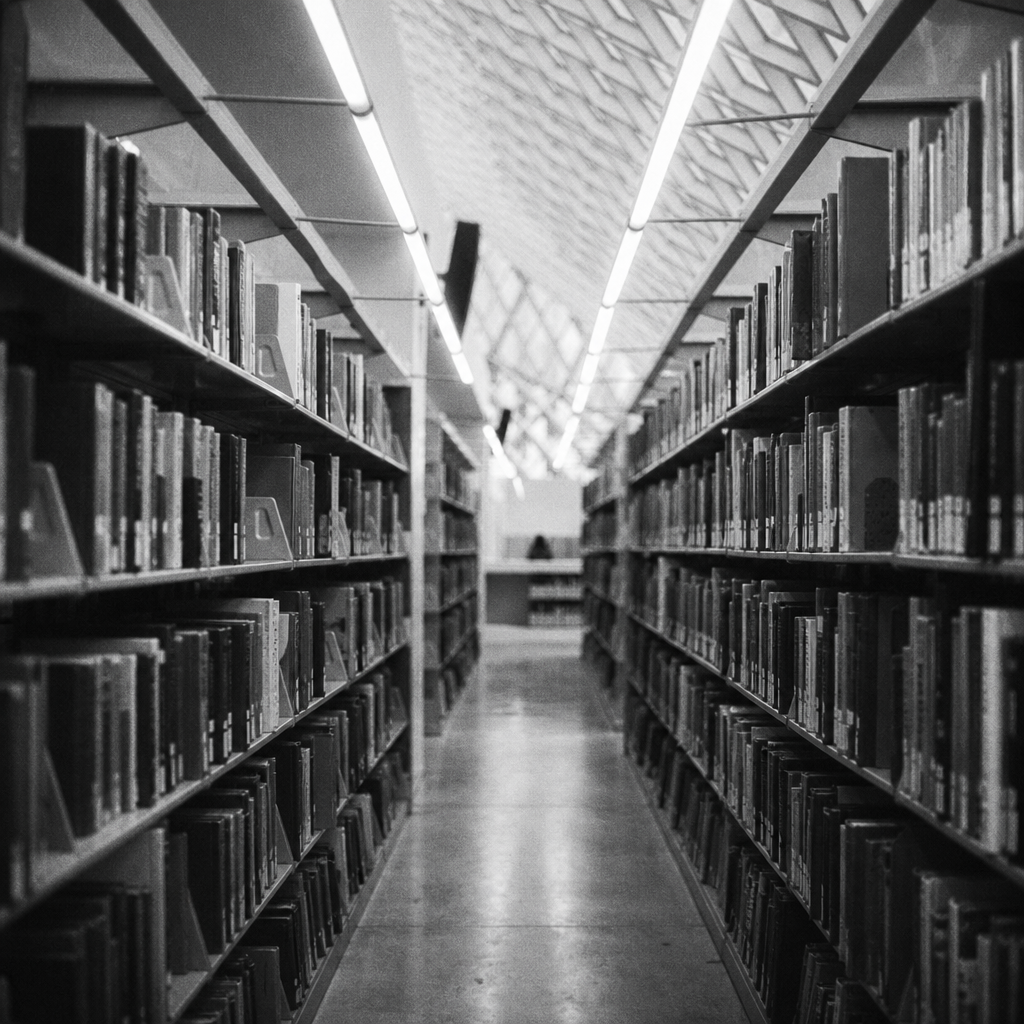
The Deschutes Public Library system in central Oregon decided the Dewey Decimal System had run its course. The county reorganized every branch around how people think when they walk in looking for something, grouping by topic and interest. The numbering scheme it replaced was first published in 1876. Emily O'Neal, the technical services manager who helped build the replacement, put the problem plainly: the library kept a system only librarians knew. A $195 million bond in 2020 rebuilt the branches, which gave staff the opening to rethink the shelving itself, and the whole system reshelved in 2023. They named the replacement Wayfinder, a wonderful name for a thing whose entire job is helping you find your way. The new central branch sits at Stevens Ranch in Bend.
A shelving decision carries an argument inside it. The argument here goes something like this: the room belongs to the people who walk into it.
When an institution asks how real people move through a space, it starts behaving like a conversation. And once you notice the shift in one place, you spot it everywhere, especially in how cities treat their walls, their vacant lots, and their public art.
The Wall as an Invitation
Cincinnati holds more than 300 murals, and a University of Cincinnati study published in the journal Cities found that mural-dense areas draw measurably higher foot traffic and cluster near restaurants, shops, galleries, landmarks, and transit. Those same areas saw faster growth in income, rent, and home values between 2010 and 2020, which the researchers flag as a gentrification evolution worth watching. Public art moves neighborhoods. The open question is who gets to stay in them.
Common Wealth Murals, whose best-documented work is in Springfield, concentrates its projects in some of the most under-resourced neighborhoods in Massachusetts, where poverty rates run five times the state average. The organization guides its work through community input, meaning the people who live beside the wall help decide what lands on it. A small procedural detail with a large effect. A library reorganizing itself around how visitors search and a mural process built around the neighbors who pass by every day perform the same move: they let the audience shape the infrastructure.
The Urban Institute has worked on measuring arts and culture at the neighborhood level for more than twenty years, publishing a measurement framework back in 2003. Its recent work argues that local arts activity supports belonging, social connection, and neighborhood vitality together. Three outcomes, tangled up in each other, the way a good neighborhood works.
Vacant Lots Are Holding Something
The Arts Council for Long Beach, California ran a project called A LOT that took vacant lots across the city and turned them into a multi-genre art experience, spaces where neighbors could meet art without a gallery door and a suggested donation box standing in the way. The National Endowment for the Arts documented it as an example of what creative placemaking does with land that was, on paper, doing nothing. The city appears on the partner list, alongside the mayor's office, the police department, the libraries, and Cal State Long Beach. Worth noticing who convened the thing and who accepted the invitation.
That word, nothing, carries tremendous weight in city planning conversations. A vacant lot gets coded as absence. The Project for Public Spaces, in a piece first published in 2015, describes arts-based placemaking as an integrative approach to planning, one that feeds local economies while widening innovation, cultural diversity, and civic participation. An empty lot holds a question. Somebody has to ask it.
Here the library loops back around. Shelves organized by the Dewey system answered an older question well. They served an assumption about who was searching and why. A vacant lot carries the same story. Both sit underused until someone asks the more interesting question.
The Cincinnati researchers noticed something else worth sitting with: murals rarely land anywhere near vacant lots. Two good instincts, running on separate tracks, in cities that could route them toward each other.
Heat, Access, and Who Gets to Participate
Some of the liveliest applications of this thinking turn up where you least expect them, like extreme heat response. On September 12, 2025, the Associated Press reported on cities pairing public art with heat protection. Phoenix commissioned artists to build shade structures for its parks: one carrying panels painted with alebrijes and a solar-powered misting system, another built from reflective paint and ultraviolet-resistant canvas. Each arrived at a community event where the city handed out cooling towels, sunscreen, and information about recognizing heat stress.
Beauty turns out to do measurable work here. A Phoenix study co-authored by David Hondula, now the city's director of heat response and mitigation, found that riders who judged a bus stop beautiful also rated it more thermally comfortable. The authors treat that as a design lever in its own right, a cheap way to make people feel better in the heat. A city that commissions an artist to build the thing keeping you cool has decided you deserve both.
A growing body of work asks who gets left out of these spaces entirely. A 2026 study from the University of Washington, now in preprint, interviewed sixteen blind and low-vision people about how they discover and engage with urban art. Most urban art turns out to be inaccessible to them, and the accessibility research that exists has concentrated on museums and outdoor navigation, leaving public art largely unexamined. It is also the question a mural program should ask before the paint dries. A mural becomes a shared resource when the sharing includes everyone nearby, including the people who move through the block by touch, by sound, or after dark.
Planners and Artists, Working the Same Room
In 2019, the Kinder Institute for Urban Research published a report drawing on Houston, San Antonio, and Denver, arguing that cities should bring artists and arts organizations into planning conversations early, as collaborators shaping outcomes while the blueprints stay soft. The argument runs structural. Inclusive cities need artists in the room where decisions get made, the same way a library needs to talk with the people who use it before deciding how to arrange the shelves.
That connective tissue runs through all of it: the library, the murals, the vacant lots turned into gathering spaces, the heat-response installations. Design any of them in isolation and hand the finished product down to a community, and the thing sits there looking pleasant and serving nobody. Design them with the community from the first meeting, and they hold.
Walk into your local library sometime and pay attention to how it organizes itself. Notice whether the room feels built for you. Then walk a few blocks and look at whatever public art or open space sits nearby, and ask the same question. The answer tells you how your city imagines you.
Then say something. Library boards hold public comment periods. Arts councils publish their meeting calendars. City planning departments run open sessions that rarely fill the room. The rooms where these decisions happen sit far more open than they look, and they get better every time a neighbor walks in.
References
https://www.fastcompany.com/91597520/oregon-library-ditched-dewey-decimal-wayfinding-system
https://centraloregondaily.com/dewey-decimal-deschutes-library-wayfinder/
https://www.uc.edu/news/articles/2025/07/how-street-murals-impact-communities-a-study.html
https://www.commonwealthmurals.org/ourimpact
https://www.urban.org/research/publication/art-and-culture-communities-framework-measurement
https://www.arts.gov/impact/creative-placemaking/exploring-our-town/long-beach-ca-a-lot
https://www.pps.org/article/creative-communities-and-arts-based-placemaking
https://apnews.com/article/5523764d28a8c10e5f6b34aae8381045
https://arxiv.org/abs/2603.26909
https://icma.org/articles/pm-magazine/importance-arts
https://kinder.rice.edu/urbanedge/how-artists-can-help-create-more-equitable-cities
Models used: gpt-4o, claude-sonnet-4-20250514, claude-opus-4-1-20250805, claude-sonnet-5, claude-sonnet-4-5-20250929, gpt-image-2