When Custodians Meet Propagandists: The Battle for Museum Independence
The silence inside a museum, that held breath before objects that outlasted every living witness, is getting harder to hear. When political actors treat cultural institutions as messaging tools, shared memory is what they put at risk.

The Room Where Things Persist
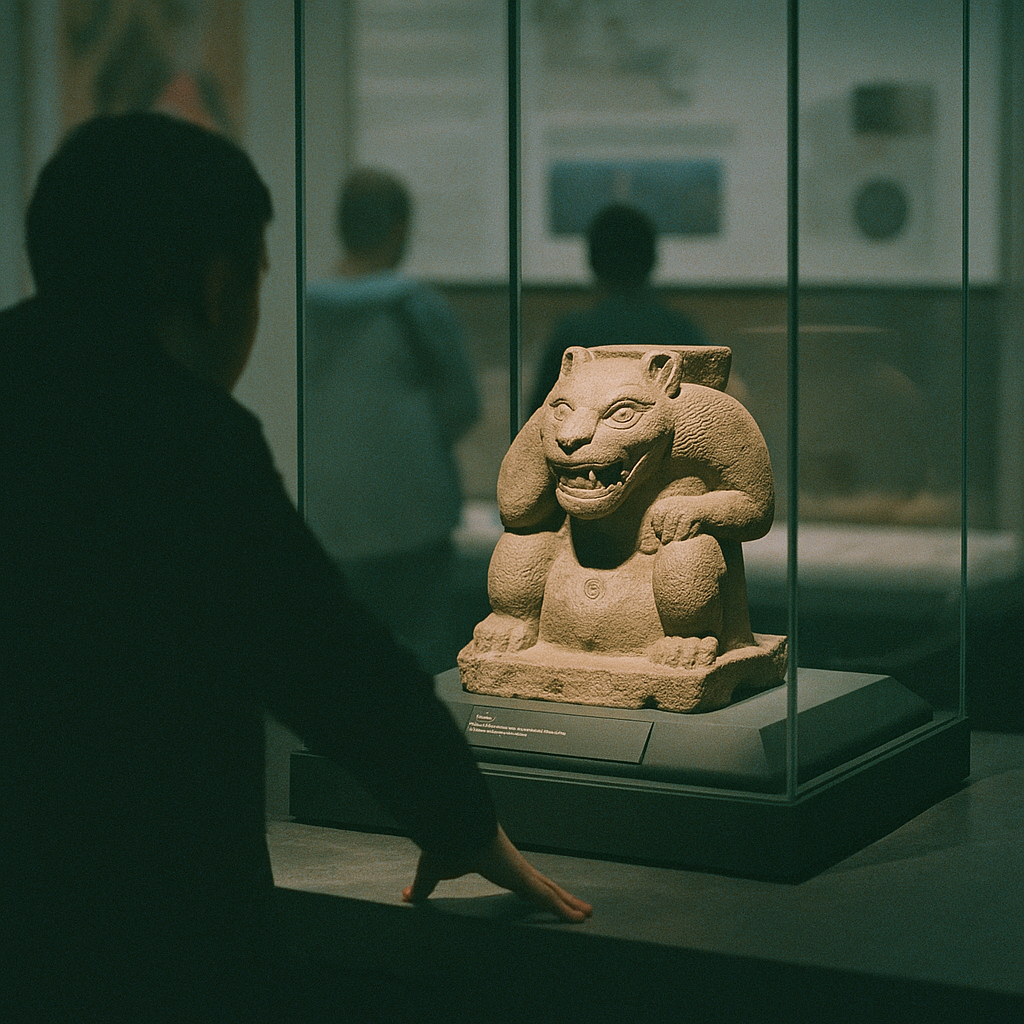
There is a particular kind of silence in a museum, not the absence of sound, but a held breath. The hush of someone standing before an object that has survived longer than any living person. A Mesopotamian cylinder seal. A fragment of medieval textile. A dinosaur femur the color of burnt coffee. These things do not argue. They simply persist, and in persisting, they offer us something rare: evidence of what actually happened.
That silence is getting harder to hear.
The Smithsonian National Museum of Natural History recently found itself at the center of a growing debate about political interference in cultural institutions. The specifics were familiar to anyone who had been watching: pressure on exhibits, questions about which stories deserved telling, and the quiet reshuffling of institutional priorities to align with political winds. The Museums Association described the period as one of unprecedented government interference, a phrase capturing a year of layoffs, content audits, and executive pressure on cultural institutions across the country. An executive order titled Restoring Truth and Sanity to American History reignited controversy about where governance ends and narrative control begins.
But politicizing museums is not new. It is not even particularly creative. As Eurozine has documented, the playbook runs consistent across populist movements, change the directors, cut the funding, rewrite the narrative. The pattern recurs from Washington to Warsaw, from Budapest to Brasília. What changes is the accent, not the grammar.
Museums have always been political. Every act of curation is an act of selection, and every selection implies a value judgment. The British Museum's Elgin Marbles are a political statement whether or not anyone intends them to be. UNESCO's work on decolonizing museum narratives acknowledges this honestly, that museums are accountable not only to their immediate communities but to a global one, and the stories they have told have often been incomplete, self-serving, or flatly wrong.
There is a meaningful difference, though, between a museum reckoning with its own blind spots and an external authority dictating what those blind spots should be. The former is scholarship. The latter is propaganda wearing a lanyard.
Nature's collection on the politics of museums and national monuments frames cultural institutions as "custodians of cultural heritage and history", a word, custodian, that carries exactly the right connotation. A custodian maintains. A custodian does not own. The distinction matters because it clarifies the relationship between a museum and the public it serves. When political actors treat museums as instruments of messaging rather than spaces of inquiry, the custodial relationship breaks down. The institution stops maintaining the past and starts performing the present.
The financial consequences are real and measurable. The American Alliance of Museums has documented how political interference erodes public trust, destabilizes donor relationships, and drives out the curators, conservators, and educators who form a museum's intellectual infrastructure. Staff leave for institutions where they can do their work without looking over their shoulders.
But the deeper cost is harder to quantify. It is the loss of cultural memory itself.
Cultural memory is not the same as history. History is what happened. Cultural memory is what a society decides to carry forward, the stories, objects, and contexts helping a community understand itself across time. When that memory is edited to serve a political moment, the edit rarely announces itself. Things vanish from the conversation. An exhibit is quietly retired. A label is rewritten. A program loses funding and no one replaces it. The absence accumulates until an entire dimension of shared understanding has gone missing, and no one can quite remember when it left.
Stanford's research on transitional justice museums offers a useful counterpoint: these institutions can shift political attitudes, but their impact depends heavily on context. A museum telling difficult truths about a nation's past, apartheid, genocide, forced displacement, can genuinely change minds, but only when it operates with independence and scholarly rigor. Strip away independence, and you don't get a museum. You get a gift shop with a thesis statement.
So what does preservation look like in practice?
First, structural independence. The Museums Association's analysis of institutional autonomy describes that autonomy as "fragile", a word alarming to anyone who cares about these spaces. Fragility implies the protections currently in place are insufficient. Governance structures need designing not for fair-weather politics but for storms. Board appointments, funding mechanisms, and editorial independence require firewalls surviving changes in administration.
Second, diversified funding. A museum depending entirely on a single government for its operating budget is a museum silenced by a single budget line. As The Gate observed, art museums cannot opt for the path of least resistance when political pressure arrives. Financial resilience, through endowments, private partnerships, international collaborations, and community membership models, creates the practical conditions for intellectual honesty.
Third, and perhaps most importantly, transparency about curatorial choices. Museums are not neutral, and pretending otherwise invites the accusations of bias political actors exploit. The more openly a museum articulates why it tells the stories it tells, the scholarly basis, the community input, the gaps it is working to address, the harder it becomes for anyone to credibly claim the institution is merely someone else's mouthpiece.
As GURL Museum Day observes, museums are culture makers, alongside artists, filmmakers, and storytellers of every kind. That power is why they attract political attention. A museum shaping how people understand the past inevitably shapes how they imagine the future.
There is a small, overlooked ritual happening in museums everywhere: a parent crouches beside a child and reads a label aloud. The child asks a question. The parent, more often than not, doesn't know the answer. They look it up together, or they stand there in shared uncertainty, letting the object speak for itself.
That moment, humble, curious, unscripted, is what a museum is for. Not a weapon. A room where people go to be honestly unsure, and where the objects on display have earned the right to complicate easy stories.
Protecting that room is not a partisan act. It is a civic one.
References
- https://medillonthehill.medill.northwestern.edu/2025/03/smithsonian-at-center-of-debate-about-politicization-of-museums
- https://www.nature.com/collections/bgfibcchjj
- https://thegateuchicago.com/2026/01/05/beauty-is-not-partisan-how-art-museums-should-respond-to-political-pressure
- https://quillette.com/2018/05/04/against-the-politicisation-of-museums
- https://observer.com/2025/12/year-in-museums-2025-censorship-executive-orders-layoffs
- https://gurlmuseumday.com/viewallmagazine/museumsaspoliticalinfluencer
- https://www.museumsassociation.org/museums-journal/opinion/2025/07/the-fragile-autonomy-of-cultural-institutions-in-an-age-of-political-interference
- https://cddrl.fsi.stanford.edu/news/do-transitional-justice-museums-change-minds
- https://www.unesco.org/en/articles/museums-change-their-story
- https://www.eurozine.com/a-populists-guide-to-using-museums/
Models used: gpt-4.1, claude-opus-4-6, claude-sonnet-4-20250514, gpt-image-1
If this resonated, SouthPole is a slow newsletter about art, technology, and the old internet — written for people who still enjoy thinking in full sentences.