What Can Musicians Learn From an Artist Who Spent Seven Years Arguing With His Machines?
Joost Rekveld spent seven years arguing with his machines to make one film. What he learned about tools, resistance, and creative control is exactly what musicians trapped in template culture need to hear.
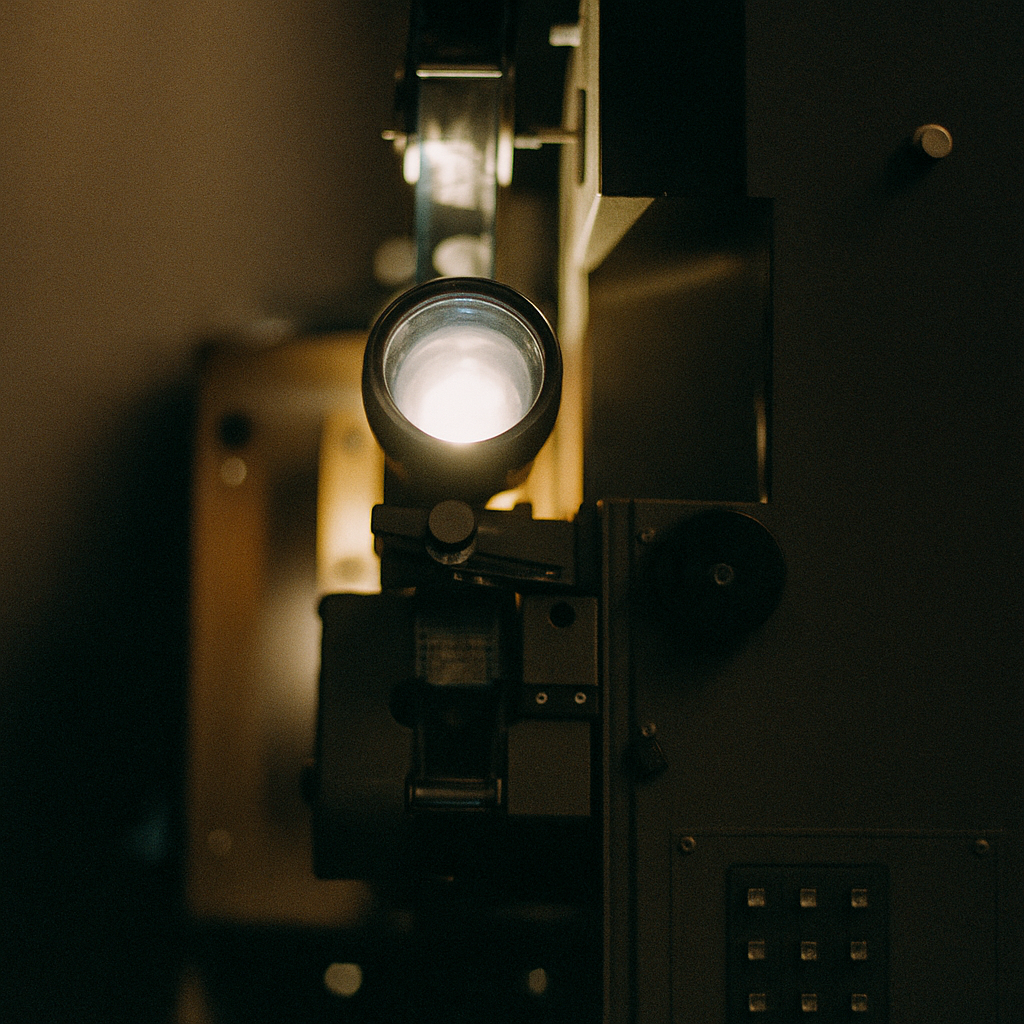
There's a Dutch artist who builds machines the way the best garage bands build songs, with guts, obsession, and a stubborn refusal to let anyone else's blueprint dictate the outcome. His name is Joost Rekveld, and for more than three decades he's been making experimental films that treat technology not as a master but as a sparring partner. He works through physical, optical, and mechanical systems of his own design, not interfaces, not templates, not someone else's pipeline. He constructs physical apparatuses, optical devices, mechanical rigs, systems that breathe and misbehave, and then he sits down with them and has a conversation. The kind of conversation where neither side knows exactly where it's going.
That's the whole point.
Rekveld, born in 1970, has been exploring what he calls "the inner depths and outer reaches of optical expression at the nexus of technology and natural phenomena" since the early 1990s. His latest book, Liberate the Machines!, grew out of a seven-year artistic research project called Dialogues With Machines. The book narrates his personal experience of that dialogue while making the experimental film Mechanisms Common to Disparate Phenomena; #59. Seven years. One film. One book. One artist refusing to be efficient.
If that doesn't sound like rock and roll to you, you haven't been paying attention to what rock and roll is.
The music industry spent the last two decades learning to survive digital transition, and by most financial metrics, it succeeded. Global music industry revenues are bigger than ever. The money came back. But something else didn't. Something harder to quantify than quarterly earnings.
The Johns Hopkins News-Letter put it bluntly back in 2015: "Popular musicians are taking far fewer risks with their instruments." That observation has only calcified since. Anyone paying attention has watched digitalization sand down the creative process one template at a time. The tools got cheaper and faster. The templates got stickier. The edges got sanded down.
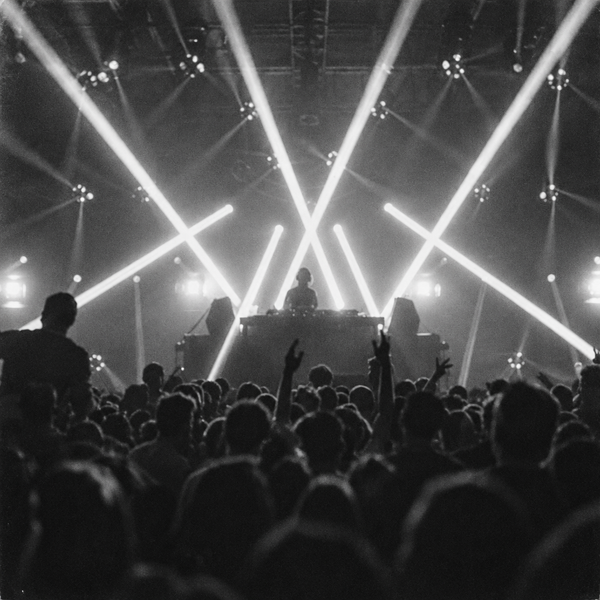
This is the homogenization problem, and anyone who's spent a Saturday night flipping through release-radar playlists knows exactly what it sounds like. It sounds like everything and nothing at the same time. It sounds like music made to satisfy recommendation engines rather than to rattle the windows of a Ford Econoline doing ninety on I-94.
And this is precisely where Rekveld's work, visual, not musical, becomes a mirror musicians need to stare into.
Rekveld's central question, the one driving everything he makes, is deceptively simple: what can humans learn from a dialogue with the machines they have constructed? Not what can machines do for us. Not how can machines make us more productive. What can we learn, about ourselves, about perception, about the weird beautiful chaos of physical phenomena, by engaging with machines as collaborators rather than servants?
At a public lecture at the Amsterdam University of the Arts, Rekveld narrated the "wandering trajectory" leading to #59, describing a process deliberately nonlinear, full of detours and dead ends and accidents turned into discoveries. He presented this work at the University at Buffalo's PLASMA 2025 Speaker Series, and SIFF Cinema has presented programs of his films in Seattle, recognition this isn't fringe curiosity but serious artistic inquiry with real voltage.
The book launch for Liberate the Machines! at Creative Coding Utrecht paired a screening with a conversation between Rekveld and artist/writer Marloes de Valk. The title alone — Liberate the Machines! — is a manifesto compressed into three words. It's not about making machines autonomous. It's about freeing them from the narrow instrumental logic saying a tool must produce a predictable, optimized output every single time. It's about letting the machine surprise you. Letting it fail in interesting ways. Letting the conversation go sideways.
Now tell me that isn't the exact ethos separating a great rock record from a forgettable one.
The music industry's historical relationship with technology has always been adversarial and confused. By 2003, Techdirt was already documenting the industry's long, stubborn history of fighting new technologies, a pattern repeating across every format shift from tape to CD to MP3. The industry fought digital reality for years, suing fans, clinging to physical formats, treating every new distribution method like an existential threat. They eventually adapted, but the adaptation was largely commercial, not creative. The pipes changed. The water running through them got blander.
The musicians who matter, the ones playing basements in Detroit and warehouse shows in Brooklyn and cramped stages in Leeds, have always understood something the industry boardrooms never will: the instrument is not the point. The relationship with the instrument is the point. The struggle with it. The unpredictability. The moment when you're wrestling with a piece of gear and it gives you something you never asked for, something you couldn't have programmed or predicted, and you recognize it as the truest sound you've ever heard.
That's exactly what Rekveld does with his optical machines. He builds them, sets parameters, and then watches what happens when physical phenomena, light, refraction, mechanical motion, assert their own agency within the system. The machines aren't executing his vision. They're contributing to it. They're co-authors.
The lesson for anyone making music right now, or making anything, is not that we should all go build mechanical film projectors in our garages. The lesson is about posture. About how you stand in relation to your tools.
You can treat a digital audio workstation as a template dispenser. Load the preset, quantize the drums, auto-tune the vocal, match the reference track, ship it. That's the path of least resistance, and it's the path producing the sonic wallpaper currently flooding every streaming platform on Earth. Or you can treat that same workstation the way Rekveld treats his machines — as something to argue with, to push against, to listen to when it does something you didn't expect.
The difference isn't technological. It's philosophical. And it's the difference between music evaporating the second it stops playing and music leaving a bruise.
Rekveld spent seven years on a single film. Seven years of dialogue, of wandering, of letting a machine teach him something he didn't already know. Meanwhile, the content mills churn out tracks optimized for sixty-second clips, engineered to trigger a dopamine response calibrated to keep thumbs scrolling.
I know which side of that divide I want to stand on. And I know which side produces work still mattering in ten years, twenty years, fifty years.
Rock and roll was never about the guitar. It was about the fight between the player and the instrument, the song and the noise, the human and the machine. Joost Rekveld, working in a completely different medium on a completely different continent, understands that fight better than half the bands currently selling out arenas. His machines aren't liberated because they're free from human control. They're liberated because someone had the patience and the nerve to let them speak.
That's the revolt. Not louder amps or angrier lyrics. The stubborn, unglamorous refusal to let your tools think for you.
References
- https://arts-sciences.buffalo.edu/media-study/news-events/recent-news/plasmarekveld.html
- https://www.siff.net/cinema/in-theaters/films-of-joost-rekveld
- https://tique.space/library/publications/joost-rekveld-liberate-the-machines
- https://creativecodingutrecht.nl/en/archive/liberate-the-machines-booklaunch
- https://www.joostrekveld.net
- https://www.jhunewsletter.com/article/2015/04/homogenization-of-music-continues-24545https://www.axios.com/media-trends-membership/2026/04/04/music-streaming-digital-transition
- https://www.joostrekveld.net/?p=2781
- https://www.ahk.nl/en/news-and-events/agenda/2022/11/24/public-lecture-by-joost-rekveld-research-group
- https://www.techdirt.com/2003/09/11/how-the-music-industry-has-resisted-technology-historically
- https://monoskop.org/Joost_Rekveld
- https://neural.it/2026/04/joost-rekveld-liberate-the-machines
Models used: gpt-4.1, claude-opus-4-6, claude-sonnet-4-20250514, gpt-image-1
If this resonated, SouthPole is a slow newsletter about art, technology, and the old internet — written for people who still enjoy thinking in full sentences.