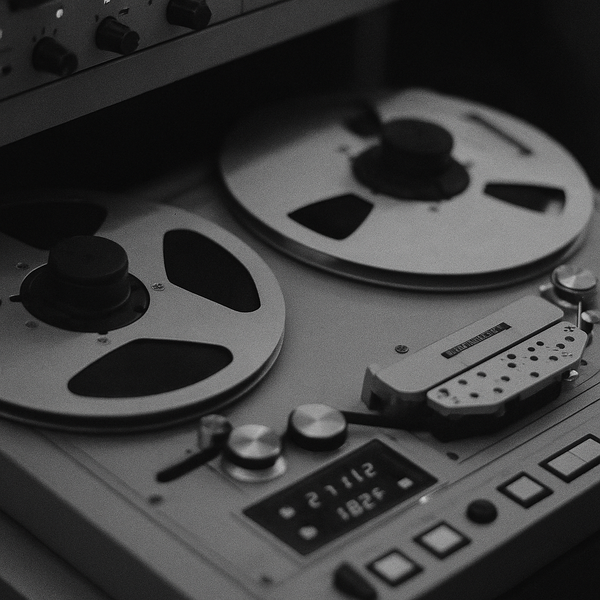
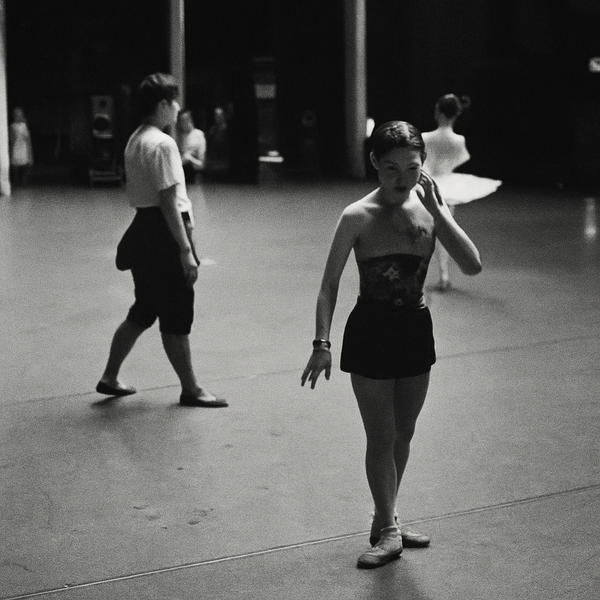
The Listening Body: Why Sound Design Is a Human Problem
We stopped listening because listening became punishing. The listening body, the idea that we hear with bone, skin, and posture, not just our ears, points toward a different way to build technology. One that knows when to be quiet.


There is a moment, if you pay attention, between the buzz of a notification and your hand reaching for the phone. A sliver of silence. In that gap lives something we've been losing, not hearing, but listening. The distinction matters more than most technologists care to admit, and it may be the key to designing systems that serve us rather than consume us.
We live inside a torrent of engineered sound. Push alerts, podcast autoplay, spatial audio ads, the ambient hum of smart speakers awaiting their wake word. Our devices are loud not because they must be, but because loudness is the default mode of an attention economy. A growing body of research suggests that the way we listen, with our bodies, not just our ears, shapes cognition, emotion, and our sense of physical presence in space. If we want technology that amplifies human creativity rather than drowning it out, we need to understand what it means to hear.
The Listening Body
Sound studies, the interdisciplinary field examining the cultural, social, and technological dimensions of sound, has long argued that hearing is not a passive sense. It is an act. The concept of the "listening body" extends this further: we don't receive sound through our eardrums alone; we process it through bone, skin, posture, and proprioception. The concept of "deep situated listening," developed in sound-studies scholarship, argues that listening is shaped by bodily position, context, and affect, rather than occurring as a purely disembodied act.
This isn't abstract philosophy. Consider SoniWeight Shoes, a wearable device that alters a user's perception of body weight by shifting the frequency spectra of their footstep sounds. Change the auditory feedback of walking, and you change how heavy or light a person feels. The body listens to itself, and what it hears reshapes its reality. Similarly, the Audio Personas project explores how body-anchored sounds in augmented reality alter social perception, letting users "decorate" themselves with sonic cues that shift how others experience their presence.
These experiments point toward a principle embedded in Pierre Schaeffer's concept of the sound object. In sound theory, the sound object is treated not as a waveform but as a unit of sonic experience shaped by the act of listening. Recent embodied-listening scholarship, including work published in Corpus Mundi, extends this by arguing that the body is not a passive recipient of sound but an active resonator in the making of meaning. Sound is something we do, not something done to us. The implications for technology design are enormous.
The Architecture of Digital Noise
Contrast embodied, intentional listening with the sonic environment most technology creates. Modern smartphone users receive dozens of notifications throughout the day. Each can function as a tiny acoustic intrusion, a chime, a vibration pattern, a synthetic tone, that prioritizes immediacy over reflection. The design goal is seizure of attention, not communication of meaning.
Human auditory ecology, the research program studying interactions between humans and their acoustic environments, reveals why this matters. Researchers in that field argue that hearing serves an important monitoring role, helping humans build representations of and navigate their acoustic environments. Notifications tap into that monitoring function, which helps explain why even minor alerts feel hard to ignore. Frequent interruptions contribute to strain, task-switching costs, and reduced performance, even when they cause no hearing damage.
The result is a kind of learned deafness. We stop listening because listening has become punishing. The volume of digital sound trains us to filter aggressively, and in doing so we lose the receptive, relaxed quality that mindful listening practitioners describe as essential to genuine attention. Real listening requires active, open, non-judgmental engagement, precisely the opposite of what notification culture rewards.
The deeper problem is structural. Many digital platforms still default toward foreground alerts rather than richly layered peripheral cues. Although operating systems offer some gradations, prevailing notification design favors interruption over subtlety. There is no gradient, no periphery, no sense that some information might be better whispered than shouted. Every sound a device makes contributes to a user's cumulative sonic history, an auditory sediment shaping mood, stress levels, and the capacity for sustained attention. We are building acoustic environments with no regard for the memories they leave behind.
Designing for the Periphery
The antidote is not silence. It is better architecture.
Calm technology, a design philosophy from Mark Weiser and John Seely Brown's work at Xerox PARC, offers a foundational framework. Its core principle: information technology should engage the user's periphery rather than constantly demanding center-stage attention. A calm interface communicates through ambient shifts, a change in light, a subtle tonal variation, a gentle haptic pulse, rather than through interruption.
Calm technology respects the listening body. Instead of hijacking the auditory alert system, it works with the body's natural capacity to monitor background conditions. Think of how you sense rain starting outside without consciously deciding to listen for it. That peripheral awareness is a feature of human cognition, not a bug. Technology that leverages it rather than overriding it would represent a genuine advance.
But calm technology alone isn't sufficient. Three concrete directions integrate insights from sound studies, auditory ecology, and embodied cognition into a more comprehensive design practice.
Sonic layering. Rather than treating notifications as identical-priority interruptions, systems could assign sounds to perceptual layers, foreground, mid-ground, and background, based on urgency and context. Research behind Sound Worlds from the Body to the City demonstrates how aural perception already structures our spatial awareness. Interface sound design should mirror that natural stratification.
Personalized auditory profiles. The SoniWeight Shoes research shows that sonic feedback is deeply personal. Future platforms should let users shape their own auditory environments with the granularity we now expect from visual themes, calibrated to the individual, not defaulting to the loudest common denominator.
Auditory rest as a design value. Just as screen-time tools remind users to look away from displays, operating systems should build in acoustic rest periods, moments where notifications are softened, not silenced, allowing the auditory system to recover. This is not only a wellness idea; it is an engineering response to the measurable cognitive and performance costs of frequent notification interruptions.
What We Build Next
The most profound innovations tend to emerge where disciplines collide. The listening body draws from musicology, phenomenology, and cognitive science. Calm technology emerged from computer science and architecture. Auditory ecology draws on biology, acoustics, and anthropology. None alone solves the problem of digital noise. Together, they outline something like a blueprint.
What we are talking about is a shift in design values, from capturing attention to cultivating it, from loudness as a metric of engagement to subtlety as a measure of respect. The technology we build encodes assumptions about what human attention is for. If we assume it is a resource to extract, we will keep building systems that shout. If we recognize it as a capacity to nurture, we might start building systems that know when to be quiet.
That sliver of silence between the notification and the reach is not empty. It is full of potential. The question is whether we will design for it, or design it away.
References
- https://en.wikipedia.org/wiki/Calm_technology
- https://arxiv.org/abs/2403.06651
- https://en.wikipedia.org/wiki/Sound_studies
- https://arxiv.org/abs/2505.00956
- https://en.wikipedia.org/wiki/Human_auditory_ecology
- https://www.mindful.org/mindful-listening-attuning-to-whats-present
- https://en.wikipedia.org/wiki/Sound_object
- https://corpusmundi.com/index.php/cmj/article/view/121
- https://portal.research.lu.se/en/publications/deep-situated-listening-among-hearing-heads-and-affective-bodies
- https://www.cambridgescholars.com/product/978-1-5275-2388-3
- https://neural.it/2026/03/edited-by-stephanie-loveless-tullis-rennie-morten-sondergaard-and-freya-zinovieff-situated-listening-attending-to-the-unheard
Models used: gpt-4.1, claude-opus-4-6, claude-sonnet-4-20250514, gpt-image-1
If this resonated, SouthPole is a slow newsletter about art, technology, and the old internet — written for people who still enjoy thinking in full sentences.