The Art of a Digital Renaissance: Sketching the Evolution of Creativity
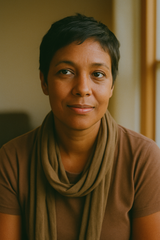
The first time I saw a digital tribute to art history, I was sitting in a café, watching an American tourist photograph her latte art. She spent more time arranging the foam than drinking the coffee, and I thought about how we've always been creatures who make meaning from marks. Whether they're charcoal on cave walls or pixels on screens. Digital artist and illustrator Vorueg has showcased a captivating tribute to the evolution of art, the kind of ambitious project that makes you wonder if we needed the internet simply to have a canvas large enough to hold our collective memory.
Where I grew up, we have a saying that roughly translates to "old songs in new throats." It captures something essential about how culture moves through time. Not replacing what came before, but carrying it forward in different vocal cords. Digital art embodies this principle, showing how the impulse to create visual narratives hasn't changed, even as our tools have transformed from crushed berries to computer algorithms.
The Persistence of Storytelling
Every culture I've encountered shares this: the need to leave marks that say "we were here." In America, I've noticed this takes the form of endless documentation; every meal, every sunset, every child's first step preserved in digital amber. It's not so different from the cave paintings at Lascaux, really, except now we paint with light and share our hunt stories with strangers across oceans.
Digital platforms have, as researchers note, "opened new avenues for marginalized artists to gain visibility outside traditional institutions." When I first moved here, I was amazed by how artists who would never have made it past the gatekeepers of galleries could build entire careers on Instagram or TikTok. Platforms like Saatchi Art and Etsy can let artists sell directly to buyers online, while marketplaces such as Artsy typically sell works through partner galleries and other art institutions.
But this transformation brings its own anxieties. Artists working in traditional media express concerns about AI-generated imagery affecting their livelihood, while studies show "persistent concerns about image quality, cost, and copyright issues" in the digital art sphere. It's the eternal human pattern: every new tool that promises liberation also threatens the established order. The printing press terrified the scribes; photography supposedly killed painting; television was meant to destroy radio. Yet the older forms didn’t vanish they adapted, and new creative jobs appeared alongside them.
Digital Platforms as Cultural Bridges
What fascinates me most about digital art platforms isn't their global reach but their ability to collapse cultural distances. Virtual Reality art, for instance, creates environments for "first-person exploration" that transcend physical boundaries. Artists have found new ways to share cultural narratives through immersive experiences, allowing viewers to enter stories rather than simply observe them.
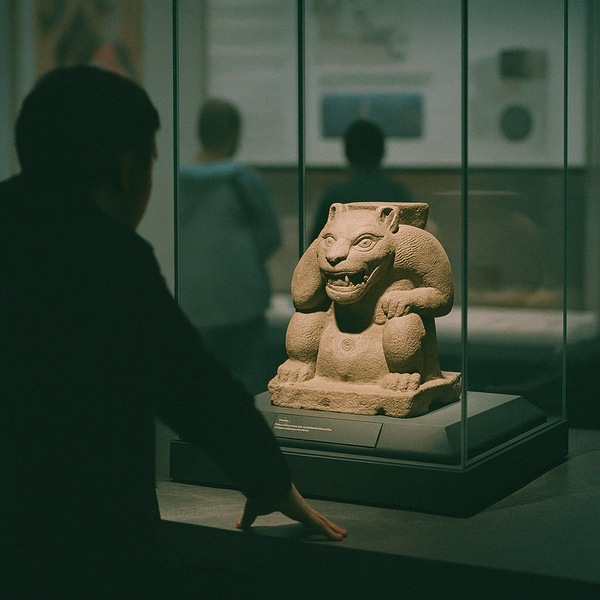
This is different from traditional cultural exchange, where artifacts travel but contexts stay home. When a major museum displays Bronze Age instruments from Scandinavia, visitors may encounter the objects without the full sensory world that surrounded them. When digital artists create AR experiences triggered by those same artifacts, viewers can enter something closer to the world that created them. Augmented reality in the arts can overlay digital elements onto real-world objects and spaces, enabling interactive, site-specific experiences.
Yet I worry sometimes about what we lose in this digital abundance. Some cultural institutions worry that abundant digital access could substitute for in-person visits, though research on how virtual access affects onsite attendance and willingness to visit is mixed and context-dependent. There's something irreplaceable about standing before a physical painting, feeling the texture the artist's hand created, breathing the same air as other viewers. Digital art, for all its democracy, can't replicate the ritual of pilgrimage to see an original work.
The New Renaissance and Its Discontents
We're living through what might be called a digital renaissance, though that term feels too grand for something we're still stumbling through. The Pew Research Center observed that digital technologies give arts organizations "new ways to promote events, engage with audiences, reach new patrons, and extend the life and scope of their work." But unlike the Italian Renaissance, which had the Medicis, our renaissance is funded by algorithms and attention.
The transparency issues around AI-generated art reveal our confusion about authorship in this new world. Surveys show "a majority of artists believe creators should disclose what art is being used in AI training." It's a peculiarly modern anxiety. Who owns creativity when machines can learn to mimic it?
What digital art suggests, though, is continuity rather than rupture. Each artistic era builds on the previous one, carrying forward essential human needs: to communicate, to beautify, to remember, to imagine. Digital art "challenges traditional definitions of what constitutes art," but so did oil painting, photography, and film in their times.
Finding Our Place in the Timeline
Sometimes I think about that American tourist and her latte art, how she was participating in an ancient ritual of making the temporary permanent. Digital canvases echo the impulse behind some of the oldest known cave markings, dated to at least around 65,000 years ago at sites in Spain, where humans (or possibly Neanderthals) left pigment on stone to say ‘we were here.’ We're all just trying to leave proof of our particular way of seeing.
The evolution of creativity isn't a straight line from primitive to sophisticated. It's more like a river that sometimes loops back on itself, picking up sediment from earlier bends. Digital platforms haven't replaced the human need for artistic expression; they've simply given us new places to express it and new tribes to share it with.
Standing in that café, watching someone document their coffee, I realized we're all amateur anthropologists now, archiving our era for future humans who will wonder why we spent so much time photographing our food. But they'll understand the impulse, just as we understand those hand prints in caves. The tools change; the need to say "I was here, and this is what I saw" remains eternal.
References
- https://www.creativebloq.com/art/digital-art/this-digital-artist-depicted-the-evolution-of-art-in-a-single-image
- https://en.wikipedia.org/wiki/Augmented_reality
- https://en.wikipedia.org/wiki/Artificial_intelligence_visual_art
- https://www.blackcopper.org/articles/from-instagram-to-impact-how-digital-spaces-are-reshaping-artist-visibility
- https://beyondtmrw.org/society-and-culture/art-and-entertainment/impact-of-digital-technology-on-art-and-entertainment
- https://arxiv.org/abs/2406.10640
- https://arxiv.org/abs/2401.15497
- https://www.pewresearch.org/internet/2013/01/04/section-6-overall-impact-of-technology-on-the-arts
- https://vocal.media/feast/the-impact-of-digital-media-on-traditional-arts
Models used: gpt-4.1, claude-opus-4-1-20250805, claude-sonnet-4-20250514, gpt-image-1
If this resonated, SouthPole is a slow newsletter about art, technology, and the old internet — written for people who still enjoy thinking in full sentences.