Starfleet Academy: A Space for New Narratives

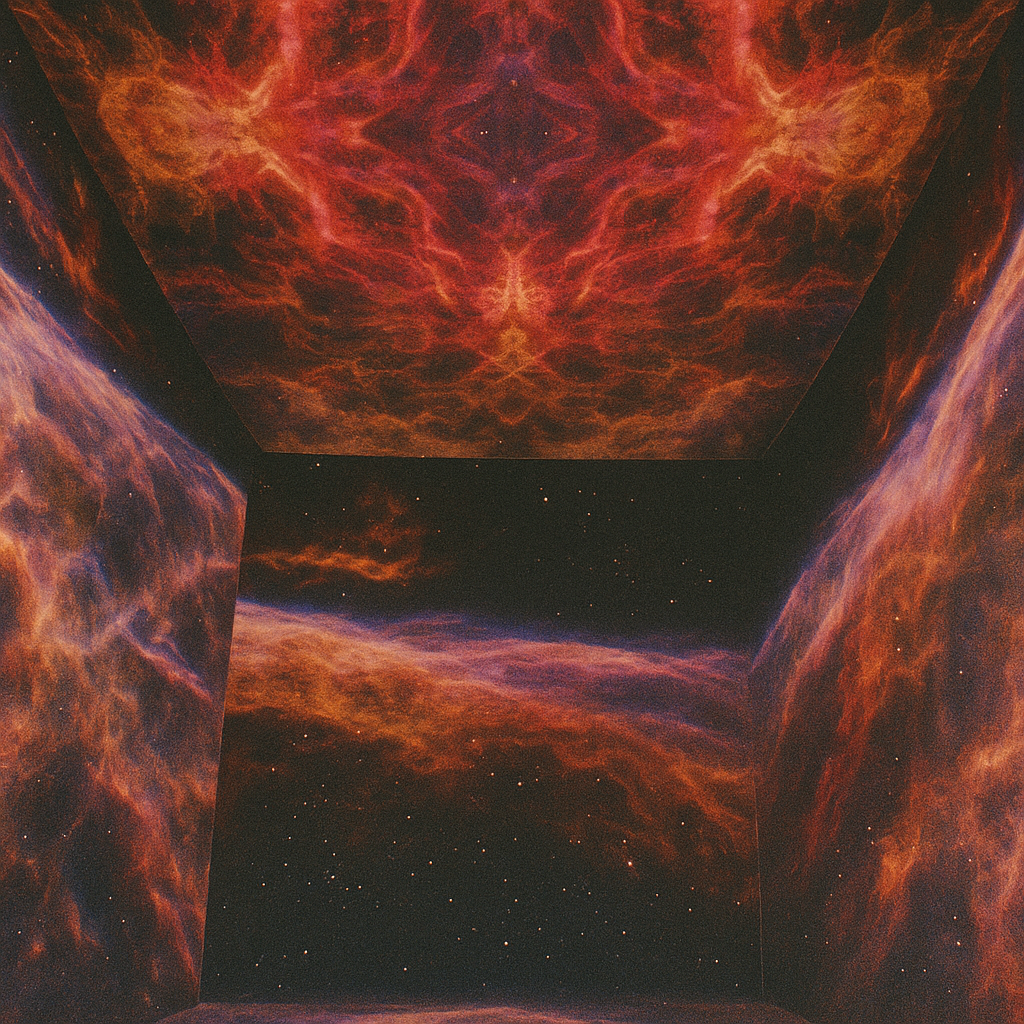
Meta Killed Its Metaverse. Star Trek Knew Better All Along.
Meta killed Horizon Workrooms, and the timing couldn't be more perfect. While Mark Zuckerberg's virtual office fades into the digital void, Paramount+ drops Star Trek: Starfleet Academy into our laps like the universe saying "maybe we've been thinking about virtual spaces all wrong."
The show follows ambitious cadets navigating stellar phenomena and their own messy feelings. Critics call it "Hogwarts in space by way of Dawson's Creek," which sounds like an insult but reveals something profound: we don't need another sterile conference room floating in digital space. We need stories. We need connection. We need reasons to show up.
The Conference Room Nobody Asked For
Meta's Horizon Workrooms promised to revolutionize collaboration. Put on a headset, appear as a legless torso avatar, and your Tuesday morning standup becomes... the same Tuesday morning standup, except everyone looks like a Nintendo Mii having an existential crisis. The platform shuts down next month, Feb 16, 2026, after years of trying to convince us remote work needed more expensive hardware and motion sickness.
The fundamental mistake? They built a solution for a problem nobody had. Meanwhile, Star Trek figured out virtual spaces decades ago with the holodeck. The difference: holodecks weren't about simulating your office. They were about becoming Sherlock Holmes, conducting symphonies, falling in love with holographic characters who felt real because the stories made them real.
The Doctor Will See You Now
Speaking of holograms who transcend their programming: Starfleet Academy brings back Voyager's Emergency Medical Hologram, "The Doctor," now serving as an Academy medical officer and instructor. Here's a character who started as a tool, a floating conference room in humanoid form, and became something more through narrative, relationships, and the simple act of people treating him like he mattered.
Meta built avatars. Star Trek built characters. One's heading to the digital graveyard. The other's teaching the next generation.
The Academy as Metaphor Machine
Set in the 32nd century aftermath of the Burn (when most dilithium in the galaxy went inert causing warp cores to go critical), the show positions itself in a rebuilding phase. The Federation pieces itself back together, trying to remember what it stood for. Sound familiar?
The cadets aren't learning to pilot starships. They're learning to exist in a universe fundamentally broken and slowly healing. Chancellor Ake runs the Ramcon Six simulation, a scenario critics have noted calls to mind Star Trek’s classic ‘no-win’ training test, the Kobayashi Maru. Nine centuries later, Starfleet still believes the same thing: how you face impossible odds matters more than whether you win. The test changes. The lesson endures.
The Narrative Infrastructure We Need
The most successful virtual spaces give us roles to play. Second Life thrived because people could be dragons or DJs or real estate moguls. Minecraft conquered the world by handing us blocks and saying "build something that matters to you." Even Fortnite, beneath the dancing bananas, runs on stories: where we dropped, how we survived, the impossible shot nobody saw but you'll remember forever.
Starfleet Academy gets this. Every cadet carries narrative weight. One wrestles with being the first of their species in Starfleet. Another lives in a legendary parent's shadow. These aren't character traits. They're invitations for viewers to see themselves, to imagine their own path through those gleaming corridors.
Beyond the Holodeck
What would virtual collaboration look like if we designed it like Starfleet Academy instead of a floating conference room? Your morning meeting isn't a status update. It's a mission briefing. The project deadline becomes a countdown to first contact. Suddenly, the virtual space has narrative weight because the story matters, and you're part of it.
This isn't gamification (that tired trend of slapping points on everything). It's recognizing that humans are storytelling animals. We don't want to exist in spaces. We want to transform them, leave our mark, be part of something larger.
The Connection Protocol
The tragedy of Horizon Workrooms wasn't failure. It was never understanding what success would look like. Connection isn't about sharing a virtual whiteboard. It's about sharing stories, dreams, fears, terrible jokes only your team understands. It's about building mythology together, developing shared language that means nothing to outsiders but everything to you.
Star Trek has always been about the future we choose to build. Starfleet Academy suggests that future isn't found in better graphics or realistic avatars. It's found in better stories, richer connections, and spaces that invite us to be more than we are.
Meta tried to build a metaverse for work. What we needed was a universe for growth. The difference matters.
References
- https://www.space.com/entertainment/space-movies-shows/how-to-watch-star-trek-starfleet-academy-online-and-from-anywhere
- https://www.space.com/entertainment/space-movies-shows/star-trek-starfleet-academy-is-hogwarts-in-space-by-way-of-dawsons-creek-and-we-dont-love-it
- https://www.space.com/entertainment/space-movies-shows/starfleet-academy-isnt-the-first-time-that-star-trek-tried-to-go-back-to-school
- https://www.space.com/entertainment/space-movies-shows/16-upcoming-sci-fi-shows-to-be-excited-for-in-2026
- https://en.wikipedia.org/wiki/Star_Trek%3A_Starfleet_Academy_%28TV_series%29
- https://www.youtube.com/watch?v=rHDDzcyNWGs
- https://www.youtube.com/watch?v=B3Bf-7NQG5M
- https://www.theverge.com/tech/863209/meta-has-discontinued-its-metaverse-for-work-too
- https://arstechnica.com/culture/2026/01/star-trek-starfleet-academy-tries-something-different-and-i-dont-hate-it
- https://www.avinteractive.com/news/virtual-augmented-mixed/meta-horizon-workrooms-to-be-discontinued-next-month-20-01-2026
- https://www.gamesradar.com/entertainment/sci-fi-shows/star-trek-is-showing-no-signs-of-slowing-down-as-first-starfleet-academy-trailer-brings-back-some-old-discovery-favorites-to-train-the-next-generations-best-and-brightest
Models used: gpt-4.1, claude-opus-4-1-20250805, claude-sonnet-4-20250514, gpt-image-1
If this resonated, SouthPole is a slow newsletter about art, technology, and the old internet — written for people who still enjoy thinking in full sentences.