Nashville Pussy and the Analog Rebellion
As digital EPs like SEETHER's 'Beneath The Surface' flood the market, Nashville Pussy's return to analog with '10 Inches Of Pussy Season 1' isn't just a sonic choice—it's a battle cry against a soulless industry.

Two bands walk into 2026. One plugs into a tape machine. The other uploads to the cloud. Only one of them leaves fingerprints.
Nashville Pussy, a band kicking teeth in since the Clinton administration, recently announced 10 Inches of Pussy Season 1, a four-song vinyl 10-inch dropping May 22nd on Slinging Pig Records, the band's own imprint. Their first new music in eight years. Recorded, and I'm quoting the band here, "the way rock 'n' roll was meant to be, fully analog." Around the same time, Seether announced Beneath the Surface, a digital-only EP set for April 17th through Concord Records. Two releases, worlds apart in their approach to making and delivering rock music.
I'm not here to tell you one band is better than the other. I'm here to tell you the gap between these two approaches is a fault line running straight through the chest of modern rock, and if you press your ear to the ground, you can hear the plates shifting.
The Tape Doesn't Lie
There's a reason Nashville Pussy went analog, and it's not nostalgia. It's theology.
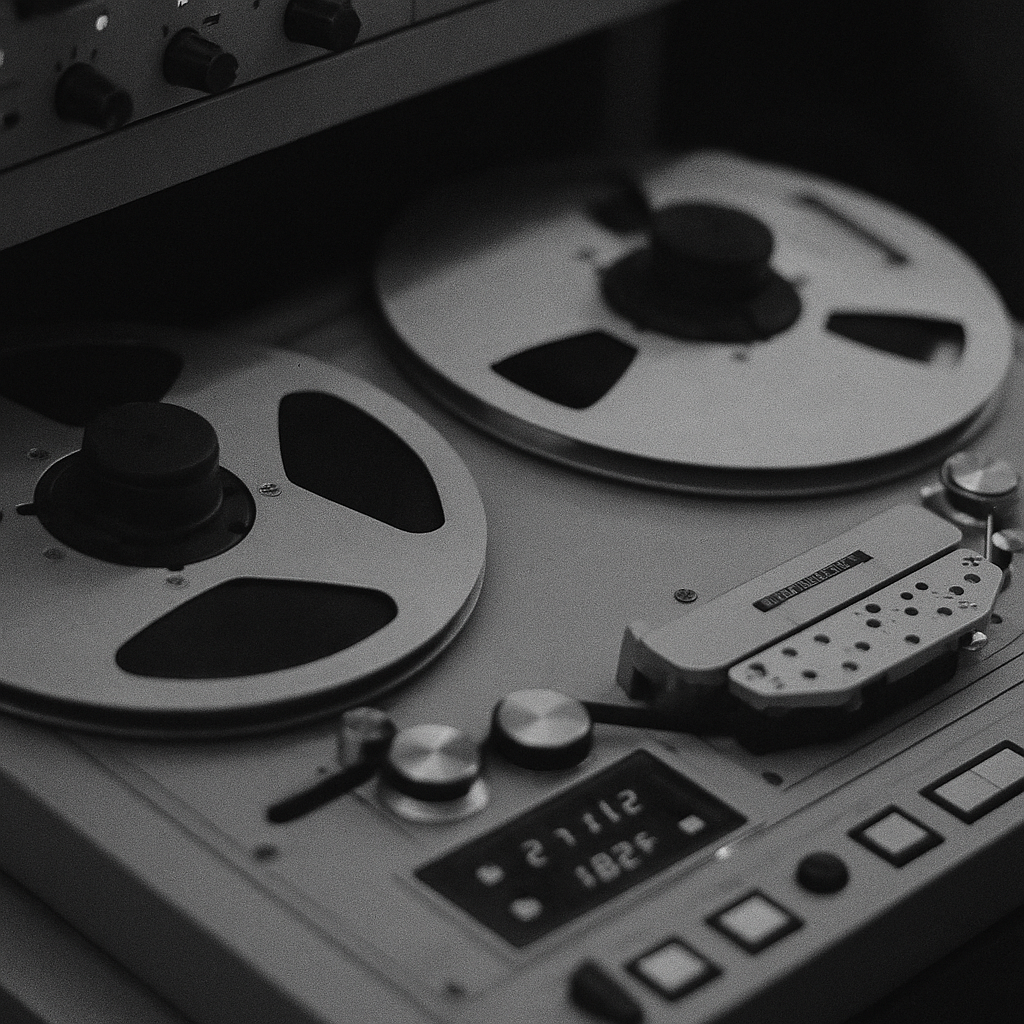
Analog recording is unforgiving. The room is the editor. You can't hide behind a grid or bury a bad take in software. What you get is what happened, four people playing loud enough to rattle the fillings out of your skull, captured on magnetic tape with no interest in your feelings. Every wobble in the vocal, every slightly rushed snare hit, every moment where the bass player locked in with the kick drum by instinct rather than software, it's all there, preserved like a bug in amber. Ugly. Beautiful. Real.
Nashville Pussy has built its entire reputation on the idea that performance matters more than production. Blaine Cartwright and Ruyter Suys didn't build this band to make music that sounds "correct." They built it to make music that sounds alive. And after eight years of silence, eight years during which the recording industry continued its slow-motion surrender to the laptop, they came back swinging with a format demanding commitment: a vinyl 10-inch on their own Slinging Pig Records. You don't skip tracks on vinyl. Not really. The friction is the point, you sit down, you drop the needle, and you take what comes.
That's not a gimmick. That's a statement of faith.
The Digital Shrug
Seether, meanwhile, does what Seether does, competently, professionally, and with the kind of frictionless efficiency making record executives sleep soundly. Beneath the Surface follows their ninth studio album, The Surface Seems So Far, which landed September 20, 2024 via Fantasy Records. That record spawned singles "Judas Mind" and "Illusion," and the band's machinery runs smooth. New single "Into the Ground" dropped March 20th, 2026. The EP announcement came the same day. Digital-only. Concord Records. Click, stream, forget.
Shaun Morgan and company are not villains. They're a working rock band navigating the same busted landscape as everyone else. Digital-only EPs save money. No pressing costs. No shipping. No warehouse full of unsold plastic. The margins are cleaner, and the turnaround is faster. Seether's approach is rational.
But rational and rock 'n' roll have never been comfortable roommates.
The problem with digital-only releases isn't sound quality, streaming platforms have improved on that front. The problem is weight. A digital EP exists as data, not as an object. It has no mass, no texture, no smell. You can't hold it. You can't read the liner notes on the toilet. You can't flip it over and notice a scratch from the night you got too drunk and knocked the turntable. Digital files don't accumulate history. They accumulate data.
And data, friends, is not memory.
The Rebellion Nobody's Covering
The major outlets aren't covering this because it doesn't generate clicks. But in the gutters and garages and back rooms, something is moving. Bands choosing tape. Bands pressing vinyl. Not every band, not for every record, but enough that it means something, and the people paying attention know it.
They're choosing tape over Pro Tools. Vinyl over digital-only releases. Physical objects over phantom files. And they're doing it because they understand something fundamental about the relationship between a listener and a record: it matters if the thing exists.
Nashville Pussy's release will exist. You'll be able to hold it, scratch it, lend it to a friend who never gives it back, find it twenty years from now in a milk crate at a flea market and remember exactly who you were when you first heard it. A vinyl record is a physical contract between the band and the listener. It says: we made this with our hands, and now it's in yours.
Seether's EP will also exist, technically. It'll live on servers in some climate-controlled facility, dependent on platforms it doesn't control, subject to licensing agreements pulling it without warning. Try telling your grandkid about the first time you heard "Into the Ground" while showing them a Spotify screenshot. See how that story lands.
What Analog Actually Means
I want to push back against the easy reading here, which is that analog equals good and digital equals bad. That's too clean, and clean is suspicious.
The truth is messier. Analog recording is expensive, time-consuming, and limiting. It requires engineers who know what they're doing, a rarer skill set every year. It requires tape, which grows harder to source. It requires a band able to play, together, in a room, without the safety net of infinite overdubs. Not every band can pull that off. Not every band should try.
But the bands that do, the ones walking into a studio with nothing between them and the microphone but air and electricity, make a choice with consequences. They choose imperfection over polish. Presence over precision. They bet the listener can tell the difference, even subconsciously, between a performance captured and a performance constructed.
Nashville Pussy is making that bet. After eight years away, they could have come back with a slick, digitally mastered comeback record designed to maximize streaming numbers. Instead, they came back with four songs on a format demanding the listener meet it halfway. That's either stupid or heroic, and in my experience, those two things are usually the same.
The Gutter Endures
Rock music's survival has never depended on the mainstream. It has always lived in the margins, in the clubs holding 200 people, on the labels operating out of somebody's garage, on the records passed hand to hand like contraband. The bands mattering most are usually the ones the industry notices last.
Nashville Pussy isn't going to save anything. They'd be the first to tell you that, probably while shotgunning a beer. But 10 Inches of Pussy Season 1, a title so gleefully juvenile it circles back around to genius, represents something worth paying attention to: the stubborn, unreasonable insistence music should be a physical act with physical consequences. A record should be a thing, not a ghost.
Seether are positioned to reach more people. Nashville Pussy are making the louder statement. And somewhere between those two facts lies the entire argument about what rock music is supposed to be in 2026.
I know which side of that argument I'm standing on. The side with the scratches on the vinyl.
References
- https://blabbermouth.net/news/nashville-pussy-announces-10-inches-of-pussy-season-1-ep-first-new-music-in-eight-years
- https://imusic.co/music/0760137207146/nashville-pussy-2026-10-inches-of-pussy-season-1-lp
- https://blabbermouth.net/news/seether-announces-beneath-the-surface-digital-ep-shares-into-the-ground-single
- https://en.wikipedia.org/wiki/The_Surface_Seems_So_Far
- https://en.wikipedia.org/wiki/Seether
- https://en.wikipedia.org/wiki/Judas_Mind
- https://seether.bandcamp.com/album/the-surface-seems-so-far
Models used: gpt-4.1, claude-opus-4-6, claude-sonnet-4-20250514, gpt-image-1
If this resonated, SouthPole is a slow newsletter about art, technology, and the old internet — written for people who still enjoy thinking in full sentences.