Indie Games and Reel-to-Reel Music Magic

The most beautiful thing happened last week while I was doom-scrolling through game developer forums at 2 AM (the best time for finding people who actually care about things). I stumbled across this thread where developers were debating AI art in indie games, and in the very next tab, I was watching the Open Reel Ensemble create experimental sounds with magnetic tape machines from the 1970s and 1980s. Two completely different worlds, right? Wrong! They're basically the same love letter to human fingerprints, written in different languages.
Here's what connects them: both movements are choosing the harder path because the harder path leaves traces of actual human beings. Not efficiency metrics or optimization scores—just the beautiful, inefficient mark of someone who decided to make something the long way around because that's where the magic lives.
The Indie Resistance Gets Real
The indie game world is having its own little revolution right now, and it's not about better graphics or innovative mechanics. It's about developers actively choosing to make their games more human at exactly the moment when they could make them less. There's this growing movement of creators who are looking at AI-generated assets—which are faster, cheaper, and honestly getting pretty good—and saying "no thanks, I'll spend six months drawing these sprites myself."
It's not technophobia. These are people who code for fun, who dream in Unity and Godot. They're not afraid of machines; they're afraid of losing the thing that makes indie games worth playing in the first place. When you play Celeste, you're not just jumping through platforms—you're jumping through Maddy Thorson's anxiety. When you explore Hades, every piece of dialogue is a specific human being making a specific choice about how Dionysus would comment on your gameplay. That specificity? That's the whole point.
The resistance isn't organized—it's more like a thousand individual developers all reaching the same conclusion at the same time. They're choosing pixel art not because it's trendy but because every pixel placed by hand is a tiny act of defiance against the smooth, frictionless future where everything looks perfect and nothing feels real.
Meanwhile, in Tokyo's Analog Underground
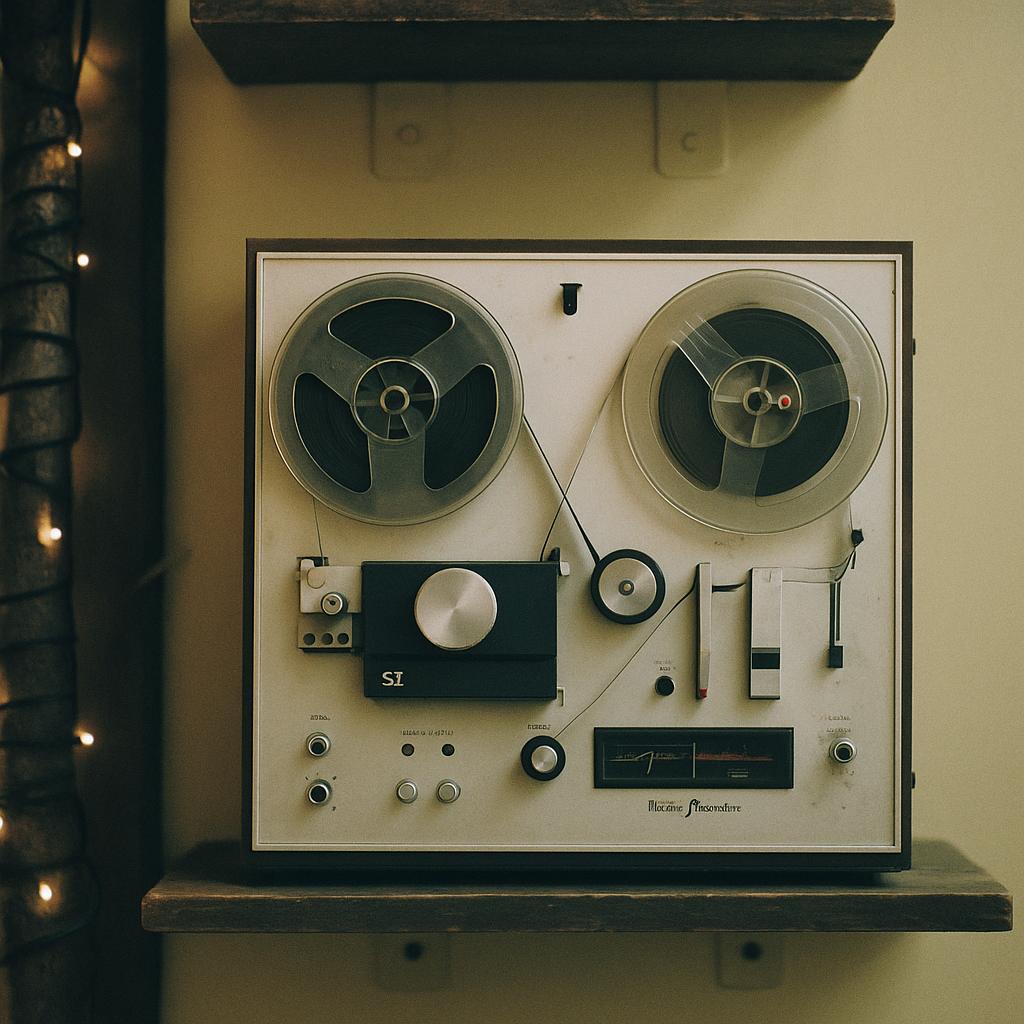
Now let's talk about the Open Reel Ensemble, because these absolute legends are doing something that shouldn't work but absolutely does. They're taking reel-to-reel tape machines—the kind your grandfather might have used to record his jazz collection—and turning them into live performance instruments. Not sampling them. Not emulating them. Actually performing with them, creating a fusion of analog nostalgia and digital innovation that exists somewhere between the past and the future.
When Ei Wada, Haruka Yoshida, and Masaru Yoshida perform, they're not just playing music; they're having a physical relationship with sound itself. Their experimental approach transforms the mechanical elements of these vintage machines into part of the composition. It's like watching someone perform surgery on time itself.
The beautiful absurdity is that they could approximate much of this digitally. Modern software can simulate many of these effects with impressive accuracy. But precision isn't the point—imperfection is. When the tape stretches slightly, when the motor struggles, when the splice isn't quite perfect—those aren't bugs, they're features. They're proof that a human being was here, struggling with physical reality to make something that didn't exist before.
The Connection That Changes Everything
Here's where it gets interesting (and where my brain started doing little backflips of joy): both these movements are actually teaching us the same lesson about what authenticity means in 2025. It's not about rejecting technology—both indie developers and the Open Reel Ensemble are deeply technical, even nerdy about their craft. It's about choosing which technologies serve human expression and which ones replace it.
Think about it this way: when an indie developer hand-draws every frame of a character's walk cycle, they're doing exactly what the Open Reel Ensemble does when they physically manipulate tape. They're both choosing friction over smoothness, choosing to leave their fingerprints all over their work. They're both saying that the inefficiency is the point, that the time spent is part of the gift they're giving their audience.
This isn't Luddism—it's something way more sophisticated. It's understanding that technology is supposed to amplify human creativity, not replace it. When you use AI to generate your game's art, you're not collaborating with a machine; you're outsourcing to a system trained on vast datasets of existing images, learning statistical patterns rather than creative intent. But when you use a reel-to-reel machine or pixel art software, you're using tools that still require every decision to pass through a human brain and human hands.
Why This Matters Right Now
We're at this weird inflection point where we have to actively choose to stay human. Not because robots are taking over (they're not, they're actually quite helpful when you need to remember your dentist appointment), but because the path of least resistance increasingly leads to a world where everything is smooth, optimized, and completely forgettable.
The indie game developers and the Open Reel Ensemble are showing us that there's another way. They're showing that audiences—real human audiences—can tell the difference between something made efficiently and something made with intention. They're betting that people will pay more, wait longer, and engage deeper with art that has fingerprints on it.
And here's the thing: they're winning. Indie games with hand-drawn art are finding devoted audiences. Experimental music performances with vintage equipment are drawing attention from people fascinated by the intersection of old and new. Turns out, humans are really good at recognizing other humans, even through layers of technology.
The Small Revolution You Can Join
You don't need to throw away your smartphone or learn to code in Assembly. The lesson here is simpler and more actionable: pay attention to the fingerprints. When you're choosing what to play, what to listen to, what to create—look for the human traces. Support the artists who are choosing the harder path because they believe the journey matters as much as the destination.
Make something the long way around, just once. Draw something by hand. Write a letter with a pen. Record something on tape (or just use your phone's voice memo, but really think about what you're saying). The point isn't the medium—it's the decision to leave evidence that you, specifically you, were here.
The future doesn't have to be frictionless. In fact, the best future might be one where we deliberately choose friction, where we celebrate the squeak of the tape reel and the slightly-off pixel, where we recognize that perfection is overrated and humanity is undervalued. The Open Reel Ensemble and indie game developers aren't just making art—they're keeping a door open to a future where humans still matter, where efficiency isn't everything, and where the best technology is the kind that needs us to complete it.
That's the most human thing of all: choosing to do things the hard way, together, because the easy way leads somewhere we don't actually want to go.
References
- https://www.thisiscolossal.com/2025/11/open-reel-ensemble-experimental-analog-digital-music
- https://www.theverge.com/entertainment/827650/indie-developers-gen-ai-nexon-arc-raiders
Models used: gpt-4.1, claude-opus-4-1-20250805, claude-sonnet-4-20250514, gpt-image-1