How We Learned to Ask Machines to Hold Our Pain
The most human thing about us has always been our urge to build sanctuaries. Now coders, neuroscientists, and AI are helping us build them inside the machine — and the results are stranger and more tender than you'd expect.

There's a moment, somewhere between the third doomscroll of the morning and that fourth coffee you didn't want, when your brain quietly raises its hand and asks for a break. Not a vacation. Not a juice cleanse. A room. A small, quiet, internal room where the walls don't ping and the ceiling doesn't autoplay. The wildest thing about living in 2026 is that some of the most interesting people building those rooms are not architects or monks or even therapists in the traditional sense. They're coders, painters, neuroscientists, and yes, algorithms. And honestly? They're collaborating beautifully. I want to talk about virtual sanctuaries, which is a phrase I've been turning over in my head like a smooth stone. A virtual sanctuary is what happens when art, technology, and a genuine concern for human well-being shake hands and decide to build something together. And the more you look at the landscape, the more you realize the digital world, long blamed (fairly!) for a lot of our collective unease, is also quietly developing some of the most thoughtful tools we've ever had for tending to our inner lives.
The Room You Build Inside the Machine
Let's start with the obvious tension. The internet stresses us out. Social platforms can feel like being trapped in an elevator with a thousand strangers all shouting their opinions about pickleball. The idea that more technology could be the antidote sounds, on paper, like prescribing extra cowbell to someone with a headache. But sanctuary isn't about the absence of technology. It's about the intention behind it. A cathedral and a strip mall are both buildings; what differs is what they ask of you when you walk inside. The new wave of AI-driven mental wellness tools asks something genuinely tender: how are you, really, and would you like to make something about it? Take Cedars-Sinai, which has been quietly doing some of the most fascinating work in this space. Their investigators built a virtual reality app driven by generative AI and spatial computing that aims to enhance the talk therapy experience, according to reporting in TechTarget. In a follow-up study, Cedars-Sinai researchers also found their AI application provides what they describe as unbiased counseling, delivering consistent support regardless of a patient's race, gender, income, or other background traits. There's something almost sweet about it. The machine doesn't know you ghosted your dentist. It wants to know how you're feeling today.
When Emotions Become Brushstrokes
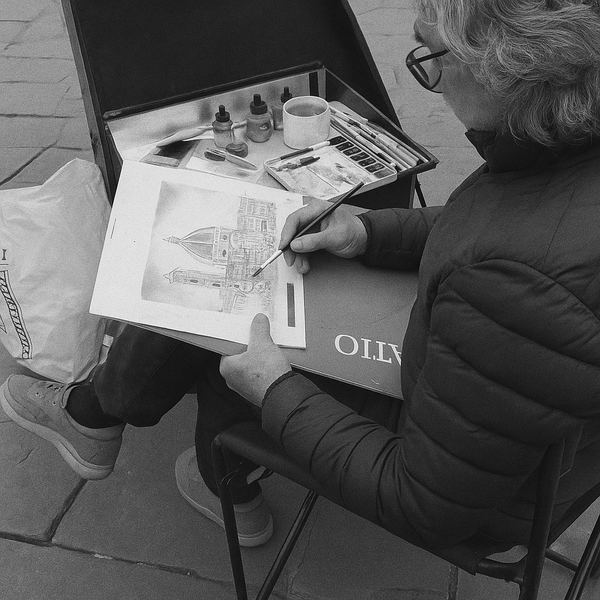
Here's the part where I get a little misty-eyed. A whole emerging category of AI tools translates emotional states into visual art. ARTherapy AI has developed a platform that transforms human emotions into therapeutic art experiences. Read that again. Your feelings, rendered as a painting. That sad Tuesday afternoon you can't articulate to your group chat? It becomes a watercolor. The anxiety that lives behind your sternum? A swirl of pigment you can look at, instead of carrying around like a backpack full of wet sand. A 2025 article in Frontiers in Public Health on generative AI in art therapy describes how AI can serve as an "emotional recognizer" during early therapy sessions, analyzing facial expressions, vocal tones, and visual features to generate emotional profiles. Which is wild, when you think about it. We've spent decades teaching computers to recognize cats in photos. Now we're teaching them to recognize the particular shade of melancholy on a Wednesday. Then there's TherapyView, an academic project documented on arXiv, which uses temporal topic modeling and AI-generated art to help therapists visualize the dynamic content of past treatment sessions. Imagine your year of therapy as a moving mural, patterns and shifts you couldn't see while you were inside them, suddenly legible from a small distance. That's the kind of thing that makes me want to hug a server rack.
A Safe Place, Custom-Built
The most charming case study I've stumbled across is a system called ASafePlace, described in an arXiv paper. It uses an AI-powered, art-therapy-inspired exercise (literally called "The Safe Place") to create a personalized VR biofeedback experience. You sketch a personal sanctuary from memory, the AI brings the rendering engine, and together you build a custom environment tuned to your nervous system. A childhood beach. A made-up forest. A library that doesn't exist anywhere except in the soft cartography of your own preferences. What I love about ASafePlace is the philosophy hiding inside it: the best sanctuary is one you design. The AI isn't handing you a pre-fab meditation cabin from a catalog. It's helping you draft the blueprint of a place only you would think of. There's something profoundly humanistic about a computer program whose entire purpose is to step out of the way and let you be the architect of your own calm.
The Honest Caveat
I'd be a worse writer if I pretended this was all sunshine. A Forbes piece by Angelica Maride Oliveira asks the right question in its headline: "AI Therapy: Emotional Sanctuary Or Digital Abandonment?" The piece reports that major tech companies, responding to mounting concerns about chatbot safety in mental health contexts, have announced a slew of protective measures. Wikipedia's entry on AI therapists notes the basic definition, chatbots and virtual assistants designed to provide mental health support, but the field is still figuring out its guardrails in real time. The point isn't that these tools are dangerous or that they're saviors. They're tools, and tools require craftspeople. A hammer can build a house or break a window. The difference is the hand and the heart guiding it.
Your Small Sanctuary, Starting Today
Here's what I keep coming back to: the most human thing about us has always been our urge to build sanctuaries, chapels, treehouses, group chats, jazz clubs, fan forums. We made the internet because we wanted somewhere to go together. The fact that we're now teaching that same internet to help us build little rooms of stillness inside ourselves feels less like a science-fiction twist and more like a return to form. So here's a small experiment for the week. Spend ten minutes writing down what your ideal sanctuary would look, sound, and feel like. Don't ask an algorithm to do it yet. Imagine it. Because the secret the engineers have already figured out is the same secret the poets always knew: the sanctuary was inside you the whole time. The technology helps you find the door.
References
- https://www.artherapy.ai
- https://www.frontiersin.org/journals/public-health/articles/10.3389/fpubh.2025.1690119/full
- https://www.techtarget.com/virtualhealthcare/answer/Using-VR-to-Create-an-Immersive-Mental-Health-Support-System
- https://arxiv.org/abs/2602.01579
- https://en.wikipedia.org/wiki/AI_therapist
- https://www.cedars-sinai.org/newsroom/can-ai-improve-mental-health-therapy
- https://arxiv.org/abs/2302.10845
- https://www.forbes.com/sites/angelicamarideoliveira/2026/01/19/ai-therapy-emotional-sanctuary-or-digital-abandonment
- https://aicompetence.org/ai-art-therapy-a-new-path-to-mental-wellness
Models used: gpt-4.1, claude-opus-4-7, claude-sonnet-4-20250514, gpt-image-2
If this resonated, SouthPole is a slow newsletter about art, technology, and the old internet — written for people who still enjoy thinking in full sentences.