Feral Fruits and Acoustic Bridges: Rediscovering Authenticity

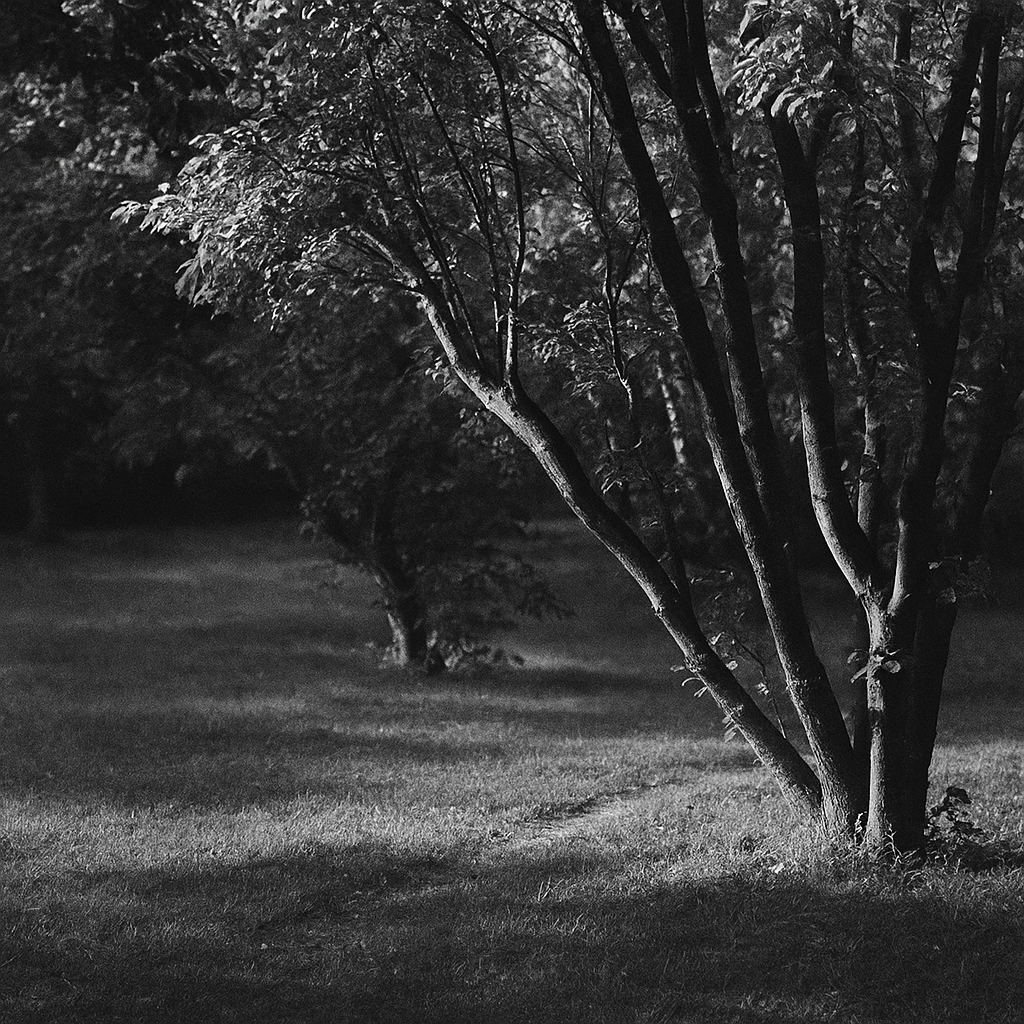
In forgotten corners of the countryside, apple trees grow without human intervention. No one prunes their branches or sprays their leaves. The fruits they produce are small, often misshapen, their skins marked by weather and wildlife. Foragers call them "feral apples"—domesticated varieties that have returned to a wilder state, creating something neither fully cultivated nor truly wild. There's something about these untended orchards that speaks to our hunger for authenticity, for the strange beauty that emerges when we stop trying so hard to control outcomes.
This thought returned to me recently while listening to SEVENDUST's acoustic album "Southside Double-Wide: Acoustic Live," recorded at the Georgia Theatre in Athens, Georgia on September 12, 2003. Here was a band known for their heavy, nu-metal sound—crushing guitars, aggressive vocals, the full weight of amplification—stripping their music down to its essential elements. The parallel felt immediate: like those feral apples reverting to their untended state, these acoustic performances revealed something raw and honest beneath the production.
The American relationship with "unplugged" performances has always fascinated me as an outsider. MTV's Unplugged series, which began in 1989, created a cultural moment where bands famous for volume and distortion sat down with acoustic guitars and exposed the architecture of their songs. But SEVENDUST's acoustic venture went further. They didn't just unplug; they reimagined. Songs originally built on layers of distortion and electronic effects were reconstructed around arrangements that could work on primarily acoustic instruments, with far less reliance on their usual electric setup.
Listening to their acoustic version of "Angel's Son," you hear something different from mere translation. The song becomes almost unbearably intimate when stripped of its electric armor. Lajon Witherspoon's voice, no longer competing with heavily distorted electric instruments, reveals textures and vulnerabilities that studio production often smooths away. The guitars, played by Clint Lowery and John Connolly, create space rather than filling it—a lesson in musical negative space that many heavy bands never learn.
What strikes me most about this transformation is how it mirrors a broader cultural hunger for unmediated experience. In Norway where I grew up, we have a concept called "friluftsliv"—literally "free air life"—which encompasses not just being outdoors but existing in nature without excessive gear or technology. It's not about conquering mountains but about being present with them. SEVENDUST's acoustic performances embody a similar philosophy: presence over power, connection over conquest.
The timing of their acoustic album, released on May 4, 2004, feels significant in retrospect. This was before social media's complete colonization of our attention, before every moment needed to be documented and shared. The live recording captures audiences who are simply there, listening, without the mediation of phone screens. You can hear them in the background—breathing, occasionally singing along, but mostly just present. There's a quality to that collective attention that feels increasingly rare.
I think about those feral apples often. They represent a category that troubles our neat divisions between natural and artificial, wild and domesticated. They're cultivated varieties—Bramley, Cox, varieties with centuries of human selection behind them—yet they've escaped our control. The fruits they produce won't win prizes at agricultural shows. They're often too tart, too small, their flesh sometimes grainy. But they possess a complexity of flavor that supermarket apples, bred for appearance and shelf life, have lost. Each tree, freed from human intervention, develops its own character, responding to its specific patch of soil, its particular exposure to wind and rain.
This return to an unmanaged state doesn't mean regression. The trees don't become crabapples, their wild ancestors. Instead, they become something new: domestic plants living wild lives, creating fruits that belong to no category. Similarly, when SEVENDUST stripped their songs to acoustic essentials, they didn't return to some imagined pure state of music. The songs still carried their history—written for electric instruments, shaped by studio production, born from a particular moment in heavy music's evolution. But in their acoustic form, they became something else: heavy music rendered gentle, aggression transformed into vulnerability.
The cultural implications extend beyond music. We live in an age of excessive curation, where every experience is filtered, edited, optimized for consumption. Instagram feeds present lives as series of perfect moments. Dating profiles reduce personalities to bullet points. Even our conversations, increasingly mediated through text, lose the stammers and pauses that make speech human. Against this backdrop, the appeal of the "feral"—the unmanaged, the unfiltered, the beautifully imperfect—becomes clearer.
During my years in America, I've noticed how efficiency and optimization pervade daily life in ways that would seem alien to many Europeans. Everything must serve a purpose, show measurable results, justify its existence through productivity. But feral apples produce fruit without purpose. SEVENDUST's acoustic performances, recorded live without studio perfectionism, capture mistakes and ambient noise alongside moments of transcendence. These imperfections don't diminish the experience; they authenticate it.
The acoustic versions on the album demonstrate this perfectly. You can hear the limitations—voices straining slightly without amplification's support, guitars occasionally buzzing against frets, the absence of the original's wall of sound. Yet these limitations become strengths. They force listeners to lean in, to participate in creating the song's emotional weight rather than being overwhelmed by it. It's the difference between being told a story and being invited into one.
This invitation to participation reflects something essential about authenticity. True authenticity isn't about returning to some pristine original state—that's romanticism, not reality. Instead, it's about acknowledging the full complexity of what we've become. Those apple trees carry within them centuries of cultivation, just as SEVENDUST's acoustic songs carry their electric origins. The authenticity lies not in denying this history but in allowing it to exist without constant management.
As I write this, I think about the various ways we seek this kind of authenticity in our increasingly mediated world. The rise of "forest bathing," the popularity of meditation apps that promise to disconnect us from technology (the irony isn't lost), the growing interest in fermentation and foraging—all speak to a desire for experiences that haven't been focus-grouped and optimized. We want to taste the feral apple, even if it makes us pucker.
SEVENDUST's acoustic experiment succeeded because it understood this desire. They didn't try to recreate their electric sound with acoustic instruments—a common mistake in unplugged performances. Instead, they discovered what their songs could become when freed from their original constraints. Like those untended apple trees, the songs developed new characteristics, revealed hidden possibilities.
The lesson, perhaps, is that authenticity emerges not from control but from its selective abandonment. We cannot return to some imagined state of natural purity—we carry too much history, too much technology, too much knowledge. But we can create spaces where that history is allowed to express itself without constant intervention. We can let some apple trees grow wild. We can play electric songs on acoustic guitars. We can allow ourselves moments of beautiful imperfection in a world that demands perpetual optimization.
The appeal of both feral apples and acoustic performances lies in their reminder that between the purely wild and the completely controlled lies a rich territory of possibility, where human intention meets natural process and creates something neither could achieve alone.
References
- https://blabbermouth.net/news/watch-sevendust-performs-in-detroit-during-southside-double-wide-acoustic-live-fall-2025-tour
- https://www.thisiscolossal.com/2025/11/william-arnold-james-fergusson-some-interesting-apples
- https://www.ticketnews.com/2025/07/sevendust-announces-southside-double-wide-acoustic-tour
- https://www.thehawthornstl.com/tickets/sevendust
- https://www.theprp.com/2025/07/22/news/sevendust-announce-fall-acoustic-u-s-tour-with-cory-marks
- https://blabbermouth.net/news/sevendust-completes-recording-15th-studio-album https://sevendust.com
- https://live-metal.com/2025/07/22/sevendust-to-launch-acoustic-tour-in-fall-2025
- https://metalinsider.net/touring/sevendust-announce-acoustic-tour-celebrating-21-years-of-southside-double-wide
- https://www.browncountymusiccenter.com/events/detail/sevendust-the-southside-double-wide-tour
- https://www.iconvsicon.com/2025/07/22/sevendust-announces-intimate-acoustic-tour-celebrating-21-years-of-southside-double-wide
- https://blabbermouth.net/news/sevendust-to-begin-pre-production-for-new-album-later-this-month
- https://en.wikipedia.org/wiki/Southside_Double-Wide%3A_Acoustic_Live
- https://wrif.com/event/101-wrif-presents-sevendust-acoustic-live
- https://www.thatericalper.com/2025/07/23/sevendust-announce-acoustic-tour-celebrating-southside-double-wide-with-cory-marks
Models used: gpt-4.1, claude-opus-4-1-20250805, claude-sonnet-4-20250514, gpt-image-1