Coffeehouse Echoes: New Hubs for Digital Dissent

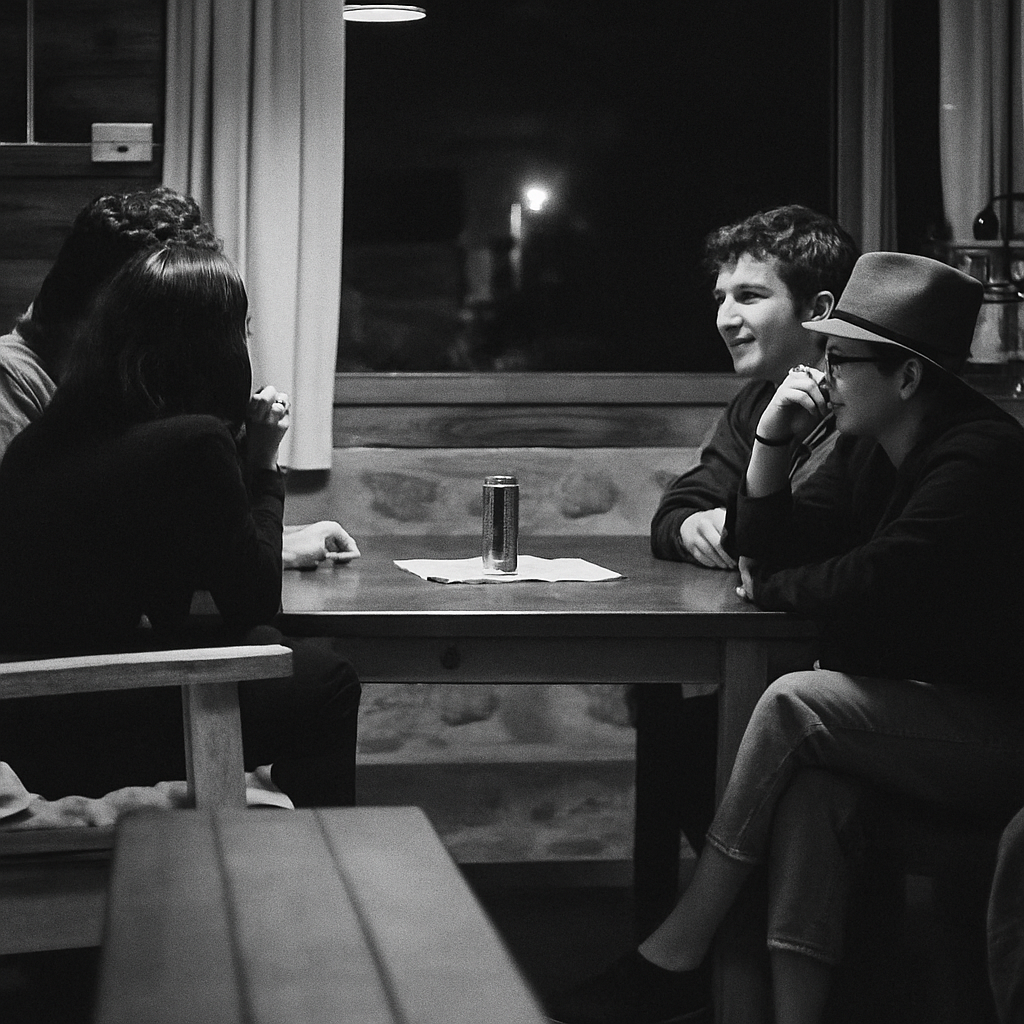
The first time I walked into a London coffeehouse—not a Starbucks, but one of those deliberately anachronistic places near Fleet Street—I was struck by how much it felt like scrolling through Twitter. Not in the obvious ways, of course. No glowing screens, no notification pings. But the same cacophony of overlapping conversations, the same clusters of regulars holding court, the same sense that somewhere in this chaos, someone was saying something that might change everything.
This wasn't my imagination. The English coffeehouse of the 17th and 18th centuries was, quite literally, the Twitter of its day: a semi-public space where strangers gathered to argue about politics, share dubious information, and occasionally spark revolutions. They earned the nickname "penny universities"—spaces where, for a modest fee, people could access conversations and ideas that might otherwise remain beyond their reach.
The Original Social Networks
These weren't just places to drink bitter imported beverages; they were information exchanges, each with its own specialized audience and unwritten rules of engagement. Business dealings and financial arrangements often emerged from coffeehouse conversations, where merchants and ship captains gathered to share news and assess opportunities.
The parallels to our digital platforms are almost too neat. Just as Reddit has its subreddits and Discord its servers, coffeehouses developed distinct cultures and clientele. Each attracted its own community, developed its own hierarchies, its own methods for separating signal from noise.
But here's what strikes me most forcefully: both eras feature the same anxious authorities wringing their hands about these new spaces of uncensored discourse. Coffeehouses faced periodic attempts at regulation and closure, with officials worried about the spread of seditious talk and false information. Replace "coffeehouse" with "social media platform" and you have essentially every congressional hearing of the past five years.
The Architecture of Dissent
What made coffeehouses dangerous wasn't just the caffeine—though the shift from ale to coffee as London's daytime beverage of choice certainly sharpened the quality of debate. It was the architecture of the space itself. Unlike taverns, which had private rooms and hierarchical seating, coffeehouses enforced a radical equality. One long table, no reserved seats. A merchant might find himself debating a printer's apprentice. A lord might have to wait for a shopkeeper to finish reading the newspaper.
This structural democratization feels remarkably similar to what early internet theorists promised us: a flattening of hierarchies, a marketplace of ideas where arguments won on merit rather than pedigree. Of course, we know how that turned out. Just as coffeehouses eventually developed their own informal hierarchies—regular customers who commanded attention, self-appointed experts who dominated discussions—our digital platforms have their blue checkmarks, their karma scores, their algorithmic amplifications.
Yet something persists. During the Arab Spring, I watched from my apartment in Copenhagen as Tahrir Square became both a physical and digital coffeehouse—a place where bodies and bytes converged to challenge authority. The protesters used Facebook to organize and Twitter to broadcast, but they also gathered in actual spaces, sharing actual coffee, having actual conversations. The revolution needed both: the speed and reach of digital networks and the irreplaceable energy of physical proximity.
The Grammar of Gathering
There's a grammar to both kinds of gathering that we rarely acknowledge. In 18th-century coffeehouses, you had to master the art of the interjection—knowing when to jump into a conversation, how to signal agreement or dissent, when to yield the floor. Online, we've developed our own elaborate etiquette: the quote tweet that adds context, the reply that shifts the frame, the screenshot that preserves a deleted post.
I notice this most acutely as an outsider in both spaces. In London coffeehouses, my Nordic accent marks me as foreign before I've expressed a single opinion. On Twitter, my tendency to hedge and qualify—that diplomatic habit that comes from being perpetually between cultures—reads as either refreshing or frustrating, depending on the audience. Both spaces demand a kind of performance, a willingness to make your thoughts public property.
But here's what the comparison reveals: the communities that last, that actually accomplish something beyond noise, are the ones that develop rituals of care alongside their customs of critique. The best online communities have their mutual aid threads, their content warnings, their practiced ways of de-escalating conflict.
The Persistence of Pattern
Walking through London last month, I passed sites where famous coffeehouses once operated. They're sandwich shops and chain stores now. But the conversations that started in those spaces—about the nature of criticism, the role of satire, the relationship between art and politics—they're still happening. They've just migrated to other venues, other mediums.
This is perhaps the most important lesson from comparing coffeehouses to digital platforms: the human patterns persist even as the technology changes. We still cluster around shared interests. We still seek spaces where we can speak more freely than official channels allow. We still transform casual gathering places into engines of social change—and authorities still try to shut them down when they become too powerful.
The question isn't whether digital platforms are the new coffeehouses. They clearly are. The question is what we do with that knowledge. Do we lean into the chaos, accepting that revolution has always been messy? Do we try to impose order, knowing that too much structure kills the very spontaneity that makes these spaces valuable? Or do we, perhaps, learn to move fluidly between digital and physical spaces, recognizing that each offers something the other cannot?
The London coffeehouse eventually gave way to the private club, the public library, the newspaper editorial page—more regulated spaces with clearer boundaries. Our digital platforms are undergoing similar institutionalization. But somewhere, in some corner of the internet I haven't discovered yet, people are gathering in new ways, developing new grammars of dissent, preparing changes we can't yet imagine.
The coffee, I suspect, is still terrible.
References
- https://www.smithsonianmag.com/history/in-colonial-america-patriots-flocked-to-coffeehouses-to-debate-politics-and-sow-the-seeds-of-revolution-180987689
- https://www.history.com/articles/coffee-houses-revolutions
- https://en.wikipedia.org/wiki/Age_of_Enlightenment
- https://en.wikipedia.org/wiki/Rota_Club
- https://www.battlefields.org/learn/head-tilting-history/sip-sip-hurrah-how-coffee-shaped-revolutionary-america
- https://www.vaia.com/en-us/explanations/history/elizabethan-era/coffee-houses
- https://www.cremacanvas.com/2025/08/coffee-and-enlightenment-how-europes.html
- https://www.numberanalytics.com/blog/coffee-fueled-revolution
- https://en.wikipedia.org/wiki/Ottoman_coffeehouse
Models used: gpt-4.1, claude-opus-4-1-20250805, claude-sonnet-4-20250514, gpt-image-1