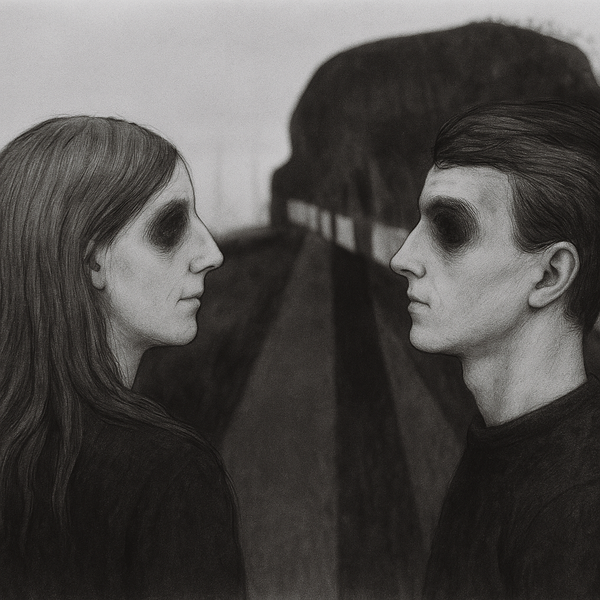
Ballerinas and Metal: A Dance of Culture and Strength
The unexpected blend of ballet's grace and metal's intensity surfaces in 'Pretty Lethal' and EINHERJER's latest album.

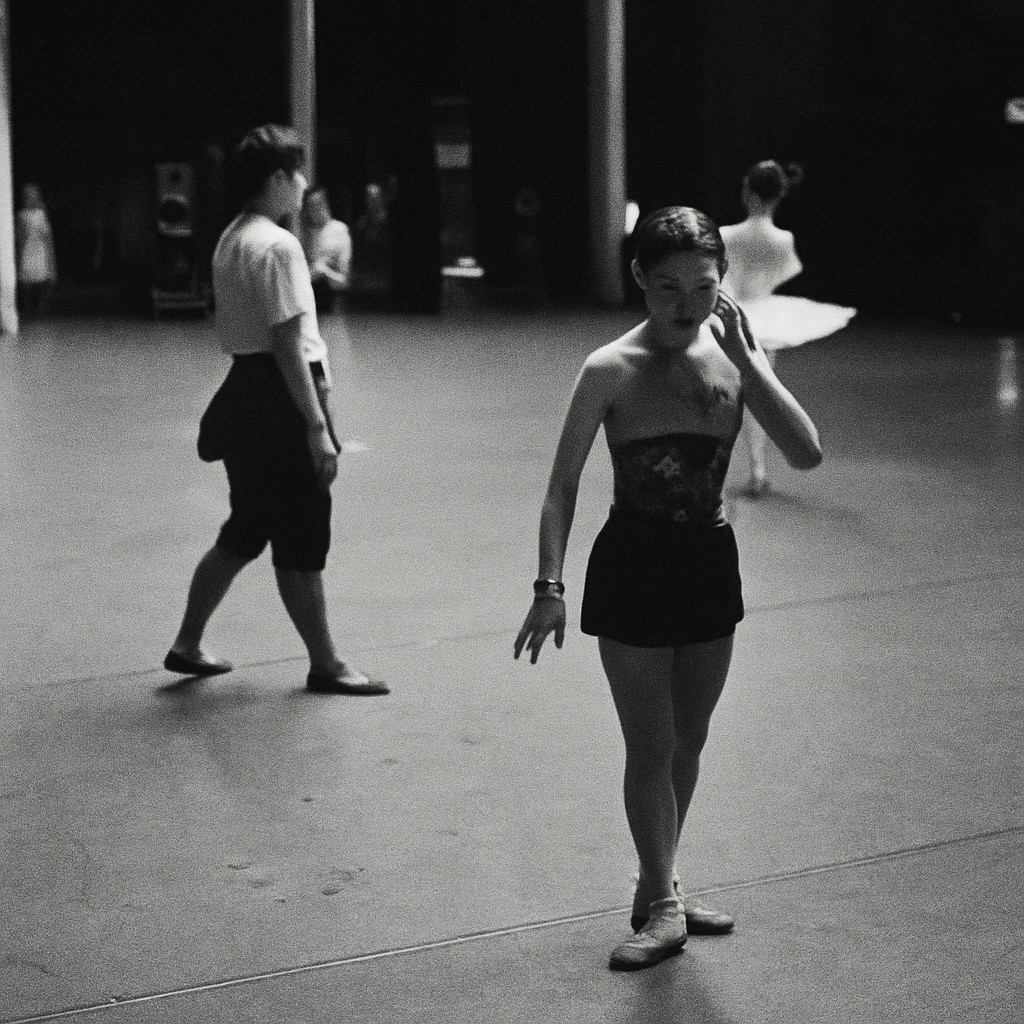
Ballet-Fu and Black Metal: When Grace Meets Brutality
There's a moment in every ballet class, somewhere in the adagio section of class, when the music slows and the room narrows to breath, corrections, and the quiet violence of muscles refusing to quit. If you've never stood among dancers holding a développé until their thighs tremble, you might not understand how close that moment is to the silence before a blast beat kicks in on a metal record. But it's the same moment. Discipline about to become spectacle.
And right now, in the spring of 2026, two wildly different cultural artifacts are making that connection impossible to ignore.
Pointe Shoes and Survival Instincts
First: Pretty Lethal, the action thriller directed by Vicky Jewson and written by Kate Freund, which premiered at the South by Southwest Film & TV Festival on March 13, 2026, before landing on Prime Video on March 25. The film, originally titled Ballerina Overdrive, which honestly deserves its own appreciation, follows five ballerinas who are barely on speaking terms, en route to a major dance competition, whose bus breaks down in a remote forest. They seek shelter at a nearby inn run by a reclusive former ballet prodigy named Devora Kasimer, played by Uma Thurman. Lana Condor and Maddie Ziegler round out the cast in what GamesRadar called "stylishly violent" in its first-look coverage.
What makes Pretty Lethal interesting isn't that it puts dancers in a survival scenario. It's that director Jewson, in her statement on the film, wrote she "wanted to bring the highly specific skillset of a ballerina to the action space." That sentence does a lot of heavy lifting. She's not saying ballet is like action. She's saying ballet already is action, it needed a different frame.
Director Jewson, in her own statement on the film, coined the term 'ballet-fu', a term I didn't know I needed but now can't stop saying. The whole premise rests on a deceptively radical idea: the physical intelligence of a trained dancer, the spatial awareness, the explosive power, the pain tolerance, translates directly into the ability to fight, to survive, to win.
Norse Metal and the Long Game
Meanwhile, on a seemingly unrelated frequency: Norwegian Nordic metal pioneers EINHERJER announced through By Norse Music that they'll release their tenth studio album this summer. Their tenth. EINHERJER has been making music rooted in Norse culture and heavy, precise instrumentation since 1993. A tenth album from a band in a subgenre most people couldn't name represents something worth discussing, the sheer endurance required to sustain an artistic vision across decades.
Metal, like ballet, punishes half-commitment. You can't fake a double bass drum pattern any more than you can fake a fouetté turn. Both demand years of repetitive practice bordering on obsession. Both attract people willing to suffer physically for an aesthetic result the world will never fully appreciate. And both exist in communities intensely loyal, deeply knowledgeable, and slightly bewildered by the outside world's inability to see what's so obviously magnificent.
EINHERJER's longevity, ten albums, three decades, a genre that never topped a Billboard chart, mirrors the career arc of a professional dancer: years of grueling work, a body that absorbs the cost of every performance, and an audience that will never fully grasp what went into making it look easy. The economics are brutal. The commitment is hard to explain to anyone outside it. The art is undeniable.
The Shared Architecture of Extremes
Here's what connects a ballet slasher film and a Nordic metal album announcement beyond the calendar coincidence of March 2026: both operate where grace and aggression become the same gesture.
Watch a ballerina land a grand jeté, then pivot into 32 fouettés, each rotation drilling force into the tips of her toes, the satin hiding what's happening inside. The audience sees elegance. That's violence wearing a costume. Listen to a well-produced metal track: the layering, the dynamic shifts, the way a quiet passage builds toward a wall of sound. That's composition wearing combat boots. The underlying architecture is identical: tension, release, control, explosion.
Pretty Lethal makes this connection literal by putting dancers in a scenario where their training becomes a weapon. EINHERJER makes it philosophical by drawing on Norse culture, a tradition where poetry and warfare were twin expressions of the same human impulse. The Vikings had a word, skáld, for their court poets, figures who composed verse celebrating the deeds of warriors and kings, where poetry itself was considered as valued a weapon as any sword. Ballet has a word too: ballerina. Both words carry more danger than their syllables suggest.
Genre-Blending as the Default Setting
What's happening across film, music, and design in 2026 is that genre purity has become quaint. The most compelling work refuses to stay in its lane. Pretty Lethal is simultaneously a horror film, a dance movie, a survival thriller, and a dark comedy about estranged friends. EINHERJER's catalog spans Viking metal, black metal, and melodic death metal, categories that matter deeply to insiders and barely register to everyone else.
This isn't new. David Bowie spent fifty years proving genre boundaries were suggestions. But the speed and enthusiasm with which audiences now embrace hybrid forms is new. Streaming platforms can greenlight a ballet slasher because the algorithm already knows the person who watched Black Swan also watched Kill Bill also watched John Wick. The data confirms what artists have always intuited: people who love intensity love it across categories.
The design implications ripple outward. Film choreography now borrows from martial arts, contemporary dance, and parkour simultaneously. Metal production incorporates orchestral arrangements, electronic textures, and folk instrumentation without apology. The walls between disciplines aren't falling, they were always thinner than the gatekeepers claimed.
A Small, Practical Truth
So here's the takeaway, and it's smaller than you'd expect: the next time you encounter something that seems to belong to two worlds at once, a film too violent to be a dance movie and too graceful to be a horror film, an album too melodic to be metal and too heavy to be anything else, lean into the discomfort of not being able to categorize it. That discomfort is where the interesting stuff lives.
Ballet and metal share a secret most art forms eventually discover: discipline is the prerequisite for wildness, and wildness is the whole point of discipline. Uma Thurman running a murderous inn full of ballerinas and a Norwegian band releasing their tenth album in a genre the mainstream forgot to notice, both are acts of faith in the idea that commitment to a specific, weird, beautiful-ugly vision will find its people.
It always does. That's the most optimistic thing about culture in 2026. The crossover episodes keep getting better, and the audience keeps showing up ready to be surprised. Stop sorting. Start listening.
- https://blabbermouth.net/news/einherjer-to-release-tenth-studio-album-this-summer
- https://en.wikipedia.org/wiki/Pretty_Lethal
- https://www.yahoo.com/entertainment/movies/articles/unhinged-pretty-lethal-trailer-lana-105436698.html
- https://www.yahoo.com/entertainment/movies/articles/action-thriller-pulp-fiction-star-110000270.html
- https://www.yahoo.com/entertainment/movies/articles/lana-condor-finally-movie-called-160002418.html
- https://www.dreadcentral.com/news/556748/your-first-look-at-pretty-lethal-uma-thurmans-ballet-slasher
- https://www.gamesradar.com/entertainment/horror-movies/kill-bill-star-uma-thurmans-new-thriller-about-blood-soaked-ballerinas-gets-a-stylishly-violent-first-trailer
- https://www.gamesradar.com/entertainment/horror-movies/kill-bill-stars-bloody-new-thriller-movie-about-a-killer-ballerina-gets-its-first-images
- https://nationaltoday.com/us/tx/austin/news/2026/02/04/uma-thurman-stars-in-pretty-lethal-a-new-ballet-slasher-premiering-at-sxsw
- https://www.aol.com/entertainment/action-thriller-pulp-fiction-star-110000233.html
- https://tribune.com.pk/story/2594547/pretty-lethal-trailer-unveils-maddie-ziegler-and-uma-thurman-in-ballet-fu-survival-thriller
- https://tribune.com.pk/story/2594599/first-look-at-pretty-lethal-survival-thriller-unveiled
Models used: gpt-4.1, claude-opus-4-6, claude-sonnet-4-20250514, gpt-image-1
If this resonated, SouthPole is a slow newsletter about art, technology, and the old internet — written for people who still enjoy thinking in full sentences.